A Death Sentence Is a Precondition for More Life
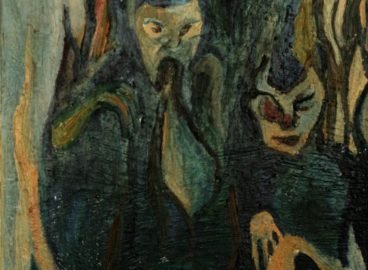
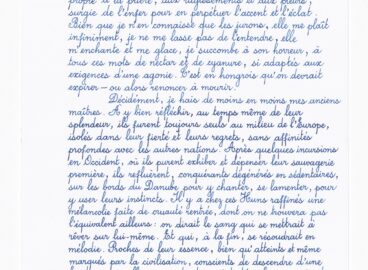
Joshua Chambers-Letson extrapolates antinomies from Danh Vo’s Death Sentence, a work on paper in MoMA’s collection, in particular the coexistence of values related to life and death.
Joshua Chambers-Letson extrapolates antinomies from Danh Vo’s Death Sentence, a work on paper in MoMA’s collection, in particular the coexistence of values related to life and death.
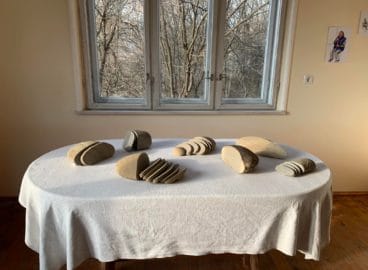
Theresa Musoke (born 1944) is one of Uganda’s premier artists. Part of the earlier generation of artists trained at the Margaret Trowell School of Industrial and Fine Arts at Makerere University, author Serubiri Moses focuses on her concept of the wild and details her intellectual rebuttal of the school’s pedagogy.
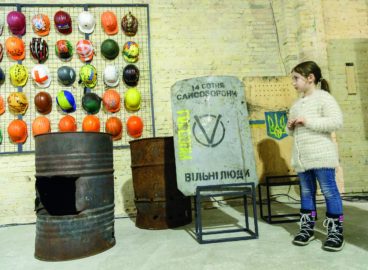
This essay highlights the reconstruction of memory through material culture in Ukrainian museums since the 1990s. Within the context of the Bohdan and Varvara Khanenko National Museum of Arts, the Ivan Honchar Museum, and the Maidan Museum—all of which are in Kyiv, Ukraine’s capital—cultural workers have responded to politically salient events, including Ukrainian independence, the Maidan revolution, and the current war.
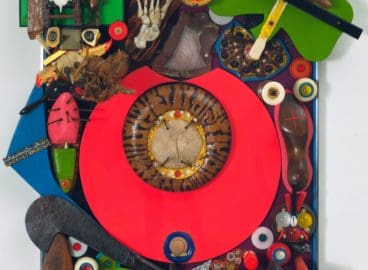
Collaborating artists Amy Lien and Enzo Camacho take a speculative approach to Alfonso Ossorio’s sculpture, currently on view in Gallery 415, attempting to locate an insurgent potential bubbling underneath the picture’s baroque aesthetic.
Gaëlle Choisne shares the details and entryways to her artistic practice. This text serves as a record of Choisne’s artistic and conceptual process, and is part of the C-MAP Asia Fellow’s ongoing research about curatorial approaches to art.
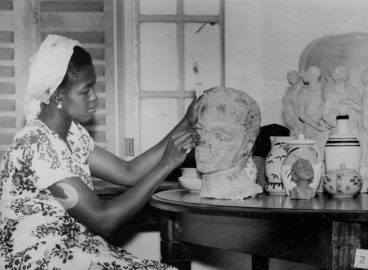
Grace Salome Kwami (1923-2006), undoubtedly a forerunner of modern art in Ghana, was one of the first women to undertake academic training in fine art. Elsbeth Court takes a closer look at her artistic formation, key work and restitution.
In this text focused on how postcolonial and decolonial processes are reflected in contemporary Ukrainian culture, art historian Svitlana Biedarieva examines methods of decolonizing Ukrainian cultural discourse through the lens of works by contemporary Ukrainian artists—specifically those addressing complex aspects of identity conflicts actualized by Russia’s ongoing war of aggression against Ukraine.
This essay brings together Baltic artists Anu Põder and Virgilijus Šonta, considering their mutual interest in human corporeality and non-heteronormative visuality to explore how their artwork reflects a disregard of official concerns of the late Soviet era, and sheds light on the blind spots of the homogenizing use of Western theoretical frameworks.
Hinged on the transversal as a means to engage with and envision new networks and ways of thinking about modern and contemporary art, the 2021 C-MAP seminar series offered an exploration and interrogation of the intertwining of multiple coeval life-worlds through concepts of “extending across.” Included here are abstracts and recordings of the four panels held on Zoom on June 2, 3, 9, and 10.
A trailblazing figure in the Southern Cone art scene of the middle decades of the 20th century, Yente (Eugenia Crenovich) has, until recently, received little recognition for her critical contributions to abstraction in Argentina. This essay discusses the context in which the artist realized one of her most unusual pieces, Object (1946), a work of art that defies clear alignment with either painting or sculpture.
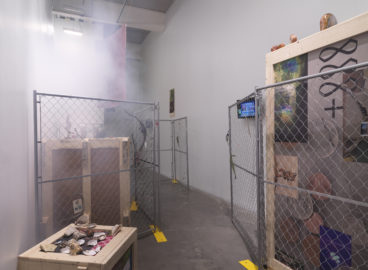

Temptations to pronounce a politics of ecology and technology are incisively moderated in this essay on Tetsumi Kudo’s multimedia installation, presented in MoMA’s Gallery 420 through the fall, prompting a broader critical commentary on the negotiations of cultural typification and belonging in the artist’s oeuvre.
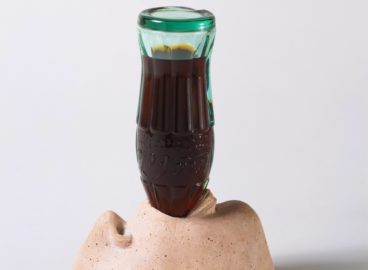
This text brings together Marisol’s sculpture Love and Frank O’Hara’s poem “Having a Coke with You” to explore their shared investigations of the personal in a capitalistic landscape, queer eroticism, global Cold War politics, and stoppered versus flowing communication.