Asia

Haptic Entanglements: Ornament as Method in Contemporary Kazakhstan

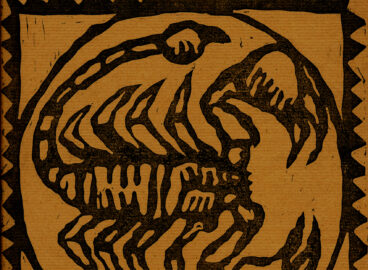
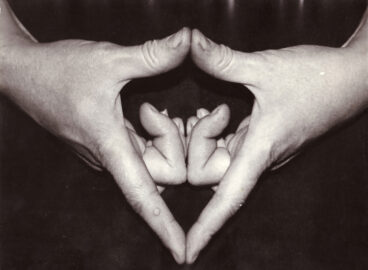
The essay approaches the intimate configurations captured in Kazakhstani artist Lidiya Blinova’s Finger Ornament as a site of artistic expression that reworks local ornamental production, dissolving categories of high and amateur, domestic and public, visual and haptic. In so doing, the essay highlights how the artwork accentuates the conceptual potential of its primary reference: the ornament of textile associated with the pre-Soviet culture of Kazakh nomads. In order to align with the artistic intention to foreground regional creative forms, the essay proposes a speculative turn: adopting a relational reading and an intertextual analysis between the artwork Finger Ornament and traditional textile ornamentation.

Tricky Terms, Coming Together: Arianna Mercado, David Morris, and Wing Chan and Carlos Quijon, Jr. in Conversation

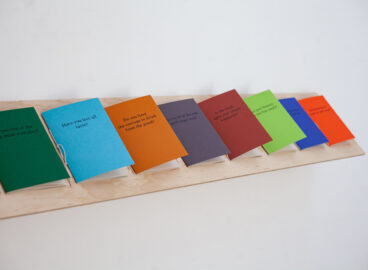
In recent years, the practice of the Jakarta-based collective ruangrupa has gained exceptional traction in the contemporary art world. The book How to Pin Down Smoke: ruangrupa since 2000, published in 2025 maps out the genealogy of the animated and complex ecosystem that ruangrupa has cultivated and which has shaped the trajectory of the group’s practice. Carlos Quijon, Jr talks to the volume’s editors to discuss their editorial processes and considerations.

“It’s not about superimposing one history onto another; it’s about finding forms of solidarity that grow from where you’re rooted.”: Maya Varma in Conversation with Shrujana Niranjani Shridhar; Part II

Maya Varma: A lot of your work turns toward the lineages that shape Dalit life and knowledge. When you think about these histories, how do you understand the inheritances you’re carrying forward? What pasts are you in conversation with, and how do you imagine the canon you’re stepping into? Shrujana Niranjani Shridhar: I think we…

“What do we allow Dalit women to do?”: Shrujana Niranjani Shridhar in Conversation with Maya Varma; Part I

Maya Varma: To begin, I wanted to talk about where you come from. How has Mumbai shaped you as an activist and as an artist? What did the city mean to you growing up? Shrujana Niranjani Shridhar: For me, Mumbai has always been a working-class city. That’s its defining character. Any city that grows because people come…

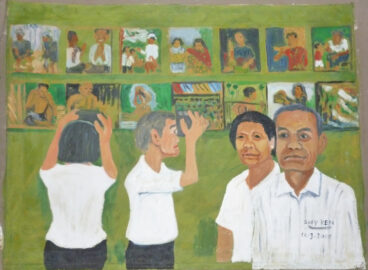
Hanoi Children’s Palace: Nostalgia for the “New Socialist Human” 

Beyond formal schooling, Hanoi Children’s Palace extended socialist cultivation into leisure time, reverie, artistic endeavors, and sports training. More than simply school routine, rituals were designed to develop the body and mind of the “new socialist human,” laying the foundation for building socialism in post-independence Vietnam. Taking the ideological history, architecture, and uncertain future of the Children’s Palace as a point of departure within the city’s broader projection of the creative industries as a strategic force, the project sought to examine how the institution’s pedagogical inheritance persists within the textures of everyday life and socialist memory.

“We’re simply trying to make sense of the country and the city in our own way”: Sameer and Zeenat Kulavoor in Conversation with Paul Galloway

This interview with the sibling duo behind Bombay Duck Designs explores their omnivorous curiosity for the diversity of visual cultures in India and suggests that an embrace of what may, on the surface, seem chaotic reveals opportunities for understanding and connection.  Paul Galloway: An aspect of your work that intrigues me is that it is steeped…

On Craft, Community, and Resilience: A View from the Living and Learning Design Centre

The concept of establishing a museum in a remote region of India—one that is not only geographically isolated but also prone to natural disasters such as earthquakes and cyclones—presents a complex set of challenges. Yet, it also offers a rare opportunity to engage deeply with the traditional knowledge systems of local communities. Located in Ajrakhpur,…

post Presents: Assemblies in Uncertain Times

This public program brought together Nancy Adajania, May Adadol Ingawanij, and Frida Muenala from Mullu for an evening of inquiry into forms and practices of gathering. The speakers, who represent diverse practices in the cultural fields—from art making to curation to institutional leadership—and operate across vast geographies, unpacked their different approaches to assemblies. Among the…

From Loot to Legacy: Rethinking “Tibetan Art” in Western Museums

Debates around the ownership of cultural heritage and decolonizing museums have become increasingly visible and polarizing in the public domain, leading to attempts to redefine the term “museum” itself.1The International Council of Museums (ICOM) Extraordinary General Assembly approved the following new definition of “museum” at the 26th ICOM General Conference held in Prague in August…

Somehow Materials Find Form: Pratchaya Phinthong and Carlos Quijon, Jr. in Conversation

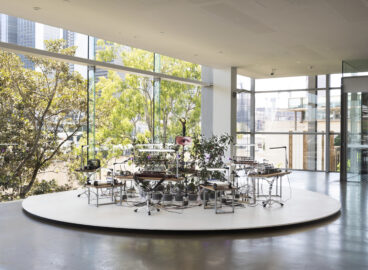
Across Pratchaya Phinthong’s more than two-decade practice, an idiom of materiality and form has emerged that aligns his artistic trajectory along a conceptualist vein. Phinthong discusses his relationship toward this categorization and shares how he approaches his artistic practice against and alongside conceptualist gestures and methods. This edited transcript comes out of two interviews conducted with the artist over video call in June 2024.