From Marketplace to Moral Economy
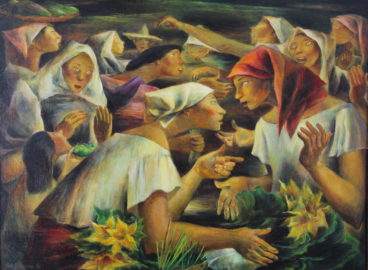
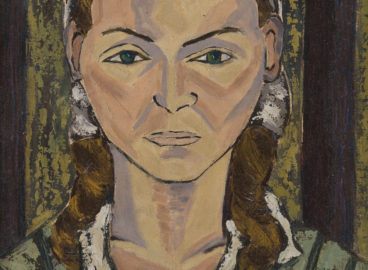
In an assiduous reading of Philippine modern artist Anita Magsaysay-Ho’s painting, In the Marketplace, art historian Chanon Kenji Praepipatmongkol discusses notions of gender, economic value, and spirituality.
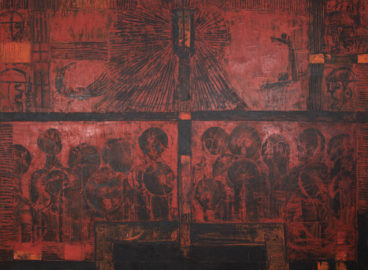
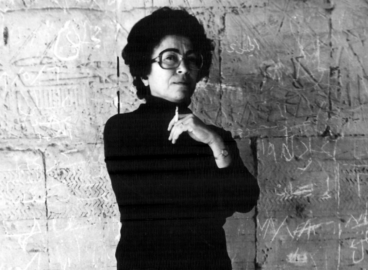
Refusing to fit into the mainstream art of her time, Gazbia Sirry replaced formal modernist training with local Egyptian art conventions to critically address women’s rights, patriarchy, social justice, and Western imperialism.
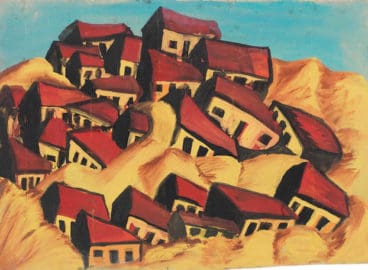
If landlessness is another condition that transforms Africans into wanderers, with nothing but their labor to sell for a pittance, then the genre of landscape painting in South Africa represents a space-time of possession and dispossession. Implicit in Gladys Mgudlandlu’s landscapes is a reminder of how the ownership of land has historically epitomized South African nationhood.
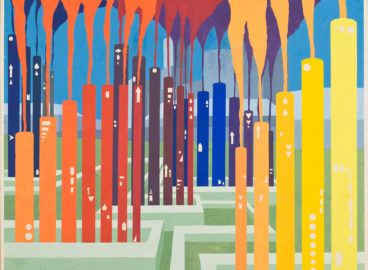
Estonian artist Sirje Runge’s (born 1950) visionary 1975 thesis project conceptualizes the dynamics between the needs of the individual and the overall logic and construction of the city space in late Soviet Estonia.
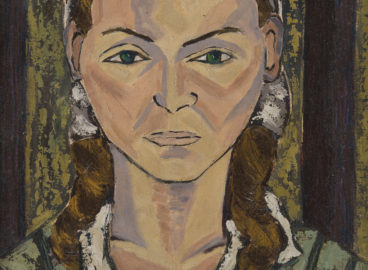
Inji Efflatoun fut une peintresse et une militante marxiste et féministe égyptienne. De juin 1959 à juillet 1963, elle fut emprisonnée par le régime nassérien en raison de son appartenance au parti communiste. Au cours de ces années, elle continua à peindre. Célébrés dès les années 1960, et aujourd’hui recherchés sur le marché de l’art, les tableaux de cette période sont souvent considérés comme les plus importants de son œuvre.
Celebrated as early as the 1960s, and highly sought-after on the art market today, Egyptian painter Inji Efflatoun’s production during her four years of incarceration by the Nasserite regime is often considered the highlight of her oeuvre.
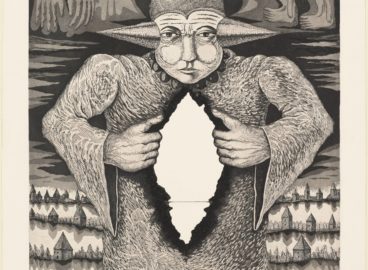
This essay looks at The Illusionist (1977), a print by Estonian artist Jüri Arrak in MoMA’s Drawings and Prints collection, and explores the larger context of the artist’s practice.
This text is a shortened version of a presentation made to C-MAP Africa group in October 2020 on Mozambican modernist, Malangatana Valente Ngwenya.
The complicated history of painting is taken up by British-Kenyan artist Michael Armitage, whose work respond to contemporary issues and events in Kenya through the ghosts of past picturing.
Okamoto Tarō recollects his experiences in Paris between 1929 and 1940, discusses the Abstraction-Création movement and reflects on his time at the Sorbonne and Musée de l’Homme.
In the spirit of collectivity despite geographical distance, post invited contributions to create a “collective poem” based on the 1981 project Poema Colectivo Revolución by the artists’ group Colectivo 3.
This source is an English translation by Stephanie M. Hohlios of a compelling 1971 memoir-essay by Japanese artist Okamoto Tarō—“Watashi to jinruigaku: pari daigaku minzoku gakka no koro (Anthropology and I: My Time at the University of Paris Department of Ethnology)”. Okamoto’s essay “Anthropology and I” sheds light on a widely recognized but little understood…