The Harvest of Evelyn Ashamallah
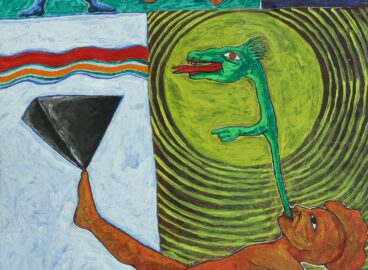
Evelyn Ashamallah (born 1948) presides over history from her small apartment in Talaat Harb in downtown Cairo. Across the past six decades, she has demonstrated a legacy of constant negotiation…
The 1960s and 1970s were a period of social and political transitions and transformations, marked by a series of historical events that would have profound effects on the future, our present. Central and Eastern Europe and the so-called Western world, and their geopolitical allies, were systemically transformed by the rivalry of the Cold War. In addition to the Vietnam War, the Asian political landscape was formed by the Cultural Revolution and hostile Sino-Soviet relations. Concurrently, most of Sub-Saharan Africa gained independence from colonial rule, marking the end of European empires. In Latin America, leftwing upheavals, U.S. intervention, and oppressive dictatorships were dominant in these decades. Moreover, the civil rights movement in the United States, along with the student and worker uprisings of May ‘68 in France, reverberated and sparked international solidarities across the world. This theme explores the mobilization of artists and collectives—and the avant-garde responses, often international in scope, that these engendered—during two pivotal decades of global history. Initially featuring essays limited to the 1960s and 1970s, this theme now spans to the present.
Evelyn Ashamallah (born 1948) presides over history from her small apartment in Talaat Harb in downtown Cairo. Across the past six decades, she has demonstrated a legacy of constant negotiation…
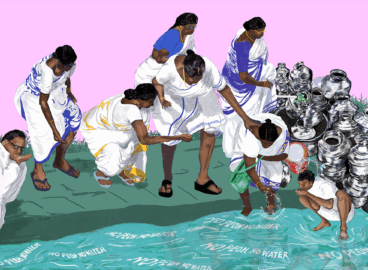
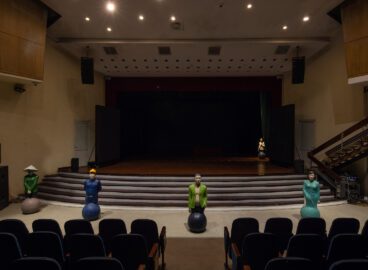
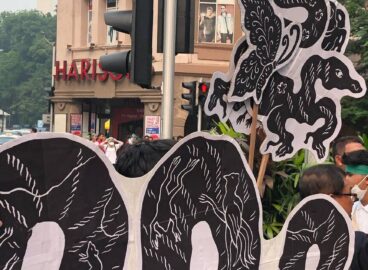
Sharon Chin is an artist and activist based in Port Dickson, Malaysia. Chin talks about how she has learned to cultivate a productive relationship between these two pursuits across two decades. The artist shares her thoughts about the locations and locutions of the political in her work.
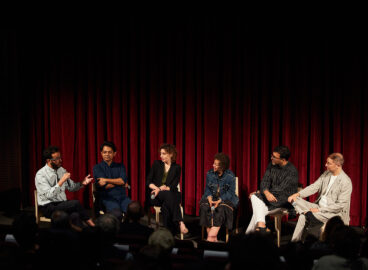
These presentations and panel discussion at MoMA brought together four filmmakers and artists who work in expanded documentary modes, using existing footage, archival research, interviews, and scripted narratives to produce imaginative accounts of transnational struggles, solidarities, and interventions. Using moving images, some of these practitioners interrogate the anti-colonial and anti-imperialist movements of the mid-late 20th…
In this essay, Guillermo S. Arsuaga presents a critical examination of architectural modernism through the lens of one of the most renowned examples of modern architecture in Africa: La Pyramide designed by Italian architect Rinaldo Olivieri in Abidjan, Côte d’Ivoire (Ivory Coast). His meticulous study of Olivieri’s unique photographic record of the project, the focus…
In the middle of debris and ruin, the Seville Oranges (naranj) were shining from behind dusty leaves. And again it was pickaxes that would come down on the rooftops, and the mud brick and dirt that would fall. —Ebrahim Golestan, From the Days Gone Narrate The wind is blowing through the street, the beginning of…
In this text, Dorota Jagoda Michalska writes about Erna Rosenstein (1913–2004), a Jewish Polish postwar artist. Michalska opens up a transnational perspective, inviting us to look at the artist’s oeuvre through the lens of global surrealisms, connecting her articulations of Holocaust trauma with the work of artists who have dealt with slavery, genocide, exile, and colonial dispossession.
Theresa Musoke (born 1944) is one of Uganda’s premier artists. Part of the earlier generation of artists trained at the Margaret Trowell School of Industrial and Fine Arts at Makerere University, author Serubiri Moses focuses on her concept of the wild and details her intellectual rebuttal of the school’s pedagogy.
This text considers the work of Vera Pagava, a Georgian artist who lived in exile in Paris, as an amalgamation of modernist and Georgian art historic references. Following Pagava’s life story from Tbilisi, where she was born, to Germany and later Paris, where she settled with her family in 1923 and lived until her death in 1988, this essay introduces her work in relation to that of various other Georgian artists, simultaneously tracing her path from figuration to abstraction.
In his screen-prints of the 1970s, South African artist Gavin Jantjes sought to convey the urgency and interconnectedness of global Black liberation movements. As an art student in exile in Hamburg, Jantjes dedicated his early practice to raising awareness of the brutal injustices of the apartheid system in South Africa, engaging with anti-colonial struggles waged by African and African-Diasporic populations around the world. In this essay, art historian Allison K. Young looks at a selection of early abstracted, dynamic compositions which evidence his belief in the connection between art and resistance, and his commitment to solidarity between localized struggles across the diaspora.
In this essay, Māra Traumane guides readers through the diverse, interdisciplinary practice of the Riga-based collective Workshop for the Restoration of Unfelt Feelings (NSRD), which operated from the end of the 1970s until 1989. NSRD was involved in the avant-garde music scene as well as in architecture, and their activities ranged from concerts and the production of record albums to performances, writing, and video art.
Zenta Logina (1908–1983) was a Latvian artist at work during the Soviet occupation. Her paintings, reliefs, and sculptural objects developed in a singular manner, as she broke away from the accepted framework of visual arts codified by the regime and crossed into the realm of contemporary art as we define it today.
In 1970, Johnson Donatus Aihumekeokhai Ojeikere, otherwise known as J.D. ‘Okhai Ojeikere (Nigerian, 1930–2014), made Fro Fro, the point of departure of this short text. Storyteller and lens-based artist Jumoke Sanwo reads this image, produced during Nigeria’s nationalist drive and considers Ojeikere’s subjects and their unapologetic defiance.