Tribute and The Modernist Constellations of Bertina Lopes
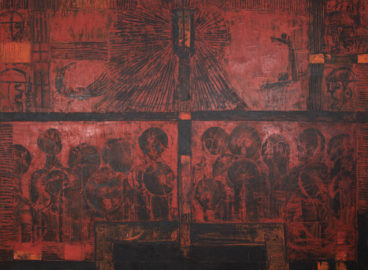
C-MAP Africa fellow, Nancy Dantas, reads Mozambican modernist Bertina Lopes’s anticolonial trajectory and long-distance nationalism in ‘Tribute to Amílcar Cabral’ (1973).
C-MAP Africa fellow, Nancy Dantas, reads Mozambican modernist Bertina Lopes’s anticolonial trajectory and long-distance nationalism in ‘Tribute to Amílcar Cabral’ (1973).
This year’s C-MAP seminar series, Transversal Orientations, comprised four panels that took place on Zoom in June 2021. This essay reflects on Acts of Transfer and the Repertoire, the second panel in the seminar series featuring Tsitsi Ella Jaji, Laura Anderson Barbata and Lina Lapelyte.
If landlessness is another condition that transforms Africans into wanderers, with nothing but their labor to sell for a pittance, then the genre of landscape painting in South Africa represents a space-time of possession and dispossession. Implicit in Gladys Mgudlandlu’s landscapes is a reminder of how the ownership of land has historically epitomized South African nationhood.
Estonian artist Sirje Runge’s (born 1950) visionary 1975 thesis project conceptualizes the dynamics between the needs of the individual and the overall logic and construction of the city space in late Soviet Estonia.
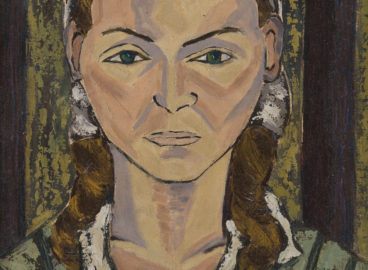
Inji Efflatoun fut une peintresse et une militante marxiste et féministe égyptienne. De juin 1959 à juillet 1963, elle fut emprisonnée par le régime nassérien en raison de son appartenance au parti communiste. Au cours de ces années, elle continua à peindre. Célébrés dès les années 1960, et aujourd’hui recherchés sur le marché de l’art, les tableaux de cette période sont souvent considérés comme les plus importants de son œuvre.
Celebrated as early as the 1960s, and highly sought-after on the art market today, Egyptian painter Inji Efflatoun’s production during her four years of incarceration by the Nasserite regime is often considered the highlight of her oeuvre.
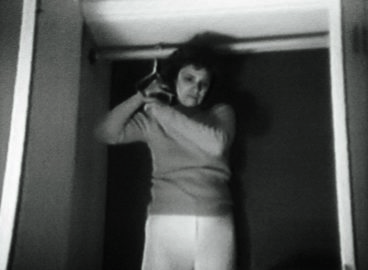
Widely distributed in recent years and now in MoMA’s collection, the two-minute video depicts Parente entering a closet and hanging up her sweater without first removing it from her body.
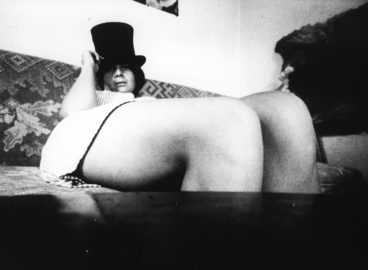
In the 1960s, Zenta Dzividzinska was one of the few women photographers in Riga whose work was highly regarded in the local and international photo club culture. Her collection of images capturing the daily life of three generations of women living in a small house in the country, have remained largely unknown until recently.
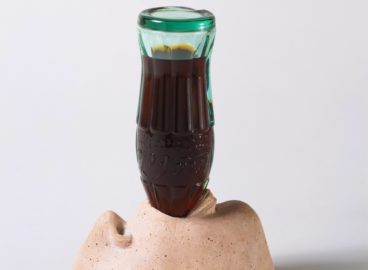
This text brings together Marisol’s sculpture Love and Frank O’Hara’s poem “Having a Coke with You” to explore their shared investigations of the personal in a capitalistic landscape, queer eroticism, global Cold War politics, and stoppered versus flowing communication.
This text is a shortened version of a presentation made to C-MAP Africa group in October 2020 on Mozambican modernist, Malangatana Valente Ngwenya.
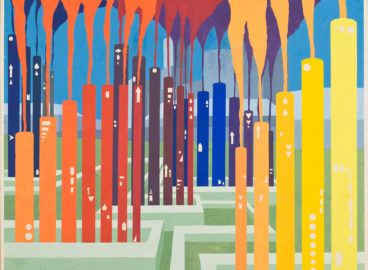
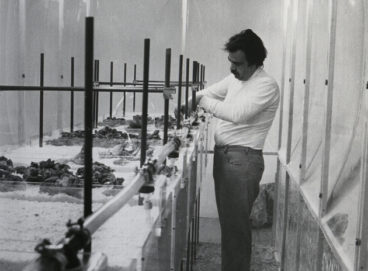
In 1972, Argentine artist Luis Fernando Benedit installed a hydroponic greenhouse environment, containing seventy tomato plants and fifty-six lettuce plants artificially supplied with light and a chemical growth formula, as well as an environment for white mice, “consisting of a maze, food source, material for burrowing, and an enclosed area for sleeping,” at MoMA.
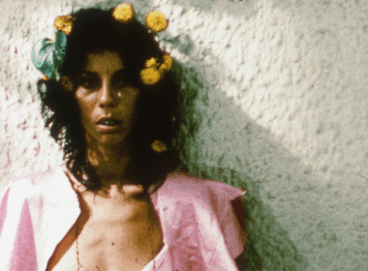
Shot in Rio de Janeiro’s poorest red-light district, and the city’s financial district, Neville D’Almeida’s Mangue-Bangue, presents a portrait of the “normality” of marginalized and criminalized bodies during Brazil’s military dictatorship.