Maximum Profit—Minimum Time
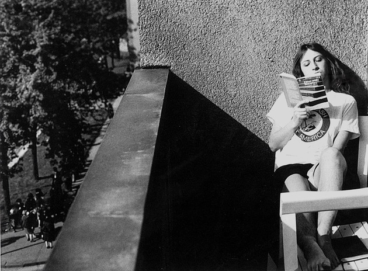
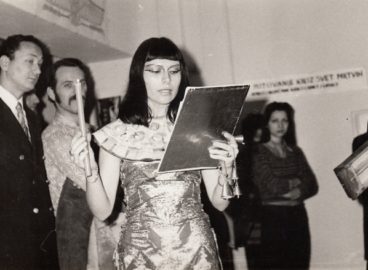
Raised during the socialist period of the former Yugoslavia, Irena Lagator Pejović examines two case studies of Yugoslav art and architecture that provide insights into Montenegro’s transition to neoliberalism.
Raised during the socialist period of the former Yugoslavia, Irena Lagator Pejović examines two case studies of Yugoslav art and architecture that provide insights into Montenegro’s transition to neoliberalism.
A major new publication, Art and Theory of Post-1989 Central and Eastern Europe: A Critical Anthology, presents key voices of this period that have been reevaluating the significance of the socialist legacy, making it an indispensable read on modern and contemporary art and theory. The following dialogue belongs to a series of conversations between artists and members of the C-MAP research group for Central and Eastern Europe at MoMA.
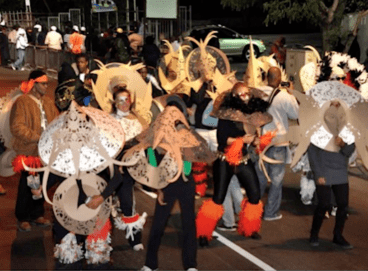
Branislav Jakovljević, Claire Tancons, and Anoma Pieris consider how concepts related to self-representation and performativity not only generate sites of resistance, but also recast our perspective on established discourses of the national, ethnic, diasporic, and racial.
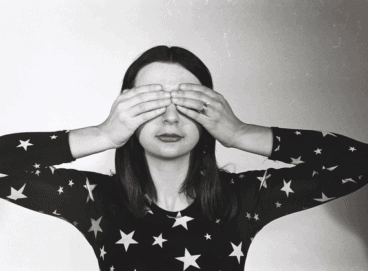
The essay explores the history of Galeria Adres, which the feminist Polish artist Ewa Partum launched in Łódź in 1972, and reveals the role of this avant-garde gallery in fostering conceptual art with an international reach during the period of state socialism in Poland.
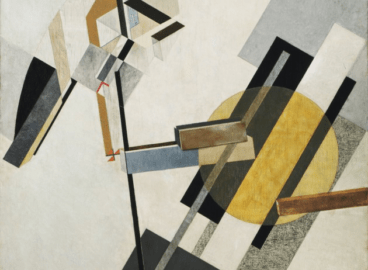
Proun 19D (1920 or 1921), one of El Lissitzky’s best-known works, offers different frames of interpretations closely related to the historiographical record of where and how the work has been displayed since its inception.
Karl-Heinz Adler used an abstract geometric approach in both his design and his fine art practices. Given state control and the resistance to alternative aesthetic forms, it is remarkable that Adler’s abstract geometries found their way into the everyday life of East German citizens.
A major new publication, Art and Theory of Post-1989 Central and Eastern Europe: A Critical Anthology, presents key voices of this period that have been reevaluating the significance of the socialist legacy, making it an indispensable read on modern and contemporary art and theory. The following dialogue belongs to a series of conversations between artists and members of the C-MAP research group for Central and Eastern Europe at MoMA.
A major new publication, Art and Theory of Post-1989 Central and Eastern Europe: A Critical Anthology, presents key voices of this period that have been reevaluating the significance of the socialist legacy, making it an indispensable read on modern and contemporary art and theory. The following dialogue belongs to a series of conversations between artists and members of the C-MAP research group for Central and Eastern Europe at MoMA.
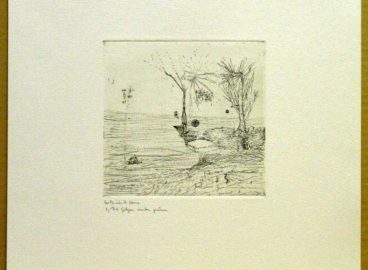
Carlfriedrich Claus is one of few artists who worked in East Germany that has work in MoMA’s collection. A portfolio of ten prints, together called Aurora, was acquired in 1980, just a few years after the prints were produced and nearly a decade before the Berlin Wall came down.
Jon Hendricks records his impressions from a research trip to Berlin and cities of the former East Germany, made with members of the C-MAP group for Central and Eastern Europe in June 2018. He highlights artists and works made in the GDR that particularly impressed him.
A major new publication, Art and Theory of Post-1989 Central and Eastern Europe: A Critical Anthology, presents key voices of this period that have been reevaluating the significance of the socialist legacy, making it an indispensable read on modern and contemporary art and theory. The following dialogue belongs to a series of conversations between artists and members of the C-MAP research group for Central and Eastern Europe at MoMA.
Alfred H. Barr, Jr. made a trip to Russia in 1927-28 to investigate the avant-garde, meeting with several Vkhutemas faculty while he was there.