Performing Identities: Self-fashioning in Visual Culture and Architecture

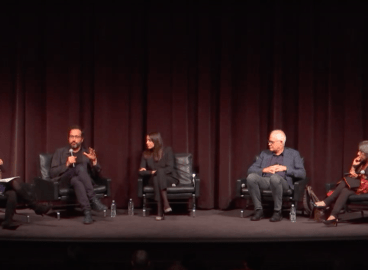
Branislav Jakovljević, Claire Tancons, and Anoma Pieris consider how concepts related to self-representation and performativity not only generate sites of resistance, but also recast our perspective on established discourses of the national, ethnic, diasporic, and racial. Organized by C-MAP Fellows Meghan Forbes (for Central and Eastern Europe), Iberia Pérez (for Latin America and the Caribbean), and Prajna Desai (for Asia), this seminar in summer 2018 sought to engage such questions as: What are some of the modes by which specific collectives perform resistance to national narratives? How are artistic and spatial practices employed to perform countermodes of identity, citizenship, or belonging (to a community, diaspora, nation)? What are the challenges faced by self-fashioning practices within architectural histories? How are tensions between local art histories and national narratives interpreted through acts of resistance? Given the relevance of diasporic narratives and aesthetics in times of increasing global displacement and inequality, how can these frameworks be mobilized at our historical juncture?

More in this theme

Subscribe to our newsletter

Related Content

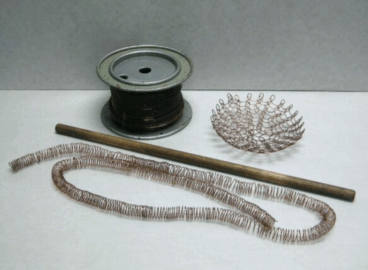
Open Loop: Reconsidering the Relationship Between Mexican Wire Baskets and Ruth Asawa’s Looped-Wire Sculpture

In creating a mesh by looping and interlocking single strands of wire, Asawa defined an intricate shape without precluding a view of its interior; instead, she foregrounded space itself. The artist had learned the basic premise of looping wire into permeable volumes during an American Friends Service Committee volunteer trip to Toluca, Mexico, where in 1947, she encountered—and briefly studied—a unique wire-basketry technique. While today, thanks to a series of critical analyses from 2006 onward, Asawa’s art sits comfortably within the trajectory of radical innovations of modernist sculpture, the Mexican origin and craft pedigree of her signature looped-wire creations are typically cast in a role subservient to the major narrative of the artist’s singular contributions.

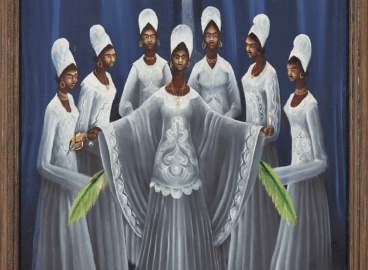
Female Approaches to the Divine: The Marian Representations of Norah Borges, María Izquierdo, and Miriam Inez da Silva / Acercamientos femeninos a lo divino. Las representaciones marianas de Norah Borges, María Izquierdo y Miriam Inez da Silva

“Mary is . . . a myth of a woman without a vagina,” proclaims queer theologian Marcella Althaus-Reid in Indecent Theology: Theological Perversions in Sex, Gender, and Politics. Moreover, Althaus-Reid declares that the adoration of the Virgin in Latin America in the…