Making Waves: A Conversation with Laura Anderson Barbata
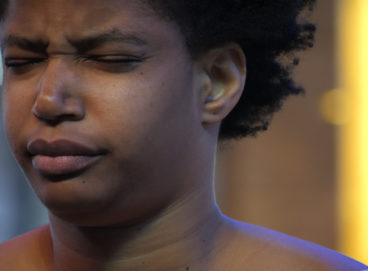
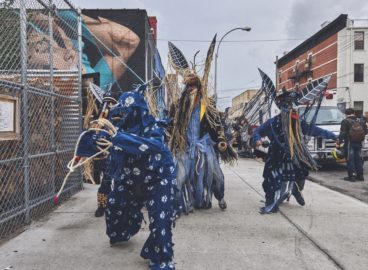
In this interview, Mexican-born, Brooklyn-based artist Laura Anderson Barbata highlights the importance of reciprocity and shared knowledge in her community-based, trans-disciplinary practice.
In this interview, Mexican-born, Brooklyn-based artist Laura Anderson Barbata highlights the importance of reciprocity and shared knowledge in her community-based, trans-disciplinary practice.
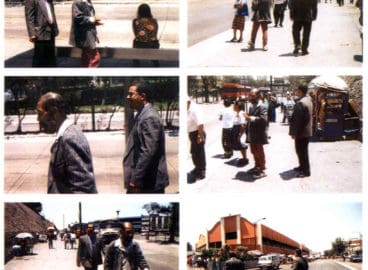
Alejandro Paz Navas’s The Bodyguard is a testament to a generation of artists who mobilized conceptual performances in public spaces to respond to the socio-economic changes in postwar Guatemala.
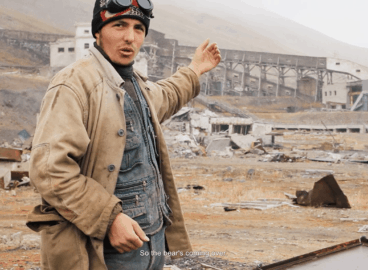
Artists reflect on the intersections between historic Soviet architecture and newly built infrastructures.
In this conversation the two discuss Pilar’s artistic formation; her use of family lore and fabulation in her interventions into the silences of the state archive; and her interests in science and digital technology.
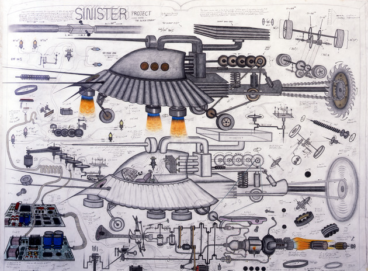
Responding with imagination to the brutality and violence of Sierra Leone’s civil war (1991-2002), Abu Bakarr Mansaray’s monumental drawing Sinister Project depicts a fictitious war machine with careful detail that reveals the artist’s background in science and engineering.
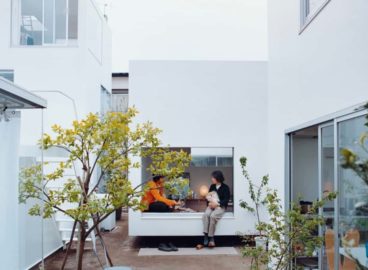
A look at the history of the modern house suggests that domestic living takes shape in the intermediate, and sometimes contentious, space between the aspirations of the dweller and architect.
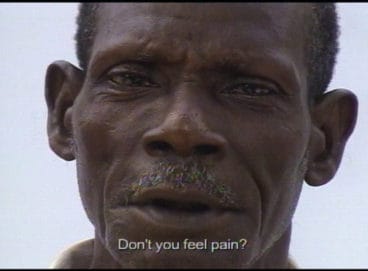
Addressing the history and impact of violence in Colombia, Juan Manuel Echavarría’s work does not represent violence as an abstraction but rather registers a tangible reality with a name and a face.
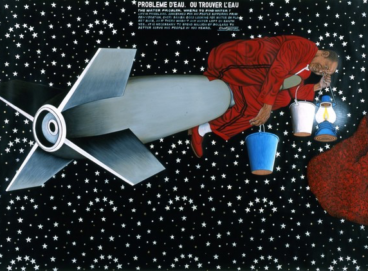
Chéri Samba likes to throw people off. The cartoon-like texts with direct messaging that frequently figure in Samba’s complex visual universes function to maintain authorial control. As the artist notes, they are “a way of not allowing freedom of interpretation to the person who looks at my painting.”
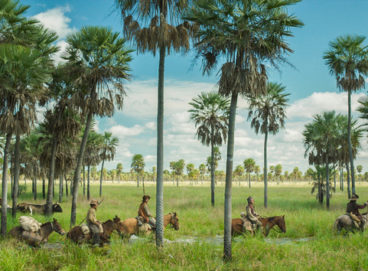
En mayo de 2019 la cineasta argentina Lucrecia Martel dio una charla en el MoMA, invitada por el Instituto Patricia Phelps de Cisneros Cisneros. Ya el primer largometraje de Martel, La ciénaga (2001), llamó la atención por la contundencia de sus imágenes, la puesta en tensión con el sonido, la exposición y espacios de quiebre en las relaciones de poder partiendo del núcleo familiar, y una sensorialidad extrema y extrañada. La idea de esta entrevista es dejar una marca escrita de su paso por el MoMA, donde habló sobre un esquema temporal alternativo basado en el sonido.
In May 2019, the Argentine filmmaker Lucrecia Martel was invited by the Patricia Phelps de Cisneros Institute to give a lecture at MoMA. Martel’s first feature film, La ciénaga (2001), attracted much attention because of the tension between its powerful imagery and soundscape, its exploration of power relations as rooted in the family, and an extreme and estranged sensorial quality. The idea of this interview is to leave a written trace of her visit to MoMA, where she spoke about an alternative, sound-based understanding of time.
Desde finales de los noventa, la obra de Regina José Galindo se ha caracterizado por denunciar distintas formas de opresión y violencia en la sociedad contemporánea. Uno de los temas recurrentes en su trayectoria artística ha sido el de las movilizaciones migratorias y el desplazamiento de centroamericanos como resultado de las guerras civiles que tuvieron lugar en Guatemala y otros países de la región en la década de los setenta.
Since the late nineties, the work of Regina José Galindo has been characterized for denouncing different forms of oppression and violence in contemporary society. One recurring theme in her artistic career has been the migratory mobilizations and displacement of Central Americans as a result of the civil wars that took place in Guatemala and other countries of the region in the 1970s.