The Harvest of Evelyn Ashamallah
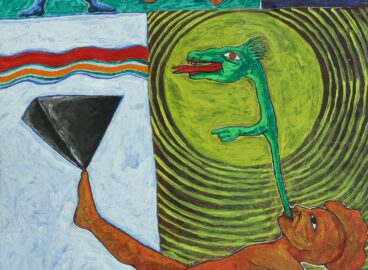
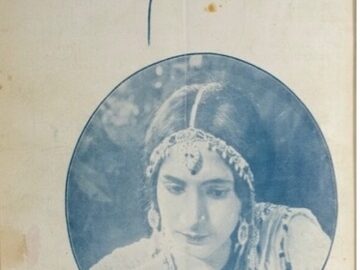
Evelyn Ashamallah (born 1948) presides over history from her small apartment in Talaat Harb in downtown Cairo. Across the past six decades, she has demonstrated a legacy of constant negotiation…
Both within and beyond the realms of art, debates on gender are proliferating and becoming increasingly politicized. Gender’s imprint on art is often characterized by the prevalence of time-based media like performance, the use of the artist’s body, interactivity, and interventions in public spaces, and can be contextualized by concurrent developments in the social sphere. Over time, singular, incipient conceptions of gender have given way to allow for multiple approaches and agents. Feminism, an important origin of discussions around gender, has, since the early 20th century, been pluralized and expanded to encompass many different feminisms. Critical race scholars and activists issued urgent revisions to suffragette movements, and continue to nuance movements toward gender equality. Equally imperative, transnational feminists challenge linguistic and geopolitical hegemony and the efficacy of liberal models of gender. Since the 1990s, queer, transgender, and non-binary communities have further illuminated these debates and destabilized the rigid binary of “Man” and “Woman.” More recently, in relation to gender, technological mediation and animal studies challenge the very meaning and form of the category of “human.” This Theme explores the vicissitudes of gender and its concomitant cultural effects.
Evelyn Ashamallah (born 1948) presides over history from her small apartment in Talaat Harb in downtown Cairo. Across the past six decades, she has demonstrated a legacy of constant negotiation…
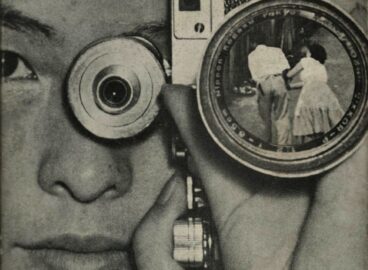
Toyoko Tokiwa (1928–2019) was born in Yokohama and grew up during the devastating years of war and occupation. Tokiwa’s Dangerous Poisonous Flowers deepens our understanding of the empathetic approach and exemplifies how the photobook served as its platform while also being a more democratic form of photographic expression. Unlike exhibitions, which are confined to specific spaces and audiences, the photobook allowed for broader circulation and accessibility, reaching viewers from diverse backgrounds.
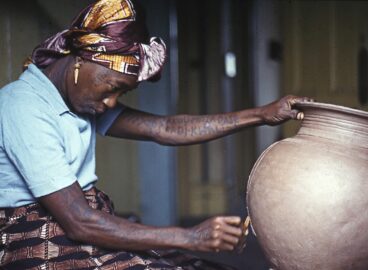
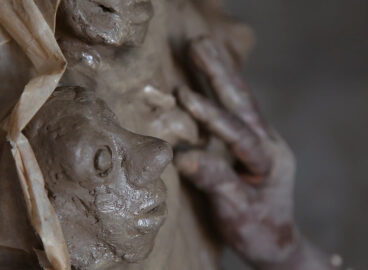
Born in the village of Kwali, Ladi Dosei Kwali (1925–1984), the pioneering Nigerian potter, grew up in a family in which it was the norm for women to make pots for practical use and sustenance. Although it was customary for mothers to teach this skill to their daughters, Kwali learned pottery from her aunt. She…
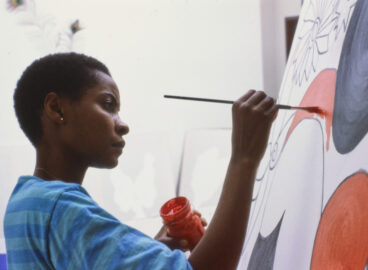
A few years after Algeria gained its independence from France in 1962, the artist Houria Niati (b. 1948) took up a position with the Ministry of Youth and Culture, where she taught painting, ceramics, and drawing to both adults and children. Art workshops were intended to help Algerians work through the trauma of the Algerian…
Since the 1990s, the Hindi film industry has undergone several transformations in response to socioeconomic and political changes in India. This is particularly a result of how the Indian nation-state and its film industries have entered into the global market. Though popular Hindi cinema has always circulated internationally through informal, ad hoc networks, during most…
Bombay cinema looms large over media and cinema studies in India even though the history of the Bombay film industry is more recent than the history of film culture in the Subcontinent. The Bombay film industry as we know it today consolidated during the 1950s in the wake of the massive political and economic restructuring…
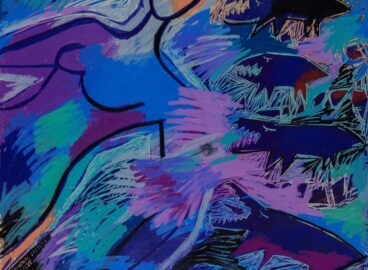
In the mid-1980s, over the course of three years and across three continents, feminist artist Everlyn Nicodemus (born 1954, Kilimanjaro, Tanzania) gathered together women to discuss their everyday experiences. From these conversations, which took place in Skive, Denmark; Kilimanjaro, Tanzania; and Calcutta (now Kolkata), India, she produced a series of seventy-five paintings and related poems that…
“Seyni Awa Camara doesn’t belong to any artistic school,” wrote art critic Massamba Mbaye in 2016. She resists any classification and has always considered herself a singular artist, whether in the context of her own country or in that of the international art…
This essay examines the practice of architecture and the roles assigned to female architects in Latvia in the 1950s to the early 1990s through the life and work of Latvian architect Marta Staņa. My initial encounter with Marta Staņa (1913–1972) and her work in architecture occurred in 2002 when, as a young architecture journalist, I…
This essay by feminist scholar and art curator Jana Kukaine explores the work of Latvian artist Daina Dagnija, who lived in exile in the United States after fleeing the Soviet occupation in 1944. While threading questions of migration and exile; memory, loss and belonging; and womanhood and mothering, Dagnija’s practice remains grounded in Baltic history,…
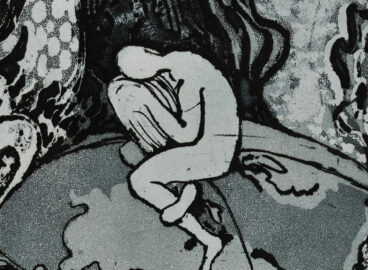
In the etching Youth (1965; fig. 1), a contemplative figure sits atop a globe, head resting on a knee, legs twisted together, arms tucked protectively into the body. The figure’s head, which is turned inward, counterposes the frontal, downcast face in the lower left foreground. It is this face that the etching’s maker, Ugandan artist…
Magdalene A. N. Odundo is a ceramic artist born in Kenya in 1950 but residing in Britain since 1971. Much has been made of her biography and the complexities of her education, training, and rigorous practice of creating beautiful vessels that speak to multiple associations and inspirations across the history of art and their resonances…