Jüri Arrak: Interpreting Visual Archetypes in Estonia
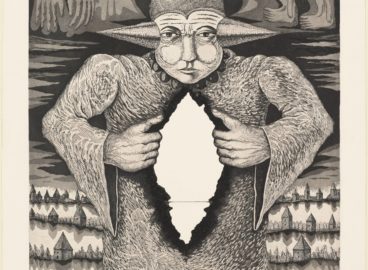
This essay looks at The Illusionist (1977), a print by Estonian artist Jüri Arrak in MoMA’s Drawings and Prints collection, and explores the larger context of the artist’s practice.
This essay looks at The Illusionist (1977), a print by Estonian artist Jüri Arrak in MoMA’s Drawings and Prints collection, and explores the larger context of the artist’s practice.
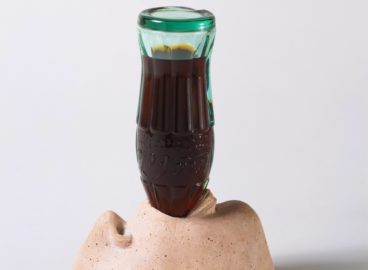
This text brings together Marisol’s sculpture Love and Frank O’Hara’s poem “Having a Coke with You” to explore their shared investigations of the personal in a capitalistic landscape, queer eroticism, global Cold War politics, and stoppered versus flowing communication.
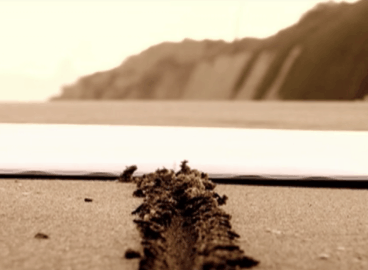
This conference series, organized by the Cisneros Institute, looks at the history of water management in the Americas through the interdisciplinary work of artists, theorists, historians, and local communities.
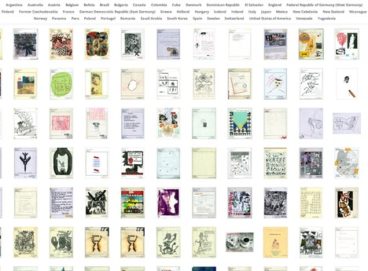
In the spirit of collectivity despite geographical distance, post invited contributions to create a “collective poem” based on the 1981 project Poema Colectivo Revolución by the artists’ group Colectivo 3.
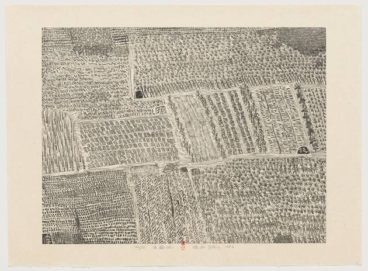
In Xu Bing’s Cropland, part of the Series of Five Repetitions (1987-88), Chinese characters double as landscape depiction, creating a liminal work that resonates between word and image, representation and abstraction.
The 1916 album War by Olga Rozanova, made in collaboration with Aleksei Kruchenykh, draws upon the visual and linguistic vocabularies of Futurism and Suprematism to explore the trauma of war.
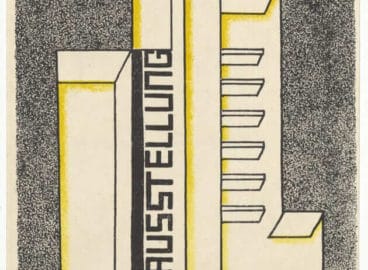
A postcard of a lithograph by Farkas Molnár (1897–1945) is one of a series of twenty postcards printed and marketed to publicize the 1923 Bauhaus exhibition in Weimar.
This essay is a rare glimpse into the alternative publications of East Germany in the 1980s. Through an overview of the magazines of the period, and a close reading of various images, advertisements, and visual poetry within them, this essay underscores the vibrancy of the underground print scene in the last decade of the GDR.
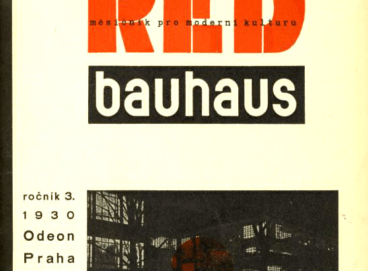
Bauhaus’ active members constituted an international network that included architects and artists from several countries in Central Europe, among them the former Czechoslovakia. The Czech and Slovak connections to the Bauhaus can be studied from various perspectives, and this essay focuses on the role of print periodicals in this history.
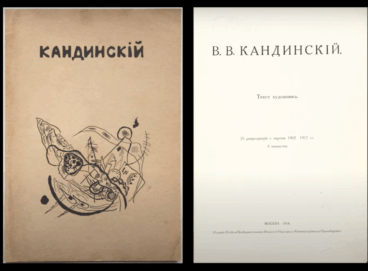
In 2018, on the eve of the Bauhaus centenary, the exhibition BAUHAUS ↔ VKhUTEMAS: Intersecting Parallels in The Museum of Modern Art Library explored the intersecting parallels of these two sites of radical experimentation. Its selection of ephemera, publications, and correspondence highlights the extensive circulation of ideas and people between the two institutions. The video here features Anna Bokov’s presentation at a “post presents” event organized in relation to the exhibition on October 17, 2018.
MoMA librarian Jennifer Tobias takes a recent trip to the Paper Conservation Lab as a jumping off point to explore the ins and outs of mechanical reproduction in the 1920s. Specifically, she takes a close look at a series of images in a set of avant-garde Czech magazines, to explore questions around how photographs were shared for publication across the country, and abroad.
Carlfriedrich Claus is one of few artists who worked in East Germany that has work in MoMA’s collection. A portfolio of ten prints, together called Aurora, was acquired in 1980, just a few years after the prints were produced and nearly a decade before the Berlin Wall came down.