Painting

Cultural Diplomacy and the Transnational Networks of the Gallery of Art of the Non-Aligned Countries “Josip Broz Tito”

The Non-Aligned Movement (NAM) was established in Belgrade, Yugoslavia, in 1961, during the peak of the Cold War, drawing inspiration from the principles of the 1955 Afro-Asian Conference in Bandung, Indonesia. Founded by developing countries opposed to formal alignment with either the United States or the Union of Soviet Socialist Republics, NAM advocated for national…

Beginning with Distraction

The prefix “para-” stages an ancillary relation: near, beside, beyond, off, away. Across the series of essays that comprise Paracuratorial Southeast Asia, we look at the “paracuratorial”: methods, sensibilities, frameworks, and practices that work within, alongside, or as supplement to exemplary curatorial frameworks such as the exhibition or the collection. The series of essays focuses…

The Cosmos and the Spiritual: A Fabric of Beliefs in the Work of Manuel de la Cruz González and Luisa González de Sáenz / El cosmos y lo espiritual: un entramado de creencias en las obras de Manuel de la Cruz González y Luisa González de Sáenz

“In cosmic beauty, there is no place for degrees or locations in time and space: Cosmic beauty is infinite. Words like pretty, ugly, tragic, funny, and useful—the abiding limits in the brief race toward death—on the other hand, are part and parcel of sensual reactions.”1Manuel de la Cruz González, “El arte como integración cósmica” [1957],…

Opening the Path for a Feminine Abstraction: Malika Agueznay and the Casablanca School

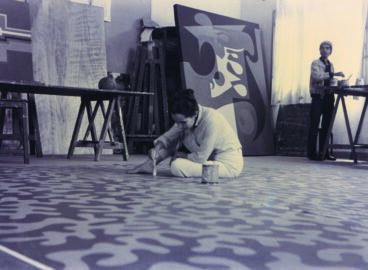
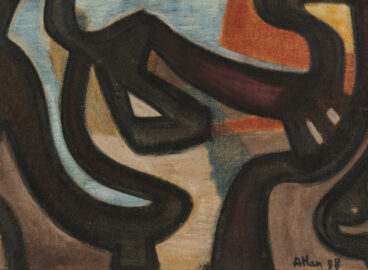
Malika Agueznay was among the first woman modernist abstract artists in Morocco. She was a student at the Casablanca École des Beaux-Arts from 1966 to 1970, during the experimental tenure of the faculty known as the Casablanca School. Shaped by the formative experience within the school, she has also distinguished herself by the ways her research emphasizes her female identity. Throughout her career, she has elaborated on seaweed as a central motif in her abstract practice. This motif is both deliberately evocative of femininity and rooted in her own female perspective.

post presents: Art, Resistance, and New Narratives in Response to the War in Ukraine

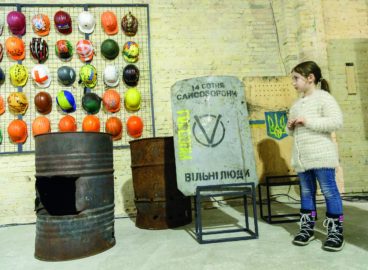
On the evening of October 12, 2022, post presents hosted presentations and conversations with artists, scholars, and curators about the artistic responses to the war in Ukraine, looking at the period between the Maidan Revolution, which was followed by Russia’s annexation of Crimea and occupation of Donbas in 2014, and the full-scale Russian invasion launched on February 24, 2022. This conversation is a continuation of the presentations and conversations commenced that evening.

Where the Lightnings Have Their Palace: Erna Rosenstein and Global Surrealisms

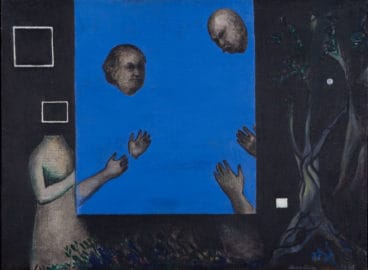
In this text, Dorota Jagoda Michalska writes about Erna Rosenstein (1913–2004), a Jewish Polish postwar artist. Michalska opens up a transnational perspective, inviting us to look at the artist’s oeuvre through the lens of global surrealisms, connecting her articulations of Holocaust trauma with the work of artists who have dealt with slavery, genocide, exile, and colonial dispossession.

Vera Pagava: A Miraculous Mirror

This text considers the work of Vera Pagava, a Georgian artist who lived in exile in Paris, as an amalgamation of modernist and Georgian art historic references. Following Pagava’s life story from Tbilisi, where she was born, to Germany and later Paris, where she settled with her family in 1923 and lived until her death in 1988, this essay introduces her work in relation to that of various other Georgian artists, simultaneously tracing her path from figuration to abstraction.

Pulling Meaning Out of Matter: Reformations of Ukrainian Cultural Heritage

This essay highlights the reconstruction of memory through material culture in Ukrainian museums since the 1990s. Within the context of the Bohdan and Varvara Khanenko National Museum of Arts, the Ivan Honchar Museum, and the Maidan Museum—all of which are in Kyiv, Ukraine’s capital—cultural workers have responded to politically salient events, including Ukrainian independence, the Maidan revolution, and the current war.