From Marketplace to Moral Economy
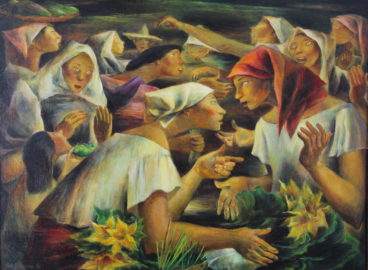
In an assiduous reading of Philippine modern artist Anita Magsaysay-Ho’s painting, In the Marketplace, art historian Chanon Kenji Praepipatmongkol discusses notions of gender, economic value, and spirituality.
Hinged on the transversal as a means to engage with and envision new networks and ways of thinking about modern and contemporary art, the 2021 C-MAP seminar series offered an exploration and interrogation of the intertwining of multiple coeval life-worlds through concepts of “extending across.” Included here are abstracts and recordings of the four panels held on Zoom on June 2, 3, 9, and 10.
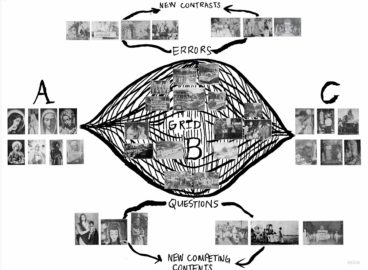
Treating as insightful case studies the records of miraculous, flower-flurried advents of Mary, Mediatrix of All Grace in the Mindanao Cross, a local newspaper founded by Catholic missionaries in Cotabato City, Mindanao, in 1948, researcher and curator Renan Laru-an initiates the notion of an exhibitionary heritage, articulating this proposition through a self-created grid.
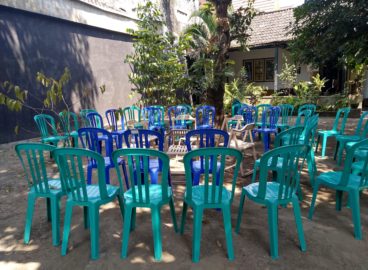
This conversation took place via email from December 2020 to February 2021. Though participants had already been acquainted for a long time before this, they began their exchange with casual personal introductions.
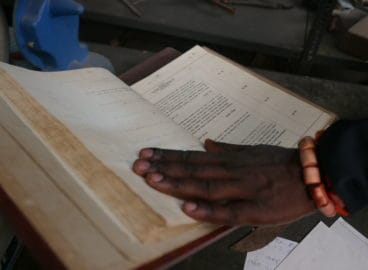
In this short virtual interview, C-MAP Fellow Nancy Dantas discusses Generator—a conceptual and infrastructural proposal, hinged on restitution—envisioned by curators Azu Nwagbogu and Clémentine Déliss as part of their long-term program for the AAF, Lagos.
In an effort to consider the variegated impacts of COVID-19—a virus with a global reach—we interviewed curators and directors from institutions around the world about how the pandemic has affected their institutions.
Achille Mbembe reflects on the global present and observes a recurring demand for durability in a planet in need of political and aesthetic repair.
By the 1850s, commercial photography studios could be found all across the globe, with people in disparate locations holding similar standing poses in front of standardized backdrops. The essay addresses different manifestations of early photography in eastern Africa, including how to critically approach the subjects pictured in colonial photographs created for international consumption.
Since the 1990s, Jean Depara has become famous for his portraits of brash city dwellers, and for his hedonistic depictions of their unbridled nightlife. This essay explores how Depara’s transgressive photographs emerged in the interstices of the otherwise very controlled Belgian colonial “image world.”
Mulk Raj Anand is perhaps best remembered as a cultural critic, writer, philosopher, and patron of the arts. But Rashmi Viswanathan turns her attention to his lesser known initiative to establish India’s First Triennale of Contemporary World Art in 1968. This essay explores Anand’s optimistic use of the triennale to shift international cultural relations and…
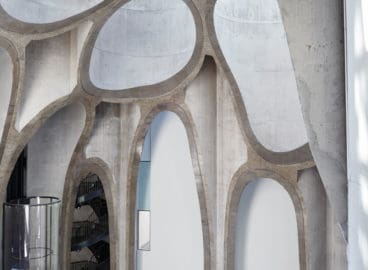
Riyaz Tayyibji considers the little-known architectural collaborations of Mahatma Gandhi, charismatic leader of the Indian freedom movement, in light of discourses of modern architecture. Weaving in discussions of phenomenology, material, and a discipline of privacy, the essay explores aspects of Gandhi’s philosophical and political thinking that propose a notion of the modern with an ethical and spiritual underpinning for 20th century architectural practice.
How does art history deal with the radical diversity of objects it encompasses?