A Look at the Czech and Slovak Avant-Garde within the Frame of the Bauhaus Network

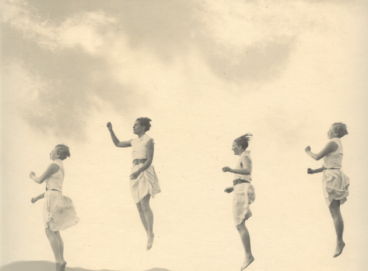
Bauhaus’ active members constituted an international network that included architects and artists from several countries in Central Europe, among them the former Czechoslovakia. The Czech and Slovak connections to the Bauhaus can be studied from various perspectives, and this essay focuses on the role of print periodicals in this history.

Vkhutemas + Bauhaus: On Common Origins, Different Futures, and Creation with Fire

In 2018, on the eve of the Bauhaus centenary, the exhibition BAUHAUS ↔ VKhUTEMAS: Intersecting Parallels in The Museum of Modern Art Library explored the intersecting parallels of these two sites of radical experimentation. Its selection of ephemera, publications, and correspondence highlights the extensive circulation of ideas and people between the two institutions. The video here features Anna Bokov’s presentation at a “post presents” event organized in relation to the exhibition on October 17, 2018.

Mechanical Reproduction from Premise to Press

MoMA librarian Jennifer Tobias takes a recent trip to the Paper Conservation Lab as a jumping off point to explore the ins and outs of mechanical reproduction in the 1920s. Specifically, she takes a close look at a series of images in a set of avant-garde Czech magazines, to explore questions around how photographs were shared for publication across the country, and abroad.

Baltic Exile and Emigrant Communities: Hell’s Kitchen Collective in New York

Andra Silapētere introduces two key figures of the Hell’s Kitchen group of Latvian exile artists in New York. The work of the group will be featured in an exhibition at James Gallery of the CUNY Graduate Center as part of a series of exhibitions on Latvian emigrant artistic communities, Portable Landscapes, organized by the Latvian Centre for Contemporary Art.

Empatía y complicidad en America’s Family Prison de Regina José Galindo

Desde finales de los noventa, la obra de Regina José Galindo se ha caracterizado por denunciar distintas formas de opresión y violencia en la sociedad contemporánea. Uno de los temas recurrentes en su trayectoria artística ha sido el de las movilizaciones migratorias y el desplazamiento de centroamericanos como resultado de las guerras civiles que tuvieron lugar en Guatemala y otros países de la región en la década de los setenta.

Empathy and Complicity in Regina José Galindo’s America’s Family Prison

Since the late nineties, the work of Regina José Galindo has been characterized for denouncing different forms of oppression and violence in contemporary society. One recurring theme in her artistic career has been the migratory mobilizations and displacement of Central Americans as a result of the civil wars that took place in Guatemala and other countries of the region in the 1970s.

Conversation: Dan Perjovschi with Roxana Marcoci

A major new publication, Art and Theory of Post-1989 Central and Eastern Europe: A Critical Anthology, presents key voices of this period that have been reevaluating the significance of the socialist legacy, making it an indispensable read on modern and contemporary art and theory. The following dialogue belongs to a series of conversations between artists and members of the C-MAP research group for Central and Eastern Europe at MoMA.

The Subject of Nonobjective Art

One hundred years ago, Kazimir Malevich’s Suprematist Composition: White on White and Aleksandr Rodchenko’s Non-Objective Painting no. 80 (Black on Black) hung side by side in the Tenth State Exhibition in Moscow. Now part of MoMA’s collection, the two monochrome interventions and their dynamic relationship shape our understanding of nonobjective painting in post-revolutionary Russia.