Malangatana as Anti/Colonial Subject (1959–74)
This text is a shortened version of a presentation made to C-MAP Africa group in October 2020 on Mozambican modernist, Malangatana Valente Ngwenya.
This text is a shortened version of a presentation made to C-MAP Africa group in October 2020 on Mozambican modernist, Malangatana Valente Ngwenya.
This conference series, organized by the Cisneros Institute, looks at the history of water management in the Americas through the interdisciplinary work of artists, theorists, historians, and local communities.
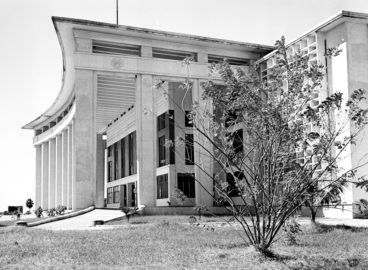
Da Hyung Jeong proposes a reading of Soviet-built structures in the region. He attempts to reveal the intentions behind their construction through an analysis of Soviet-era cultural criticism, socioeconomic studies, and encyclopedia entries.
James Barnor (b.1929) is a pioneering figure in Ghanaian photography. He documented the decolonizing processes and realities of the postcolonial context in Ghana, as well as the diasporic, metropolitan life in London.
The session explores New York as a site of intersections of artists from around the world who have passed through or settled in the city.
Andra Silapētere introduces two key figures of the Hell’s Kitchen group of Latvian exile artists in New York. The work of the group will be featured in an exhibition at James Gallery of the CUNY Graduate Center as part of a series of exhibitions on Latvian emigrant artistic communities, Portable Landscapes, organized by the Latvian Centre for Contemporary Art.
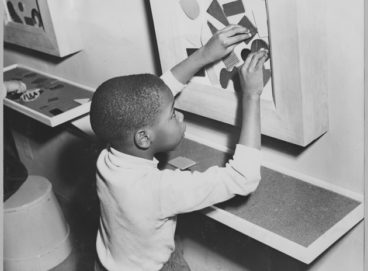
This text is a reimagined transcription of a series of conversations between Prabha Sahasrabudhe and Indira Gandhi that took place in 1960 at the Westbury Hotel in New York City.The reason for their meetings was to discuss bringing an adaptation of MoMA’s Children’s Art Carnival to India.
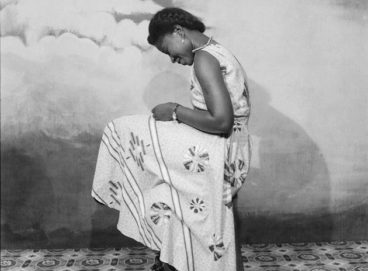
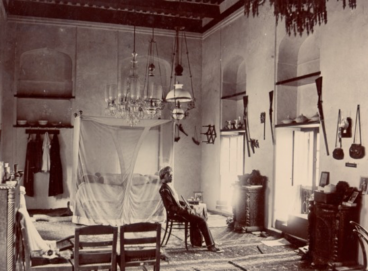
By the 1850s, commercial photography studios could be found all across the globe, with people in disparate locations holding similar standing poses in front of standardized backdrops. The essay addresses different manifestations of early photography in eastern Africa, including how to critically approach the subjects pictured in colonial photographs created for international consumption.
Mulk Raj Anand is perhaps best remembered as a cultural critic, writer, philosopher, and patron of the arts. But Rashmi Viswanathan turns her attention to his lesser known initiative to establish India’s First Triennale of Contemporary World Art in 1968. This essay explores Anand’s optimistic use of the triennale to shift international cultural relations and…
Karl-Heinz Adler used an abstract geometric approach in both his design and his fine art practices. Given state control and the resistance to alternative aesthetic forms, it is remarkable that Adler’s abstract geometries found their way into the everyday life of East German citizens.
The essay analyzes the resonances between the Brazilian artist Rubem Valentim and the Sudanese artist Ibrahim El-Salahi by focusing on two paintings belonging to MoMA’s collection. Deploying hybridized semiotics and different strands of painterly abstraction, the artists critically express their stance towards race, nationhood, and universal human values.
Fernando Bruno analiza la relación entre pintura y escritura en la obra de la artista argentina Mirtha Dermisache a finales de los sesenta y setenta, examinando el modo particular en que ésta se articula con algunas tendencias del arte argentino de la época.