Maximum Profit—Minimum Time
Raised during the socialist period of the former Yugoslavia, Irena Lagator Pejović examines two case studies of Yugoslav art and architecture that provide insights into Montenegro’s transition to neoliberalism.
Karen Grimson comments on the inaccessibility of national archives in Cuba and questions art’s ability to contest censorship and battle the state of “disinformation” that has afflicted Cuban society for decades.
Waldemar Cordeiro’s work shifts from his involvement with Concrete Art in São Paulo (of which he was one of the central artists, critics, and curators), to landscape design, a unique take on Pop Art through his “Popcretos,” and his final 1970s experiments with computer art. Cordeiro’s 1970s works were produced while Brazil was ruled by a military dictatorship that was skilled and innovative in its manipulation of mass media to control society and manage dissent.
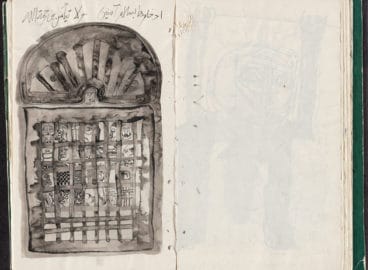
Thoroughly committed to novelty, invention, and atomic and space-age practices, the Crystalist group proposed completely new directions for art in Sudan in the 1970s. Their manifesto published in a Khartoum newspaper within the artistic context of the time introduces the Crystalist themes of transparency and dualism.
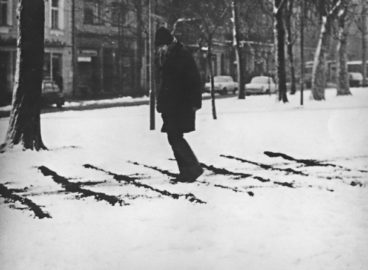
This series presents newly translated texts from the 1970s by Conceptual artists from Poland, Hungary, and Slovakia.
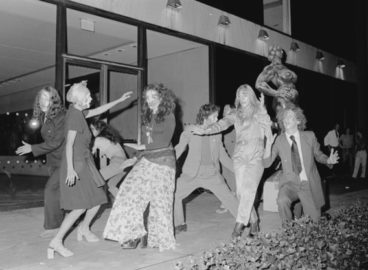
Experimenting with ideas of disruption, participation, community, and institutional critique, Argentine artist Marta Minujín blindfolded and “kidnapped” fifteen audience members as part of Kidnappening.
This series presents newly translated texts from the 1970s by Conceptual artists from Poland, Hungary, and Slovakia.
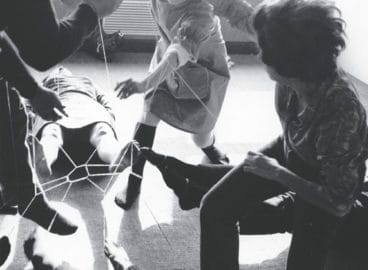
In the mid-1960s, Brazilian artist Lygia Clark turned from painting and sculpture to make participatory “proposições” (propositions). In the 1970s, she started “corpo coletivo” (collective body) experiments.
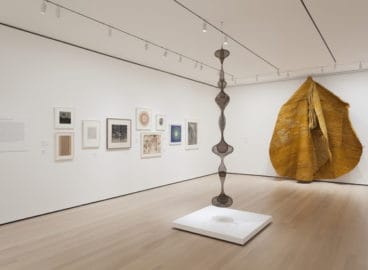
Yellow Abakan and Pregnant by Magdalena Abakanowicz engage with a diverse range of materials that address the limitations of working as a female sculptor under state socialism.
In the mid-1960s, Brazilian artist Lygia Clark turned from painting and sculpture to make participatory “proposições” (propositions). In the 1970s, she started “corpo coletivo” (collective body) experiments.
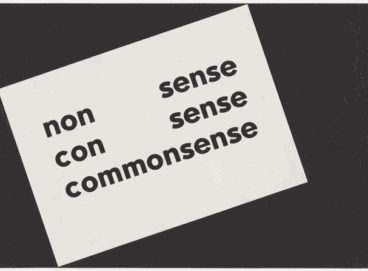
The essay focuses on four artist books by Mladen Stilinović (1947-2016). Several of the books are in an accordion-fold format, common for Stilinović’s photobooks and pamphlets that include drawings, word constructions, and collages.