Claudio Perna: The Son of the Immigrant
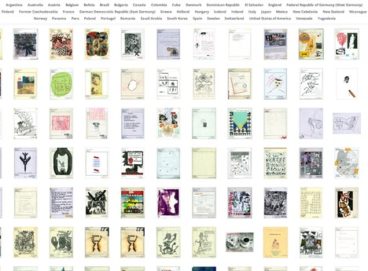
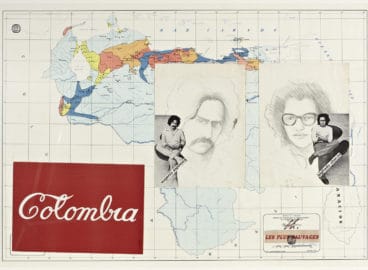
Beginning with the Autocurriculum, this essay examines Claudio Perna’s conceptual fixation on the fluid boundaries between documentation, artistic expression, and self-representation.
Beginning with the Autocurriculum, this essay examines Claudio Perna’s conceptual fixation on the fluid boundaries between documentation, artistic expression, and self-representation.
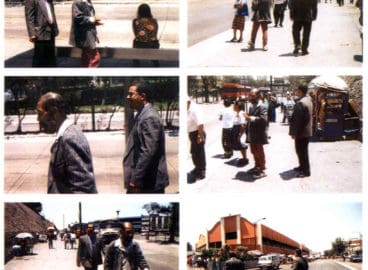
Alejandro Paz Navas’s The Bodyguard is a testament to a generation of artists who mobilized conceptual performances in public spaces to respond to the socio-economic changes in postwar Guatemala.
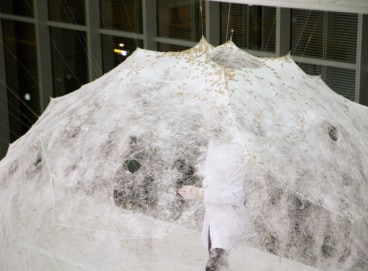
The exhibition Neri Oxman: Material Ecology shows the architect’s practice at the intersection of nature and computation. Her dynamic approach, though rooted in the modernist tradition, brings together material science, digital fabrication technologies, and organic design.
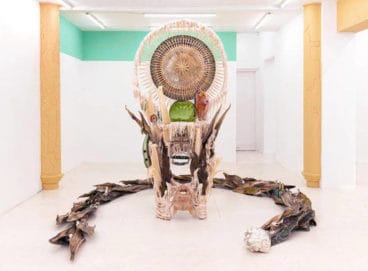
The performative installation made by Salvadoran American artist Guadalupe Maravilla, recently acquired by The Museum of Modern Art, offers a ritual space both for disease and healing.
In this conversation the two discuss Pilar’s artistic formation; her use of family lore and fabulation in her interventions into the silences of the state archive; and her interests in science and digital technology.
Is the globe of globalization the same as the globe of global warming?
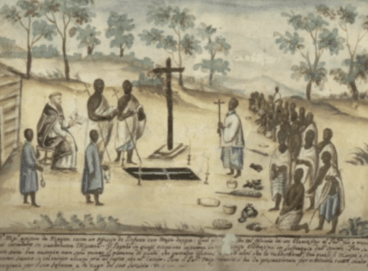
The panel examines historical cases of the migration of images and knowledge across cultures and temporalities.
In the spirit of collectivity despite geographical distance, post invited contributions to create a “collective poem” based on the 1981 project Poema Colectivo Revolución by the artists’ group Colectivo 3.
The move to diversify art historical narratives is often accompanied by a search for commonalities. Instead addressing a need to acknowledge radical difference and untranslatability, each presenter in this panel approached the question of the incommensurable, interrogating tensions between a global approach and site-specific study.
The session explores New York as a site of intersections of artists from around the world who have passed through or settled in the city.
A key contradiction of globalization is its facilitation of the movement of goods while the movement of people is increasingly restricted. Furthering this tendency, biometric technologies have expanded the traditional notion of the border, regulating the circulation of gendered, racialized, and classed bodies.
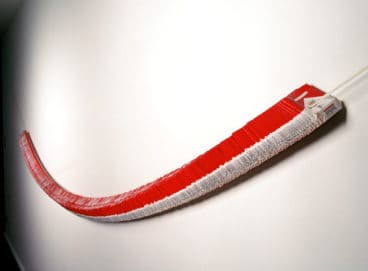
Made of 1200 cigarette packs, Jac Leirner’s Lung works both reflect the consumerism of which they are born but also transcend far beyond it while conjuring tropes from Minimalism, Conceptual Art, Pop Art as well as Neo-Concrete art of her native Brazil.