Africa

Cultural Diplomacy and the Transnational Networks of the Gallery of Art of the Non-Aligned Countries “Josip Broz Tito”

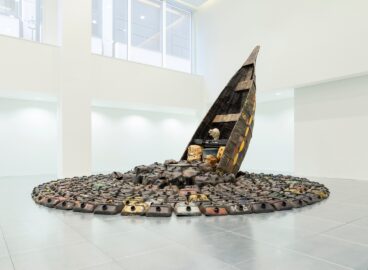
The Non-Aligned Movement (NAM) was established in Belgrade, Yugoslavia, in 1961, during the peak of the Cold War, drawing inspiration from the principles of the 1955 Afro-Asian Conference in Bandung, Indonesia. Founded by developing countries opposed to formal alignment with either the United States or the Union of Soviet Socialist Republics, NAM advocated for national…

post Presents: Unsettled Dust—Archives, Epistemologies, Images

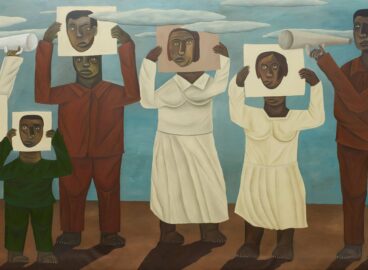
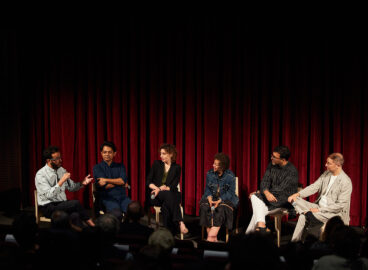
These presentations and panel discussion at MoMA brought together four filmmakers and artists who work in expanded documentary modes, using existing footage, archival research, interviews, and scripted narratives to produce imaginative accounts of transnational struggles, solidarities, and interventions. Using moving images, some of these practitioners interrogate the anti-colonial and anti-imperialist movements of the mid-late 20th…

Beyond the Modern Architect: La Pyramide, African Labor, and Rinaldo Olivieri’s Lens in Abidjan

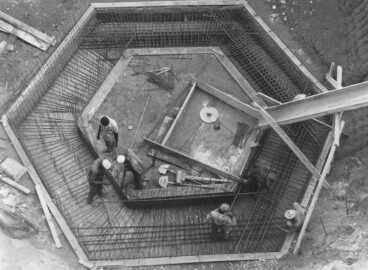
In this essay, Guillermo S. Arsuaga presents a critical examination of architectural modernism through the lens of one of the most renowned examples of modern architecture in Africa: La Pyramide designed by Italian architect Rinaldo Olivieri in Abidjan, Côte d’Ivoire (Ivory Coast). His meticulous study of Olivieri’s unique photographic record of the project, the focus…

Opening the Path for a Feminine Abstraction: Malika Agueznay and the Casablanca School

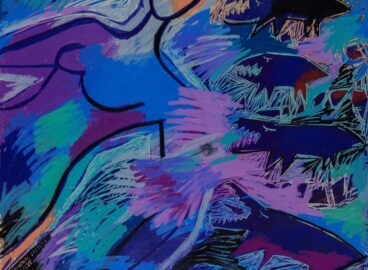
Malika Agueznay was among the first woman modernist abstract artists in Morocco. She was a student at the Casablanca École des Beaux-Arts from 1966 to 1970, during the experimental tenure of the faculty known as the Casablanca School. Shaped by the formative experience within the school, she has also distinguished herself by the ways her research emphasizes her female identity. Throughout her career, she has elaborated on seaweed as a central motif in her abstract practice. This motif is both deliberately evocative of femininity and rooted in her own female perspective.

Safi Faye: Selbé et tant d’autres

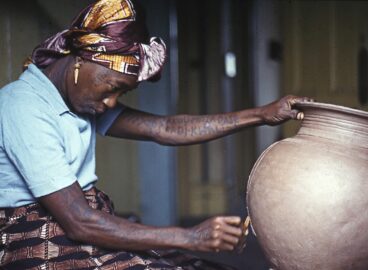
Artist and author Nene Aissatou Diallo revisits Safi Faye’s 1982 portrayal of Selbé, a thirty-nine-year-old mother of eight from Fad’jal as she and her compatriots go about their daily routines, carried by song. This feature reflects on the visual portrayal of Selbé, and Faye’s use of the camera in a documentary produced as part of the series As Women See It.