2010s

Dreaming of Food, Air, and Water: In Conversation with Rajyashri Goody 

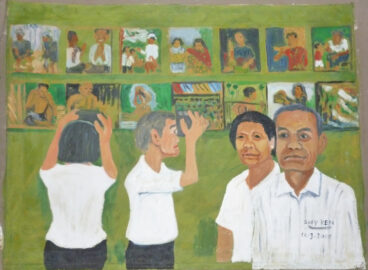
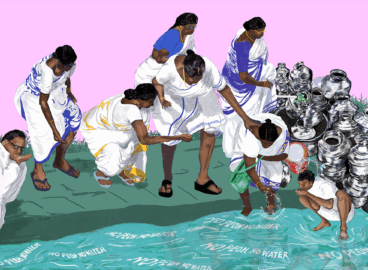
Rajyashri Goody (b. 1990) queries food and water politics, Ambedkarite Buddhist practices, literacy and Dalit literature, and mobility and place-making in the context of caste-based violence and Dalit resistance in India. She works primarily with paper pulp, clay, text, photography, and printmaking. What follows is an abbreviated account of Goody’s session with the C-MAP Bombay/Mumbai Group.…

Sabelo Mlangeni | Other Love Stories

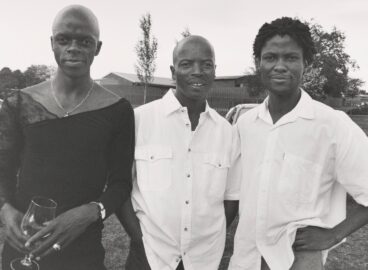
Two white shirts and a black top. One long-sleeve, two short-sleeve. Two bald heads and a crowned shrub of twists. Relaxed wrists and palms caressing a near-empty wine glass, some hands submerged in pockets, and another gently placed on a hip. Pressed cotton, embroidered lace. A ring, a watch, a necklace. Three radiant gazes. Mbulelo…

Tricky Terms, Coming Together: Arianna Mercado, David Morris, and Wing Chan and Carlos Quijon, Jr. in Conversation

In recent years, the practice of the Jakarta-based collective ruangrupa has gained exceptional traction in the contemporary art world. The book How to Pin Down Smoke: ruangrupa since 2000, published in 2025 maps out the genealogy of the animated and complex ecosystem that ruangrupa has cultivated and which has shaped the trajectory of the group’s practice. Carlos Quijon, Jr talks to the volume’s editors to discuss their editorial processes and considerations.

“What do we allow Dalit women to do?”: Shrujana Niranjani Shridhar in Conversation with Maya Varma; Part I

Maya Varma: To begin, I wanted to talk about where you come from. How has Mumbai shaped you as an activist and as an artist? What did the city mean to you growing up? Shrujana Niranjani Shridhar: For me, Mumbai has always been a working-class city. That’s its defining character. Any city that grows because people come…

“We’re simply trying to make sense of the country and the city in our own way”: Sameer and Zeenat Kulavoor in Conversation with Paul Galloway

This interview with the sibling duo behind Bombay Duck Designs explores their omnivorous curiosity for the diversity of visual cultures in India and suggests that an embrace of what may, on the surface, seem chaotic reveals opportunities for understanding and connection.  Paul Galloway: An aspect of your work that intrigues me is that it is steeped…

On Craft, Community, and Resilience: A View from the Living and Learning Design Centre

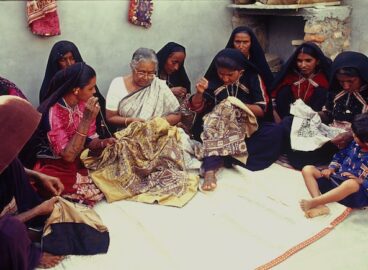
The concept of establishing a museum in a remote region of India—one that is not only geographically isolated but also prone to natural disasters such as earthquakes and cyclones—presents a complex set of challenges. Yet, it also offers a rare opportunity to engage deeply with the traditional knowledge systems of local communities. Located in Ajrakhpur,…

Au Sow Yee: The Fate of the Post-Heroic Perwira

Au Sow Yee’s three-part video series The Extreme Journey of Perwira and the Calm Sea: In 3 Acts (2019–22) begins with a karaoke session. An introductory xylophone sequence announces the unfamiliar Song of Departure: a mash-up of lyrics and melodies from a Taiwanese conscription tune and cinematic theme songs. In conventional karaoke fashion, synchronized textual cues (in Japanese, Chinese, and English) accompany a montage of images, and from the song’s main refrain, we learn of its premise as well as its protagonist: ぼくらのハリマオ | 我們的 Harimau—in English, “our Tiger.”