Magdalena Abakanowicz’s “Magical Things” at The Museum of Modern Art
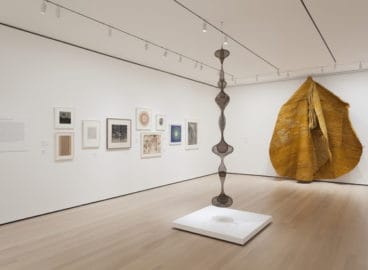
Yellow Abakan and Pregnant by Magdalena Abakanowicz engage with a diverse range of materials that address the limitations of working as a female sculptor under state socialism.
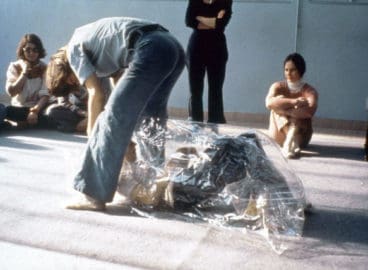
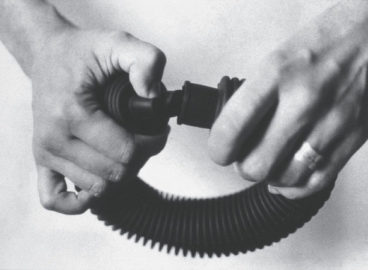
In the mid-1960s, Brazilian artist Lygia Clark turned from painting and sculpture to make participatory “proposições” (propositions). In the 1970s, she started “corpo coletivo” (collective body) experiments.
This essay considers Robert Rauschenberg’s 1975 residency in Ahmedabad, India, which fostered an environment of exchange and collaboration between Rauschenberg and the Sarabhai family.
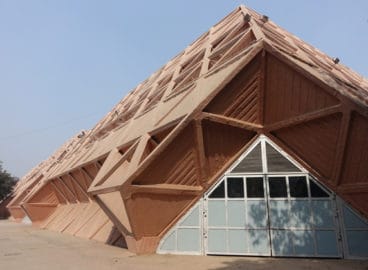
Despite protests and petitions from leading architects and architectural historians across the world, the Hall of Nations was surreptitiously demolished overnight on April 23-24, 2017. In this essay, Stierli bids farewell to architect Raj Rewal’s iconic building—a hallmark of modernist architecture in post-independence India.
At the age of sixty-seven, Polish artist Zofia Rydet began her photographic series Sociological Record in an effort to document Polish individuals in their private and deeply personal spaces.
In the mid-1960s, Brazilian artist Lygia Clark turned from painting and sculpture to make participatory “proposições” (propositions). In the 1970s, she started “corpo coletivo” (collective body) experiments.
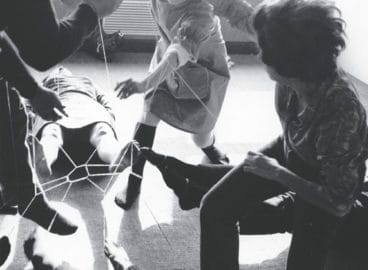
Curator Christine Macel traces the connections between Brazilian artist Lygia Clark’s fascination with psychoanalysis and subsequent exploration of the body and mind in art.
Curator Carolina Ponce de León discusses Colombian art history, describing how Conceptual art of the late 70s in Colombia differed from similar practices in South America.
Curator Christine Macel traces the connections between Brazilian artist Lygia Clark’s fascination with psychoanalysis and subsequent exploration of the body and mind in art.
Film historian and curator Ashish Rajadhyaksha discusses the need for a canon, the year 1971, cracks in the bastion of the nation(al), the belated effects of censorship, and the pluralization of globalities
Gego (1912–1994, Gertrud Goldschmidt), arguably the most influential Venezuelan artist of the twentieth century, was the critical counter-figure of Venezuelan Kineticism.