Ananya Sikand

Ananya Sikand is a Forsyth Visiting Graduate Student Fellow at the University of Michigan as well as a doctoral candidate in Art History and an affiliated student of the Department of Gender, Women & Sexuality Studies and the South Asia Center at the University of Washington. She researches modern and contemporary art, with a focus on South Asia within broader transnational Asian and global contexts. Her dissertation-in-progress, entitled “Muslim Unbelonging: Conceptual and Performance Art in Post-Independence South Asia (1970-2020)” reframes histories of conceptual and performance art of South Asia and its diaspora via the dialectic of belonging and unbelonging.

From 2024-26, she was the inaugural Contemporary and Modern Art Perspectives (C-MAP) Cities Fellow focusing on Bombay/Mumbai at the Museum of Modern Art (MoMA), New York. At MoMA, she conceived the research and programming activities of the C-MAP Bombay/Mumbai group and co-edited the museum’s research platform post.moma.org. Most recently, she co-organized the C-MAP Seminar Assemblies in Uncertain Times as well as the CAMP Study Day and performance Reading Listening Seeing Bombay Tilts Down in conjunction with the exhibition Video After Video: The Critical Media of CAMP. She also contributed research towards the upcoming exhibition Nilima Sheikh Fractured Skies.

Sikand earned her MA in Contemporary Art and Art Theory of Asia and Africa at SOAS, University of London, and has previously worked at the Seattle Asian Art Museum, USA; the Museum of Fine Arts, Boston, USA; the Siena Art Institute, Italy; and the Chhatrapati Shivaji Maharaj Vastu Sanghrahalaya (formerly the Prince of Wales Museum), India.

Contributions

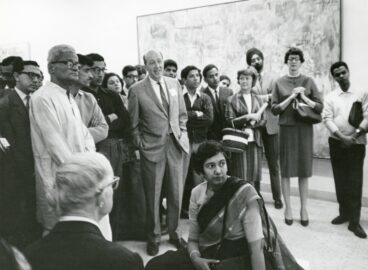
In Memoriam: Jay A. Levenson (1948–2026)

Jay A. Levenson, esteemed Director of the International Program at The Museum of Modern Art and beloved colleague, friend, and mentor, passed away in Mumbai in February 2026. It is with great sadness that we mark his untimely death. Levenson joined the Museum in 1996 and led its International Program for three decades, playing a…
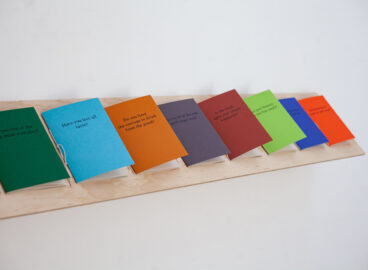
Healing in Community: A Conversation with aqui Thami 

aqui Thami is a Thangmi woman of the Kiratimma first peoples of the Himalayas. Her practice positions art as a medium of healing in community, grounded in social exchange, participation, and collaboration. Spanning ceremonial interventions, performance, drawing, zine-making, fly-posting, and public intervention, her interdisciplinary work is often self-funded and collectively realized. Her artistic pursuits are…

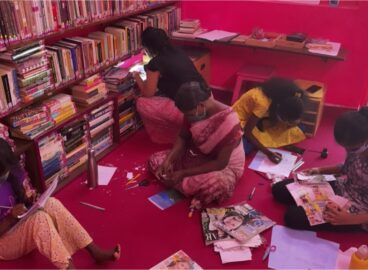
Dreaming of Food, Air, and Water: In Conversation with Rajyashri Goody 

Rajyashri Goody (b. 1990) queries food and water politics, Ambedkarite Buddhist practices, literacy and Dalit literature, and mobility and place-making in the context of caste-based violence and Dalit resistance in India. She works primarily with paper pulp, clay, text, photography, and printmaking. What follows is an abbreviated account of Goody’s session with the C-MAP Bombay/Mumbai Group.…

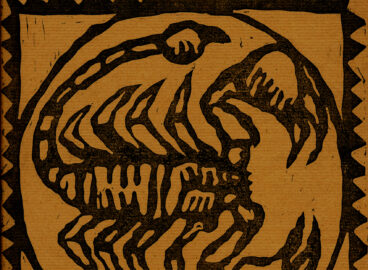
On Vrishchik: A Conversation with Gulammohammed Sheikh 

Gulammohammed Sheikh (b. 1937) is an artist, pedagogue, and writer known for his prolific career across practices that include curating and publishing. Sheikh taught art history and painting at the Faculty of Fine Arts at the Maharaja Sayajirao University of Baroda—the foremost institute for avant-garde practice during the post-Independence period—for almost three decades, spearheading an…

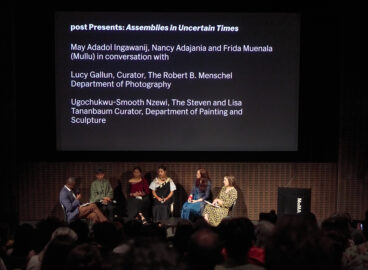
post Presents: Assemblies in Uncertain Times

This public program brought together Nancy Adajania, May Adadol Ingawanij, and Frida Muenala from Mullu for an evening of inquiry into forms and practices of gathering. The speakers, who represent diverse practices in the cultural fields—from art making to curation to institutional leadership—and operate across vast geographies, unpacked their different approaches to assemblies. Among the…