aqui Thami is a Thangmi woman of the Kiratimma first peoples of the Himalayas. Her practice positions art as a medium of healing in community, grounded in social exchange, participation, and collaboration. Spanning ceremonial interventions, performance, drawing, zine-making, fly-posting, and public intervention, her interdisciplinary work is often self-funded and collectively realized. Her artistic pursuits are not bound by exhibition-making, but extend into long-term, community-led, and socially engaged processes. She founded Sister Library, the first traveling community-owned and community-run feminist library in South Asia, conceived as an evolving artwork and site of care, mutual aid, and knowledge exchange. She also co-runs Bombay Underground and Dharavi Art Room. Across her practice, she engages histories of colonialism, violence, and resilience. What follows is an abbreviated account of aqui’s session with the C-MAP Bombay/Mumbai Group.
Ananya Sikand: Today we’re joined by aqui Thami, whose talk will reflect on building cultural and community infrastructures from the margins through Sister Library, Bombay Underground, Bombay Zine Fest, Dharavi Art Room, and her wider artistic practice. Speaking from her position as an adivasi person,1An Indigenous person from the Indian Subcontinent. aqui traces how art becomes a site of healing, memory, and collective survival amid the ongoing realities of caste violence, racism, displacement, and erasure. Moving between personal narrative, grassroots organizing, publishing, pedagogy, and studio practice, she considers what it means to create space outside institutional permission and what communities teach us about care, authorship, and belonging. Rather than offering fixed conclusions, her presentation is an invitation to think together about culture as something lived, shared, and continually rebuilt through relationships.
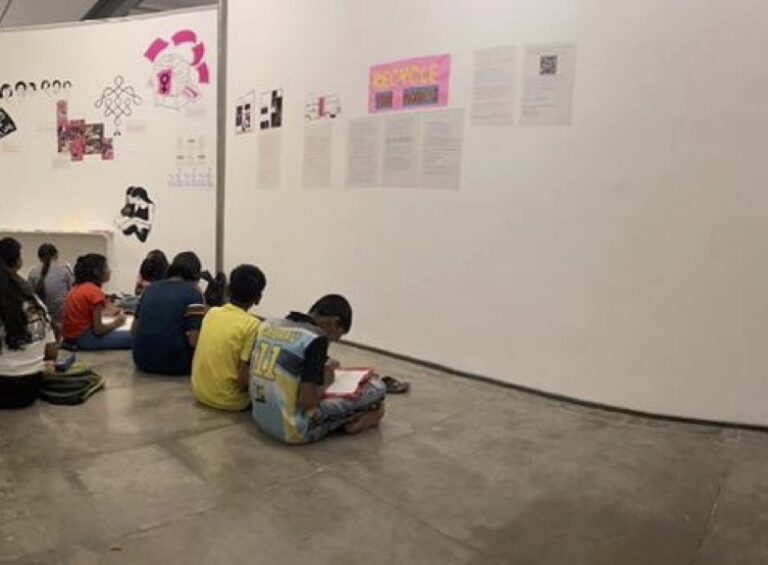
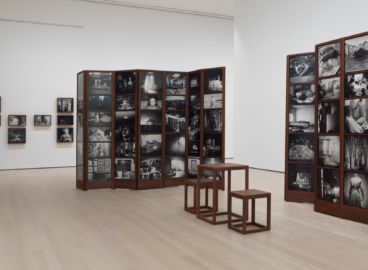
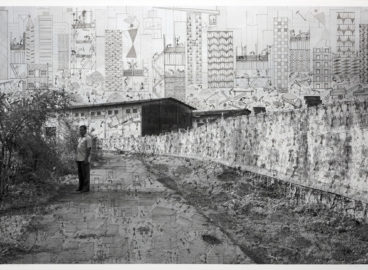
aqui Thami: I want to start with this image of our kids with parallel universe (2023), a work we made for Chemould Prescott Road, one of the oldest private art galleries in India (fig. 1). It was a big shift for us—from the street into a gallery. It was wonderful that they made space for us to explore what a parallel practice and universe look like.
I also want to say sewa to you all. This is how we, in Thangmi Kham, the language of my people, say “I see you.” I want to acknowledge my ancestors, elders, and spirit guides; the sky above me, the land below me, and the air and water surrounding me; and you, for bringing us together to witness each other even though we are in faraway continents.
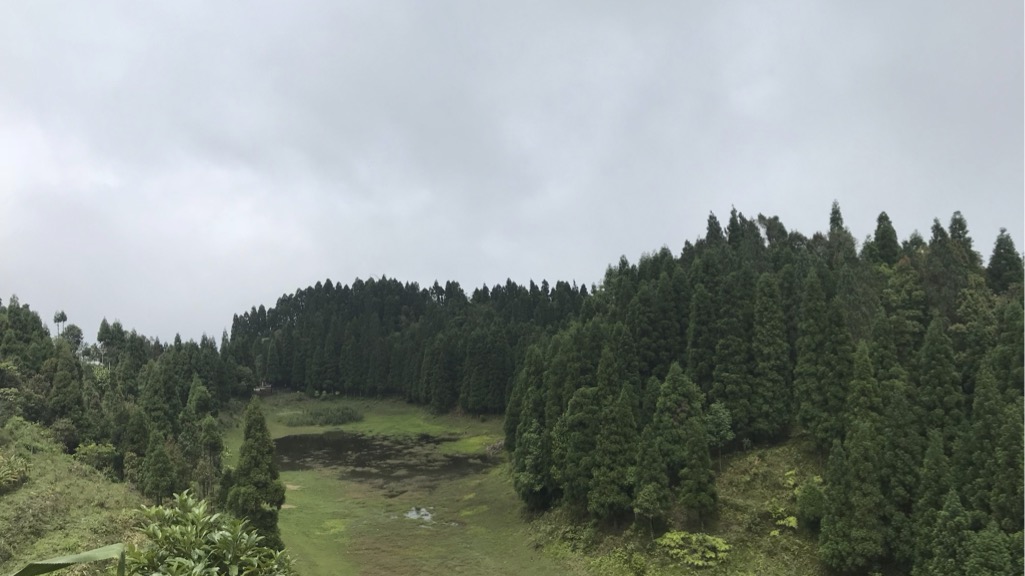
I am aqui; Thami is my people. Here are images of the lands that I come from and that made me (figs. 2a–b). These lands are governed by caste, specifically the Nepali-speaking caste Hindu community. The hierarchy of caste ensures that Indigenous peoples are cast outside of it. A marker of our community is our language, which stems from other Indigenous languages rather than from Indo-Aryan ones. According to Hindu scripture, Indigenous peoples are without souls; therefore, we are outside the philosophy of karma whereby we can be reborn into a higher caste order in our next life depending on the karma of this life. Thus, we are completely absolved of the possibility of being reborn—manifested in the way that we’ve been treated for many decades—subject to genocidal and ongoing violence. We are among the world’s most endangered communities, consisting of approximately 30,000 people with 10,000 speakers of our language.
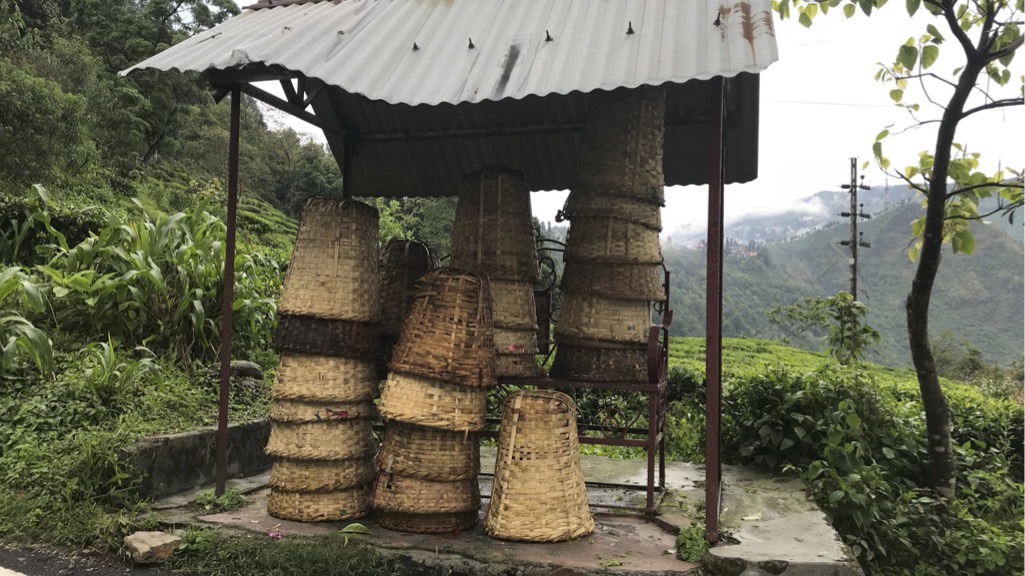
My mountains are also consumed by tea plantations. The British started the one I am from. My great-grandparents were sold into the plantation as slaves, and my family is still there—they’re survivors of plantation and militarized violence. Because my parents are land defenders, I was able to leave my home, land, and community at age 15. I grew up in the mainland and had to parent myself at a precarious age, as a young teenager, especially because native children are among the most trafficked communities in South Asia. If you go to any red-light district, for example, Kamathipura in Bombay, you will see Indigenous and Dalit girls and women—our bodies are treated with disgust in the mainland. Having survived all of this, it makes sense why I wanted to create safer spaces.
People come to Bombay because it is the so-called city of dreams. But there’s also a huge gap between how we experience our city and how the city is outside of us. As artists, we are allowed to be in a space where we are outsiders and to live in the city of outsiders. Bombay Underground began as a refusal of and resistance to this separation. Because we were made to feel like we shouldn’t exist in certain spaces, we started creating others where we could gather, think, talk, be together, and collectively care for each other as well as the city.
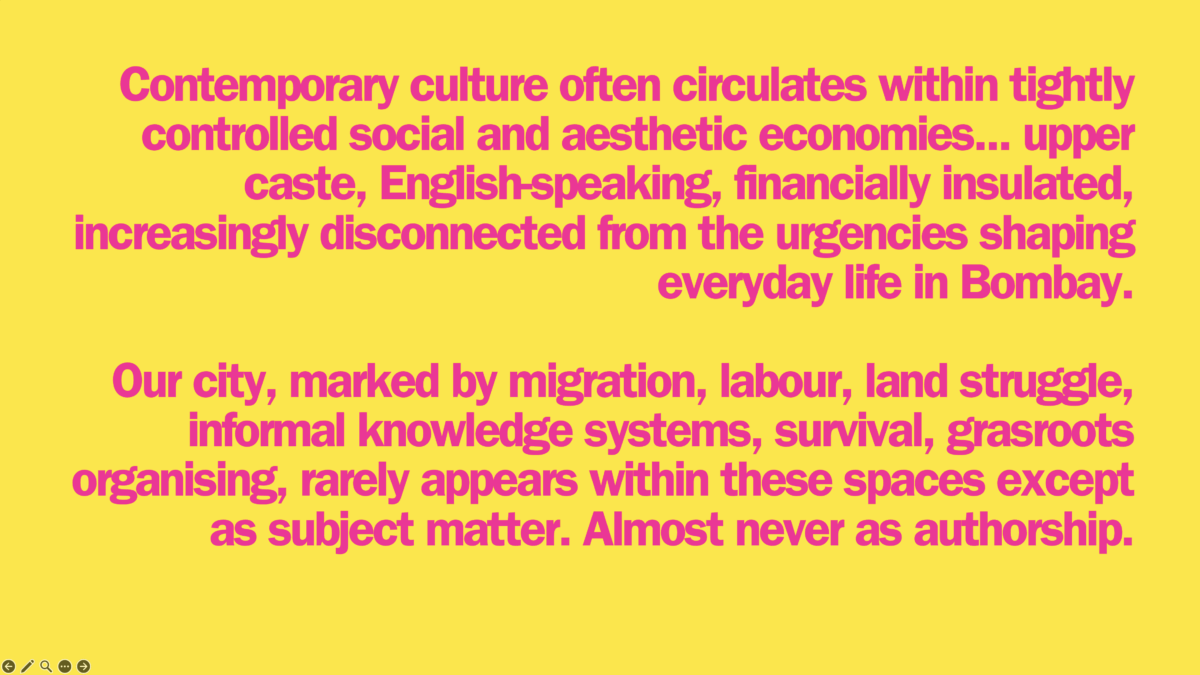
Bombay Underground is a space of collaboration with grassroots movements, such as Indigenous resistance movements, which often have no funding so there’s no communication of what’s really happening in the Northeast or in other regions—or even in other parts of Bombay. We collaborate to make posters and zines, to collect funds, and we take to the streets. We work alongside bookwallas, the booksellers of Bombay, because as the city has shifted and changed, it’s become more pristine and untouched by people like us. Bombay fed me culturally; it gave me the possibility to dream, to read and learn, and this happened in the street with the bookwallas, who recommended books to me. Though they may not have formal educations, they know their books. They used to say, “If you liked bell hooks, then you’ll also like Patricia Hill Collins.” That is how I learned. To see these booksellers thrown off the streets and replaced by big fancy bookshops is very sad. So we bought books from them to create neighborhood reading spaces, and this is how Sister Library came to be.
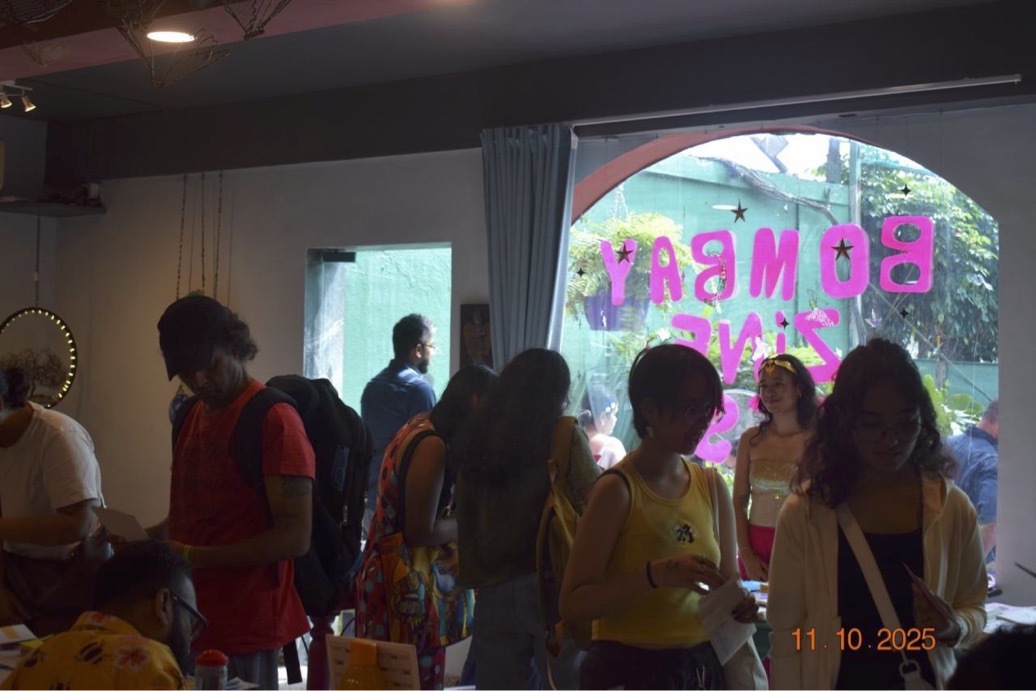
Through Bombay Underground, we started Bombay Zine Fest (fig. 4), now in its 10th year. Zine Fest is completely independent, without external funding or advertisement. Everything is from the ground up and via word of mouth. We’ve been very blessed to have thousands of people coming to Zine Fest and we [my collaborator Himanshu S and I] always find places to host us. Himanshu and I have built a lot of things together because we come from precarious backgrounds and don’t have the same relationship to art practice, fame, and wealth that others we know do.
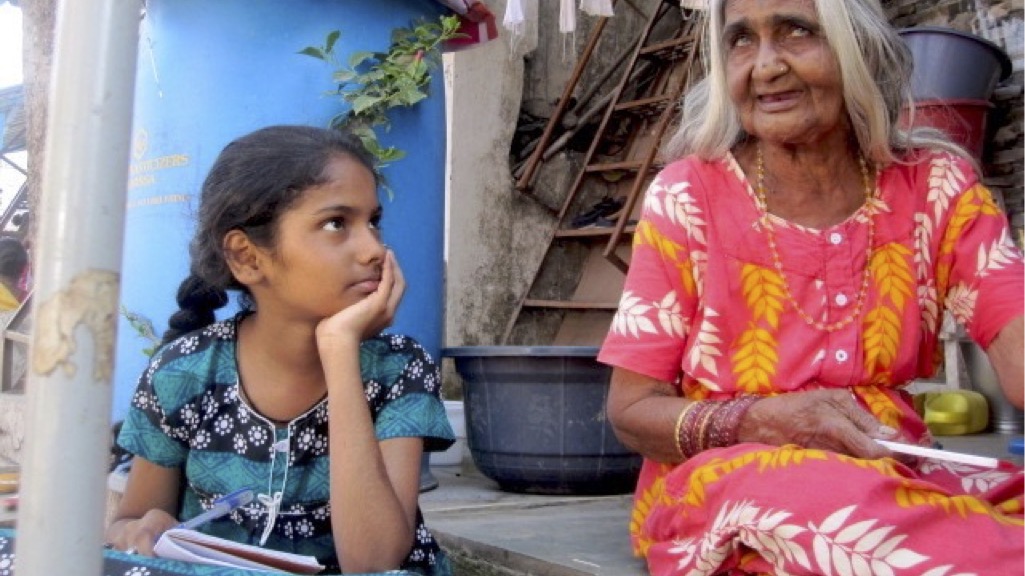
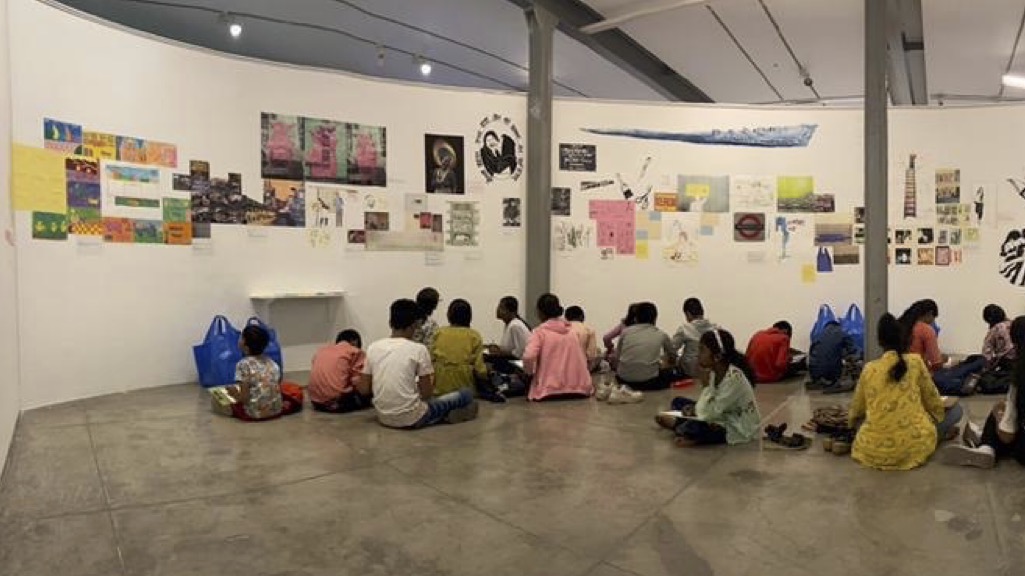
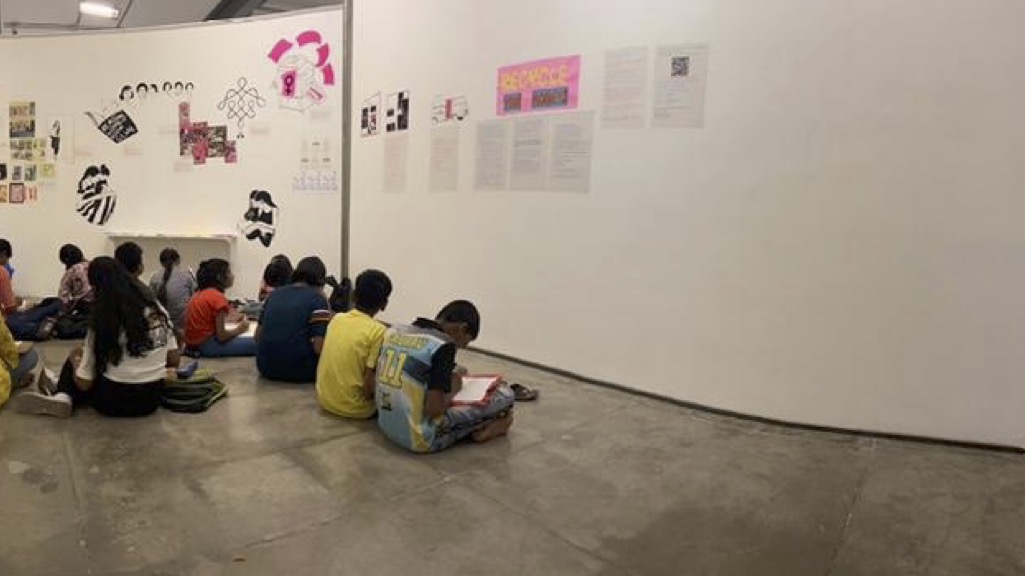
Here’s a picture taken outside the Dharavi Art Room, where kids document lived experiences and histories of migration of women in Dharavi (fig. 5). Storytelling about family typically happens from the male perspective, but women live very different lives. So far, we’ve worked with over 10,000 children, and the Art Room is a space that is loved by the community. Early on, we used to move from one space to another, from the Maharashtra Nature Park to the bus stop, but as our kids got older, we noticed that the girls were uncomfortable in such public spaces. Our current space, where we’ve been for the past 10–12 years, was offered to us by one of the parents. It’s just above their house. Over the years, we’ve seen our kids growing from little babies, whose elder siblings would carry them to the Art Room, to finishing university—we’ve been with them throughout.
Being in Dharavi, and coming from precarious backgrounds ourselves, we understand what it means when people from outside come to spaces like this, and how uncomfortable it can be. We specifically created the Art Room for the women and children of the community, because they lack spaces where they can go and do whatever they want. The Art Room is a safe space—the kids know they won’t be abused here. We have a library and art classes, but more importantly, it’s a space of possibility where they can transcend and dream beyond whatever they’re facing. We go on field trips to museums, etc., to show the kids that Bombay is also their city. Something you notice in Dharavi is that locals never leave—or if they do, it’s only to go to their villages.
Over the years, the Art Room has become an artist-run center and community archive. Because Dharavi is in the center of the city, it’s prized real estate, and there’s a lot of changing hands in who the owner or so-called owner of the land is. People are always living in insecurity or being displaced. Our community in Dharavi, our kids, are told that they “live like cockroaches so it’s better to move far away.” These are the kinds of things they are told as their houses are being demolished. When they grow up and can return to Dharavi, they can look back at the images they were working on, at the exhibitions they made in the space, and remember what it meant to them and what Dharavi looked like to them, as opposed to what they are told it is. The Art Room has also become a space where people with differing ideologies and religious beliefs can come together to see each other as collaborators and friends rather than blindly participating in acting out against each other.
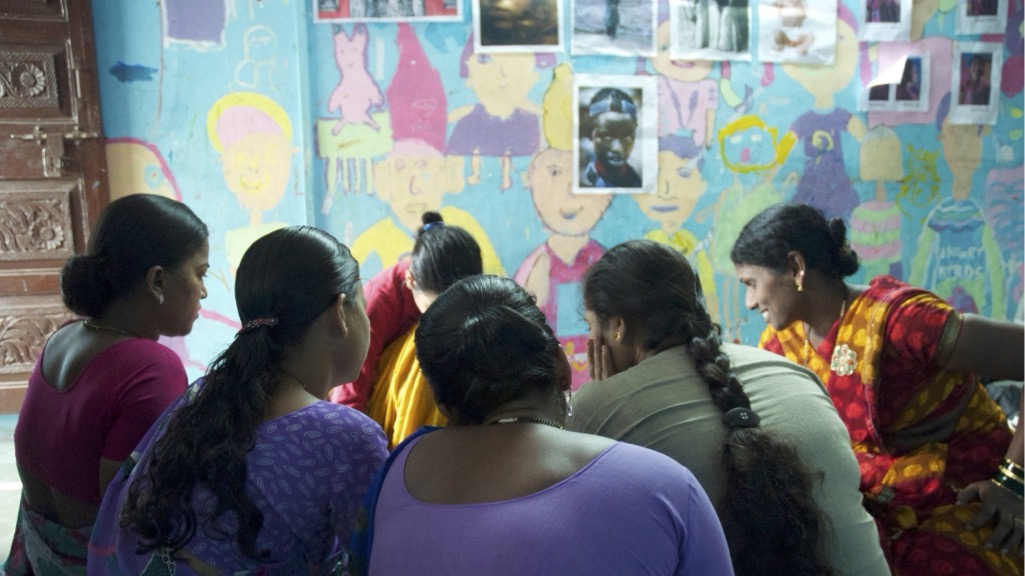
Here’s an image of women with whom we did a photography project (fig. 6). They wanted to hold cameras and explore their neighborhood, which resulted in a series of exhibitions and a publication. It was the first time they came together in a space that many of them had never had access to—they hadn’t been to school and/or they were married off at a young age. The Art Room gave them a space where they could sit together and understand what it means to exist in community—which they’ve never had the luxury to do before. B-Town Kids was another program we initiated that looked at storytelling as a means of reclaiming history from the ground up (fig. 7). It was a photographic exchange project for kids age nine and under in Basel [Switzerland] and Bombay. As an artist, I’ve always had the possibility to really understand others and break oppressive structures using the tactic of togetherness, and that’s central to the work we do.
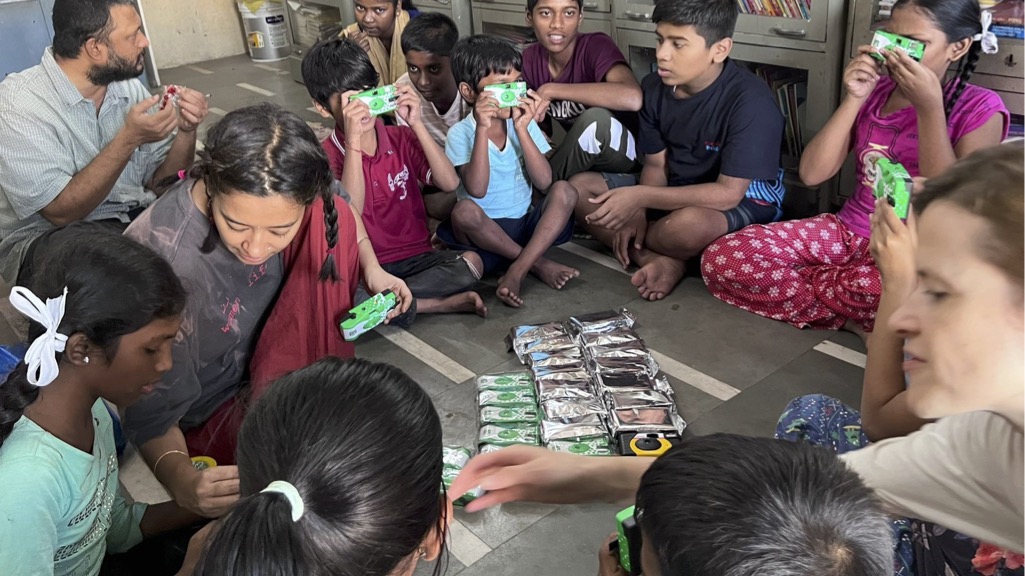
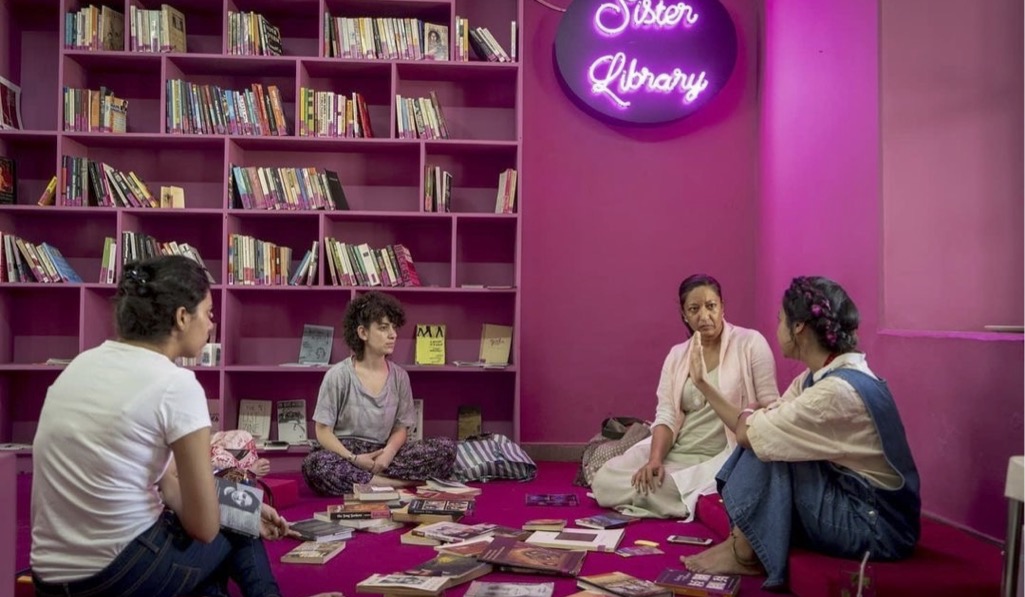
Turning back to the bookwallas and the discrepancy I was seeing between knowledge to be shared versus knowledge for specific groups of people, I realized that the containing of knowledge is by design. Sister Library (figs. 8a–c) started with a practice of reading women exclusively, and later expanded into a full-fledged library. It was not easy to build Sister Library—I experienced resistance from feminists, communists, Marxists, and leftists as well as the expected resistance from the right. Sister Library allows for the breaking down of hierarchies, borders, and other palpable lines of difference. Many women like me live their lives in Bombay as completely invisible. It’s almost like we don’t exist. But in Sister Library, we sit with each other, listen to each other’s voices, and always make space for those who don’t usually get to talk about their experiences.
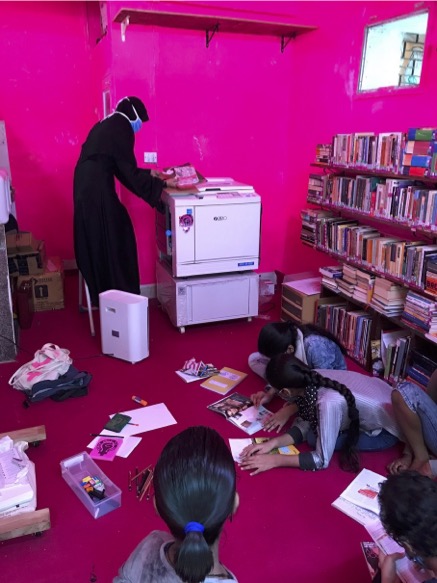
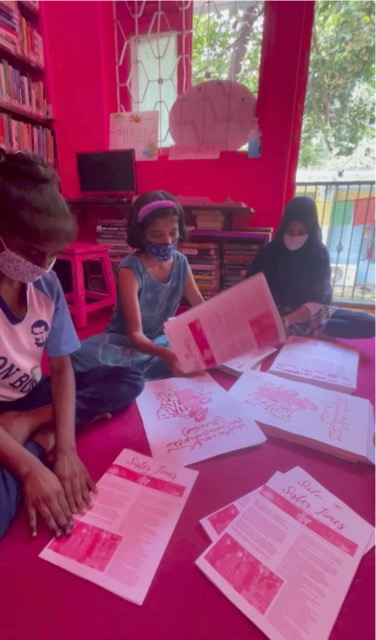
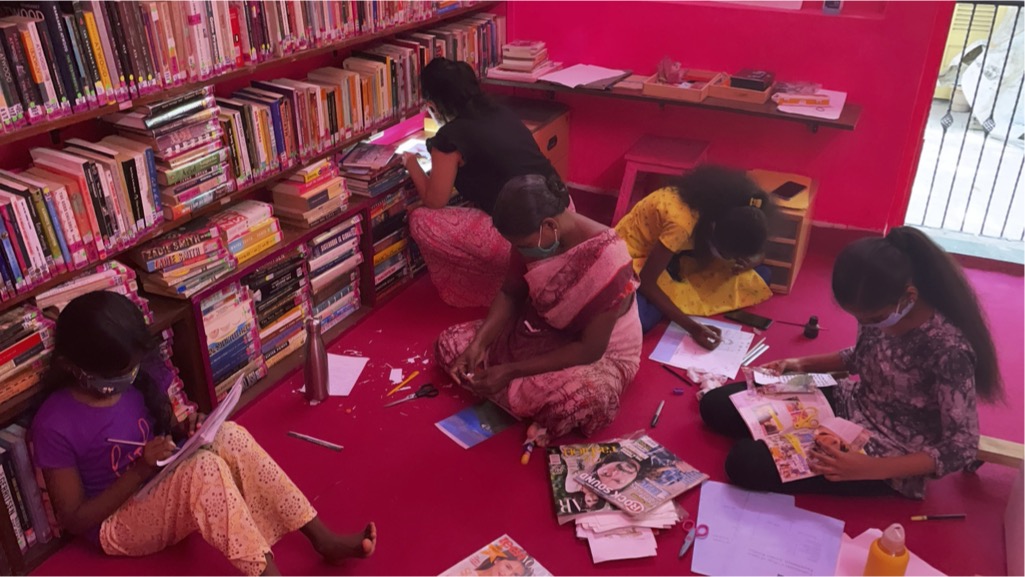
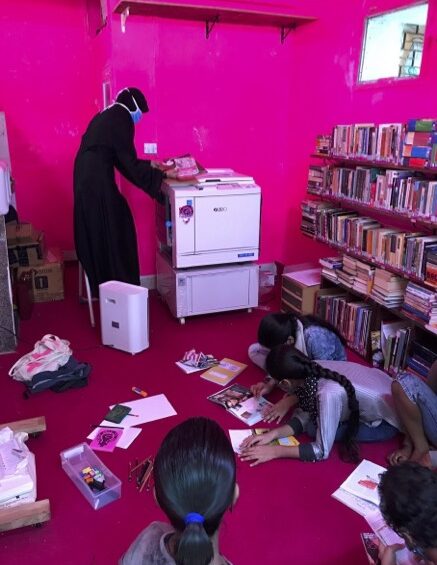
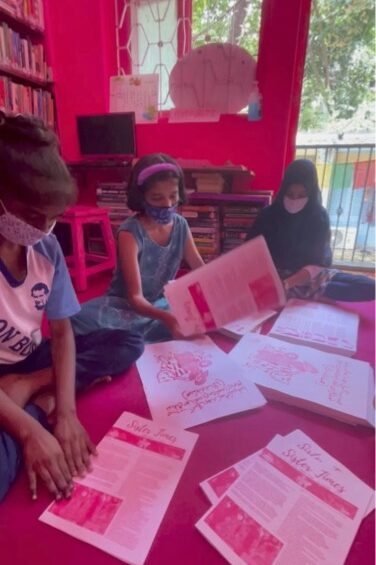
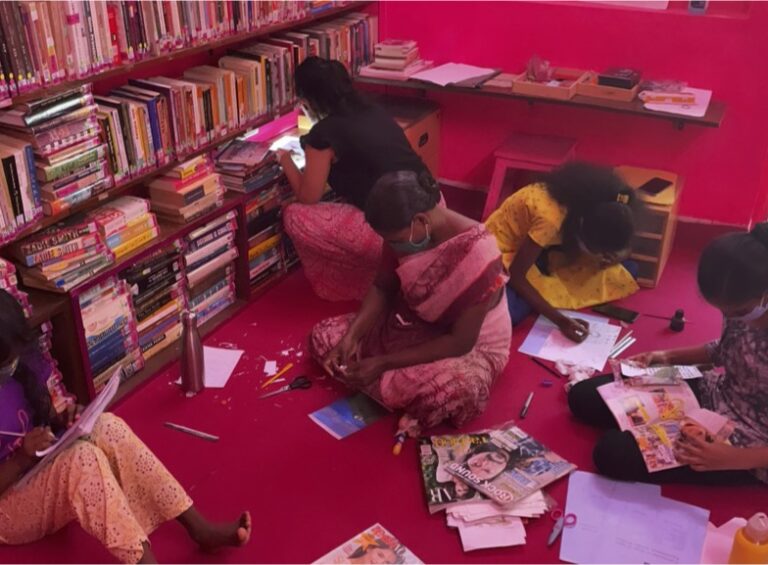
Sister Library also has a press—we are the only risograph press in South Asia—and we make zines and newspapers.2For example, Sister Zine and Sister Times. At the moment, these are on hold because of funding. Our money goes to whatever needs the most attention, and presently, that’s the Walking with Savitri Mai Fellowship, which supports young girls pursuing education. This Fellowship honors India’s first female teacher, Savitri Mai, who started the first school for girls. Savitri Mai walked from her house to her school every day, carrying a spare sari, because people would pelt her with stones and rubbish. When she was asked how she felt about this, she said, “I feel like they’re throwing flowers at my feet, because I know what my goal is.” In celebration of her work, our Fellowship supports young girls from school through university. We’ve now had five girls finish university, and it gives me great pleasure to share this because I used to be one of them, someone who came from a family in which nobody had ever gone to university before.
We also have other Library events, such as our annual feminist school, Sister Residency, which we began last year and through which we’ve hosted two Indigenous women artists, and Sister Radio, etc. We also offer crisis support—often, because of militarized violence or the climate crisis, the people who suffer the most are Indigenous people, specifically Indigenous women—so we send support immediately. Sister Library is not just a place where we sit together and read; we center pedagogy and community.
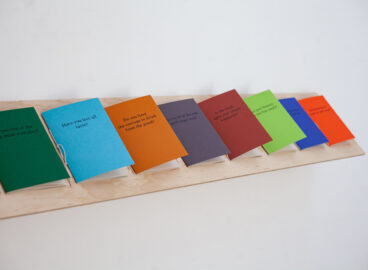
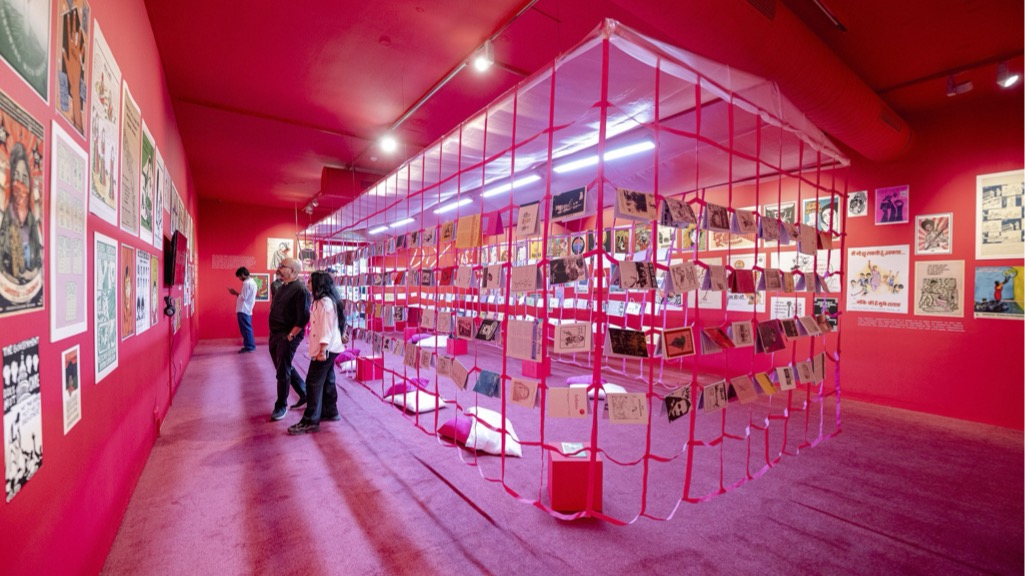
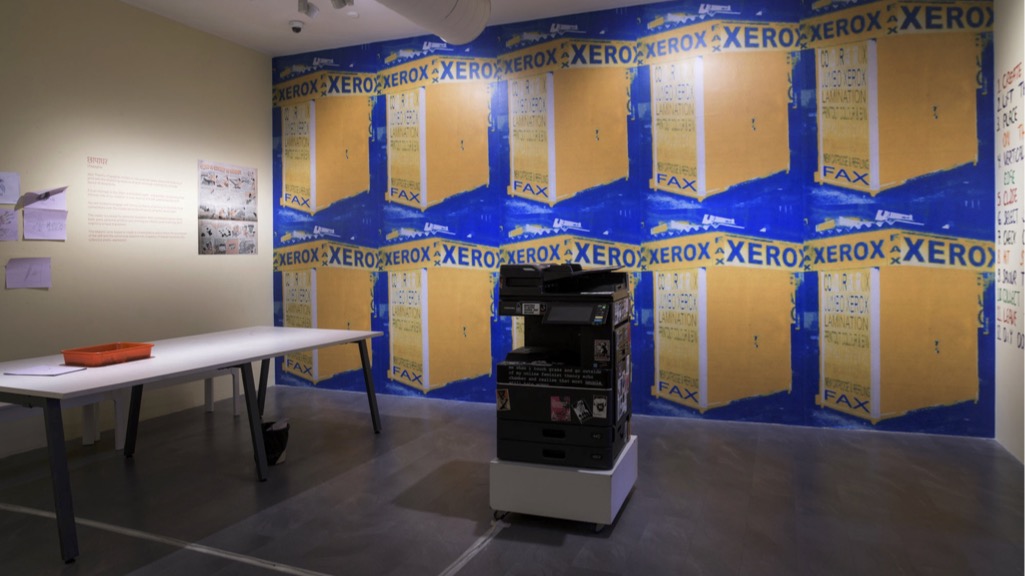
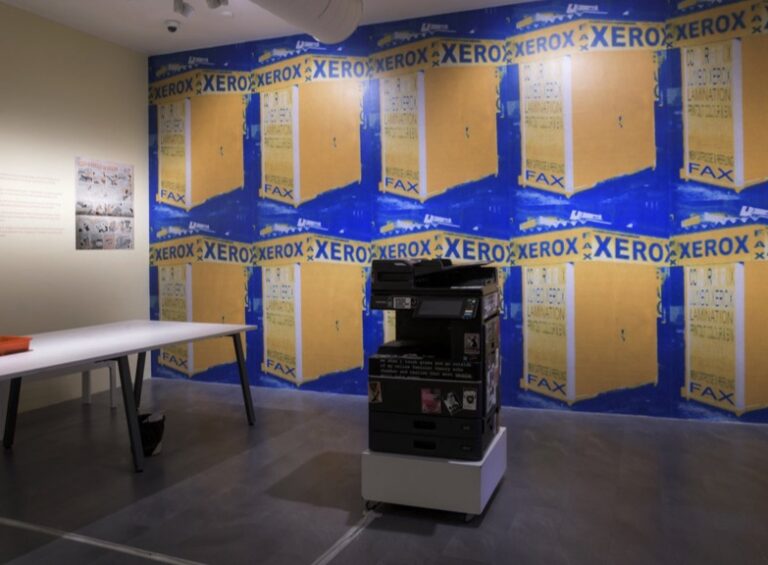
From here on, I’ll share works I’ve made and projects I’ve been involved in outside of Bombay Underground, Dharavi Art Room, and Sister Library. Recently, I co-curated a museum exhibition on zines and comics.3please touch gently (zines, comics, ephemera), curated by aqui Thami, Bharath Murthy, and Himanshu S, KNMA, Delhi, October 5, 2025–January 10, 2026, https://www.knma.org/whats-on/exhibitions/please-touch-gently-zines-comics-ephemera/. It was the first time that this museum had allowed art objects to be held and touched. We had over 1,000 zines, and this particular section had zines, posters, and films made by women (fig. 9a). It was a celebration of the underground. I also made Chapa Ghar (2023, 2025; fig. 9b), in homage to a form of the press—to the xerox shops that you see all over Bombay, where I learned printing and printmaking. It is so freeing to be allowed to use a machine to make that I wanted everyone to experience it. But it also makes you rethink what making is, because when you look at self-publishing and zine-making in the Subcontinent, the practice is very different from in the West. In South Asia, you have to collaborate with the man, usually Dalit or Indigenous, who works in a xerox shop and who might be a collaborator in solidarity with the movement because he’s making space for such work.
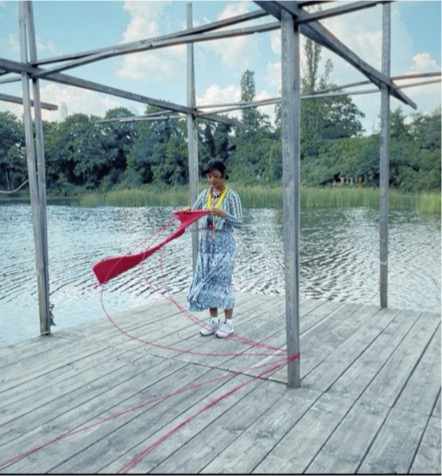
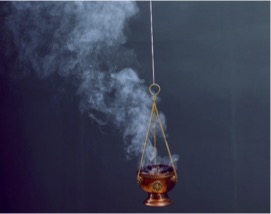
For the last two years, I’ve been working outside India because of some violence that I suffered that made it impossible for me to work in Bombay. Pā āsha (“to knit” or mending a broken stitch in Thangmi Kham, 2023; fig. 10a), is a ceremony that I did in Berlin about how all of us are woven into each other’s lives, and how if one stitch comes undone, everything unravels. Ceremony to bear witness (2020; fig. 10b) is from a ceremony that I did for a gallery in Delhi, where I was a witness—recalling, remembering, and honoring people who were killed by the military every single day for a period of three months.
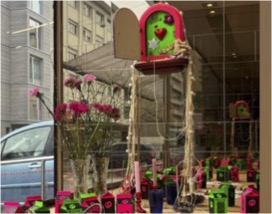
Mountain Girls (2023; fig. 10c) is a shrine to Heidi. When I was working in Switzerland, I saw Heidi—the book and character—everywhere; she is like a mascot. I related to her because I was also a girl taken away from my mountains, so I created this work as there’s much curiosity about shamanism, and I invited people to make their own altars.
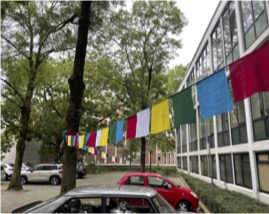
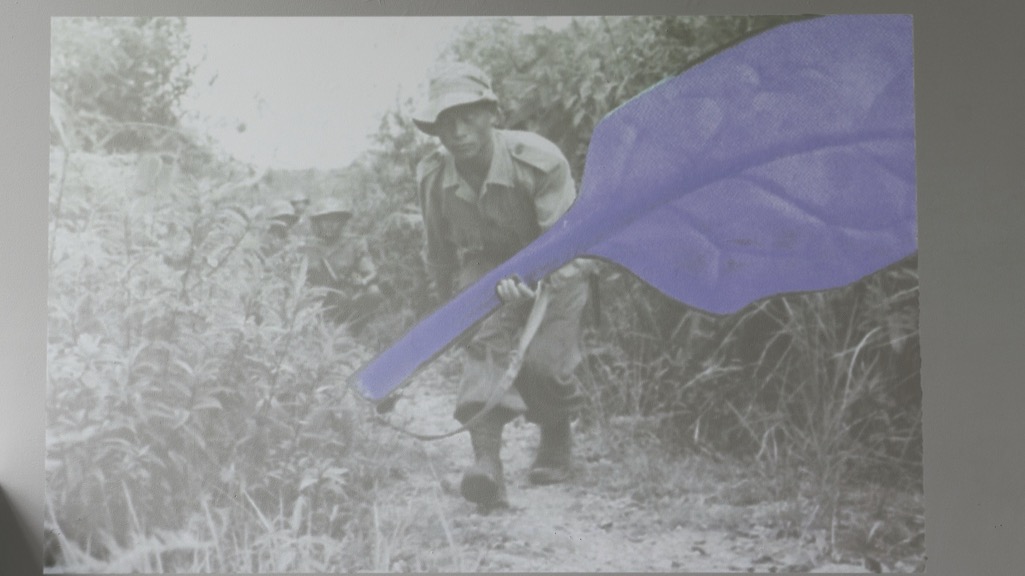
In Breathing with my baje (2024; fig. 10d), I was thinking about the violence of not being allowed to feel fear as expressed in the militarism of the Gorkha Regiment—in which my grandfather was enlisted and from which he never returned. Each prayer flag was a screen print of a Gorkha Certificate, which is necessary to enlist in the military. These government certificates are only issued to the Kirati peoples as it is thought that Kirati men feel no fear. I immersed the prayer flags in a mix of hormones that our bodies produce when we feel fear, and then I put them up so that when the wind touched them, that fear was dispersed. Usually these flags disperse prayers, but I wanted to bring out the fears of so many young men whose lives were lost in wars designed by the West. Early on, I looked through archival images in museums to find pictures of my grandfather, but all I found were war images. I wanted to take away the affects of war from these photographs, so I replaced weapons with everyday objects (fig. 10e) so that all of the images felt like I was looking at my grandfather. I just wanted to allow these men normalcy for a brief moment.
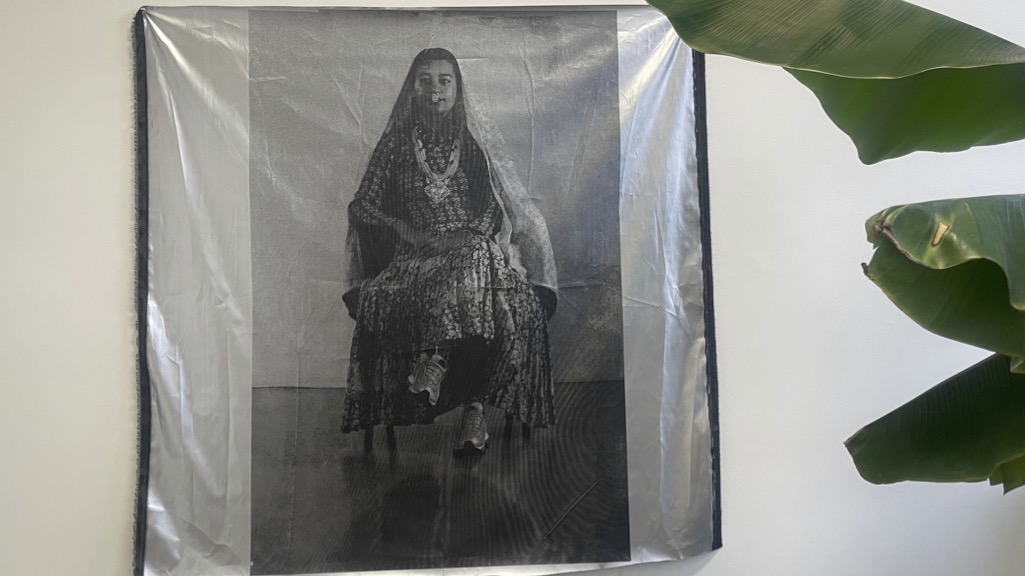
i see you (2024; fig. 11) is a body of work that I did with a camera from the 1940s. Indigenous women, especially those from plantations, are among the most photographed people in the world. My grandmothers were photographed a lot because it was thought that we would become extinct, so I wanted to explore these archives and play with the idea of what it means to be frozen in the past, because there’s always the expectation that we are exactly as we have been archived to be.
AS: As you’ve been speaking, your words “If you’re not working with the community, and you’re not sharing resources, then what are you doing?” have been ringing in my head. Thinking through these words, your presentation, Burning Tite-Pati,4aqui Thami, Burning Tite-Pati: Healing Practices of the Himalayan Peoples (Zubaan, 2020), https://zubaanprojects.org/cdn/uploads/2025/09/SPF-Grant-Papers-2019_Aqui-Thami_Burning-Tite-Pati.pdf. and Esther Syiem’s words—specifically, “There was always a sense of something that had to be done for the community in terms of retrieval, recordings, anything that would make these stories come alive”5Esther Syiem, “The Oral in Literature: An Interview with Esther Syiem,” interview by Jobeth Ann Warjri, Indian Writing in English Online, https://indianwritinginenglish.uohyd.ac.in/the-oral-in-literature-an-interview-with-esther-syiem/.—has made me wonder about your relationship with orality. Can you reflect on this?
aT: Orality is very important to me. I didn’t realize how much I longed for it until I could create it. I’ve always felt the way education and learning are designed outside of Indigenous cultures is not working because one learns in isolation—with a book in a library where you have to be quiet and can’t speak to anyone or express what you’re learning. Whereas, for us, we come together, learn together, tell stories, and learn through song and ceremony. I did both, because I was always both in my community and outside of it, and it was difficult to just be by myself.
At Sister Library, we have a reading circle, which is an exercise in listening and in reading. So, as part of it, someone holds a text and reads it as much as they want and then they pass it along to somebody else, who carries on the reading. And this is important because it allows us to make space within ourselves to hold other people’s voices, and every time someone is speaking or reading, you can feel how a certain thing is being conveyed by their intonation and by how they hold each word in their mouth. And it’s such a special feeling; it’s truly a gift to experience that. You can see how their bodies change and soften, and how their faces change and shift while they are understanding a certain thing, while they are reading. And as you witness this, something also happens to you, and that kind of learning is so intimate and valuable, yet it is typically not allowed. Somewhere along the way, I think the non-Indigenous world gets disconnected. When you’re kids, you do connect, but as you grow up, you become more isolated. It’s been a gift for me to be able to bring this practice back into my life and my community. It also makes you want to do better without being forced to do so. You sit together, think together, and when you’re not able to think and process a certain thing, you bring it to the community, and everyone helps you think it through. I think that’s beautiful.
This is also how Sister Radio was born. It began during COVID as a practice of care calls between Indigenous sisters everywhere, because we were so isolated; and though we were consuming a lot of media, we were not seeing ourselves in it as Indigenous peoples—especially as, for example, those from my community don’t necessarily believe in medical institutions. It was a time of fear for us, not just fearing for our lives, but a different kind of fear. And so, it started as care calls, and then it became a space where we’d share so much. I thought that it was important for the rest of the world to listen to these conversations. Because I feel like we have a sense of responsibility to share what we’ve not been allowed to share. So, I hold orality in very high regard.6I’m currently working on a project to build an oral interface for Thangmi Kham, which is an oral language and does not have a written script. The project is intended for those who lost the language—and from whom it was taken away—so that they can learn it as it was meant to be learned. Two Fulbright scholars have made Thangmi Kham dictionaries, though technically you’re not supposed to look at the words and read them, but rather to hear them given the nature of the language and the fact that the same word can be used for many different things.
AS: I’m thinking about a word that you’ve used—“tactic”—and of orality as a tactic; your pink posters that you posted across Bombay as another tactic; and do-it-yourself (DIY), doing-it-together (DDT), and don’t-do-it (DDI) as still other tactics in your practice. Could you speak on this?
aT: These are philosophies and life practices that have sustained me not just in art, because for me, art and life are intermingled. It’s a very Indigenous way of doing, where things can’t be separated from one another. A lot of my work is just me doing it myself and learning while doing. But there is something to be said about DDT, which I practice a lot. And then there’s the practice of DDI, and so of being very mindful of not participating in certain things. I get a lot of criticism for it at times, but I’m also flexible, I allow myself to understand things, and I’m always open to conversation. DIY, DIT and DDI are practices that I live with and by, and they’ve held me.
Lucy Gallun: Could you talk more about the works from your own art practice that exist more as individual pieces and how you have created space to weave that practice into the work that you’re doing in Bombay and with community in a particular location?
aT: I love making work in Bombay because everything is so instant, and everything is made there, and I know everyone. It’s been my home outside of my lands, and I basically grew up there, but it’s also a city that expels people. It’s like a whirlwind, and you have to be inside of it and move at its pace or you get thrown out of it. And being an outsider, an Indigenous person from the Northeast, a person of the borderlands—therefore not Indian—there’s a lot of tension there.
I don’t get any art grants from India, and everything that I have gotten to practice my work, or to be able to think and learn different things, was allowed by going outside. I was well received outside, and I had the space to speak freely and was not canceled or threatened. There was space [for me]. I think the world at large is now asking questions and seeking answers. They’re looking at Indigenous ways of living and practicing, and so there’s a lot of pressure being put on Indigenous peoples, Indigenous thinkers, Indigenous culture workers. But at the same time, it’s also, for the first time in many years, that we’ve had the space to look at each other, collaborate with each other, reflect with each other. So, I’ve had the privilege of working with Indigenous peoples from Turtle Island, from the Sami, and from the Arctic as well as with Indigenous peoples in Australia and Africa. It’s an exciting time for me, even if art institutions have no space or very limited space for us.
There is an alternate space, an underground even. Things are happening. And those sparks are important not just for us, but also for the larger art ecosystem, because it’s not just what happens within bigger museums and institutions that is culture, it’s also what’s happening outside of them, which is more exciting to me. It has to be both. And this is not to say that it’s not hard. It’s immensely hard for me to navigate white Western spaces, because I don’t have any blood memory of these realities or of the community in such spaces, where disposability is valued, where you move from one thing to another in a very fast-paced way. Or rather, I am part of a community of a different kind, one in which we hold on to everything and rebuild every broken thing so that we don’t have to dispose of it. So, these are challenges that I’m now navigating by myself in the Western world, which is difficult, but here we are.
LG: Another aspect is the work you’re doing as a founder and organizer of various initiatives and spaces, and the ongoing community activities that are part of them. How have you balanced or given space to your own work alongside these efforts—or how do you think about the relationship between your art practice and your work?
aT: All of these things are a different kind of learning for me, because I used to be very involved. I’d go to Dharavi every day, but now I have some distance, and I think it’s because now I can see that a lot of children have grown up, and some have graduated from the J. J. School of Art and now are teachers at different schools. And I also want to see how it organically shapes into being what is required in the city. And it’s interesting for me because it’s a space that came out of my heart because I desired a space like this and then we built it together; but it’s also a space of the city that the city has embraced, and it flows and is shaped into what the city requires. I talk to the kids every day. We have a lot of video calls, but it’s also about shared responsibility, and we function using a very organic model that comes from love and responsibility, because we don’t have any paid staff. Everyone does the work because they really love the space and they want the space to exist and function.
Elena Pérez-Ardá López: I want to know more about the relationship between you and the big, powerful institutions with which you’ve worked. How was the dialogue and process of working with them? What was the reception?
aT: It’s always a challenge working with institutions. Typically when I work with institutions in India, it is through people that I trust like Nancy Adajania, who for many years has supported my practice.7See, for example, Woman Is As Woman Does, curated by Nancy Adajania, Jehangir Nicholson Art Foundation, Mumbai, August 13–October 16, 2022, https://jnaf.org/exhibition/woman-is-as-woman-does/. Whereas with the please touch gently exhibition in Delhi, which is not my city, I didn’t really know anyone. When they approached me three years ago, I told them that if I work on a show on zines, then I’m not going to do it without Himanshu, and they made space for that. We also had another friend, Bharath Murthy, a comic maker who runs an indie comic fest, come on board. But it was really hard to put up the show. We wanted people to touch and feel the zines. We didn’t want them behind vitrines. We wanted the zines to be zines rather than art objects. So that was a big challenge. But a lot of people were introduced to zine-making and able to use the copier. People were able to read the words of Dalit activists and Indigenous artists and watch videos, and so it paid off.
AS: Could you talk a little bit more about funding and how you make all these incredible things happen for the communities with whom you’re building these spaces?
aT: Funding is always a problem for us because I don’t come from money—and I don’t know anyone who comes from money. My community is from Dharavi, so you can imagine when we need money, we’re just like, oh, what do we do now? I’m not very good at going to parties and networking, so I work really hard and put everything that I make back into the community, because where else will I spend my money? All of my travels are only possible because someone else is buying me a ticket to work on an exhibition or to participate in a residency, etc. Friends also support us. For example, someone says it’s my birthday, and I want to give x amount, and that might take care of the rent for the library, etc.
Recently we held the exhibition fundraiser called Are You My Sister?, and wonderful artist giants like Dayanita Singh and Gauri Gill gave us their works. Up-and-coming artists—contemporaries of mine such as Rajyashri Goody—also gave us work, and we sold some of it. We’re looking at hosting another edition because it was both a provocation and an invitation—because, yes, you are making feminist work, but are you my sister? All the money from such initiatives goes back to the community because nobody is paid and everyone is a volunteer; and after we subtract the monies required for framing, printing, and other exhibition-related costs, the remaining amount goes back into running and sustaining our spaces.
We always have food and drink, sanitary products in the toilets, because a lot of women facing different precarities come to these spaces, and we don’t want them to have to voice what they might need. We never know if someone has not had a meal in many days, and we want the space to be as welcoming as possible for as many people as possible. We’re also always looking for funding for the school and college program, because as you can imagine, sending kids to college is hard. Our kids go to school and university in the morning, and then they come to the library and use it as a buffer space before they go back to Dharavi. The library is the middle space between their neighborhood and the world outside. So they’re usually chilling in the library—they read, they watch a film, there’s a reading circle or a potluck. We have all sorts of events happening in the library. And then when other people come to the library and talk to them, and they can tell that they are Dalit or oppressed people, they don’t expect them to say, oh yeah, I go to Sophia College [for Women] or SNDT [Women’s University] or Wilson [College]. They’re always taken aback, which gives me so much joy.
This essay stems from the Contemporary and Modern Art Perspectives (C-MAP) Bombay/Mumbai initiative at MoMA. The 2024–2026 Bombay/Mumbai research program was conceived and organized by Ananya Sikand (C-MAP Bombay/Mumbai Fellow) and Lucy Gallun (Curator, The Robert B. Menschel Department of Photography). Read more about C-MAP here.
- 1An Indigenous person from the Indian Subcontinent. ↩︎
- 2For example, Sister Zine and Sister Times. ↩︎
- 3please touch gently (zines, comics, ephemera), curated by aqui Thami, Bharath Murthy, and Himanshu S, KNMA, Delhi, October 5, 2025–January 10, 2026, https://www.knma.org/whats-on/exhibitions/please-touch-gently-zines-comics-ephemera/. ↩︎
- 4aqui Thami, Burning Tite-Pati: Healing Practices of the Himalayan Peoples (Zubaan, 2020), https://zubaanprojects.org/cdn/uploads/2025/09/SPF-Grant-Papers-2019_Aqui-Thami_Burning-Tite-Pati.pdf. ↩︎
- 5Esther Syiem, “The Oral in Literature: An Interview with Esther Syiem,” interview by Jobeth Ann Warjri, Indian Writing in English Online, https://indianwritinginenglish.uohyd.ac.in/the-oral-in-literature-an-interview-with-esther-syiem/. ↩︎
- 6I’m currently working on a project to build an oral interface for Thangmi Kham, which is an oral language and does not have a written script. The project is intended for those who lost the language—and from whom it was taken away—so that they can learn it as it was meant to be learned. Two Fulbright scholars have made Thangmi Kham dictionaries, though technically you’re not supposed to look at the words and read them, but rather to hear them given the nature of the language and the fact that the same word can be used for many different things. ↩︎
- 7See, for example, Woman Is As Woman Does, curated by Nancy Adajania, Jehangir Nicholson Art Foundation, Mumbai, August 13–October 16, 2022, https://jnaf.org/exhibition/woman-is-as-woman-does/. ↩︎