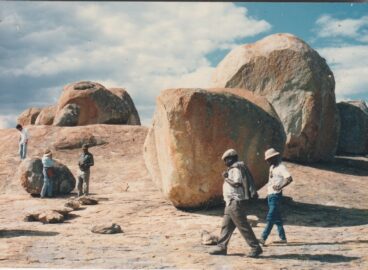
On September 29, 1967, William Rubin wrote to the Ford Foundation after attending a slide presentation by Frank McEwen. McEwen, the founding director of the National Gallery of what was then Southern Rhodesia (today Zimbabwe), had shown images of what Rubin described as “ateliers of native sculptors in Rhodesia—some of them actually out in the bush” (fig. 1). Projects of this “kind,” he confessed, usually struck him as “of interest for the sociologist rather than the art historian or critic.” But what he saw surprised him. “While much of the material he showed was not especially good,” Rubin wrote, “it was all very serious and in no way resembled the slick ‘airport art’ which native Africans usually end up producing. But more important—there was a handful of really fine pieces.” Rubin, the man who would soon loom large over the fate of modern art at MoMA as a leading curator in its Department of Painting and Sculpture, concluded that helping McEwen secure the modest funds needed “to bring over the work so that he could sell it here would be a fine humanitarian project.”1William Rubin to the Ford Foundation, September 29, 1967. Department of Circulating Exhibitions Records, C/E 68-1: New African Art: The Central African Workshop-School, Work Folder 1, II.2.145.1.1, The Museum of Modern Art Archives, New York.
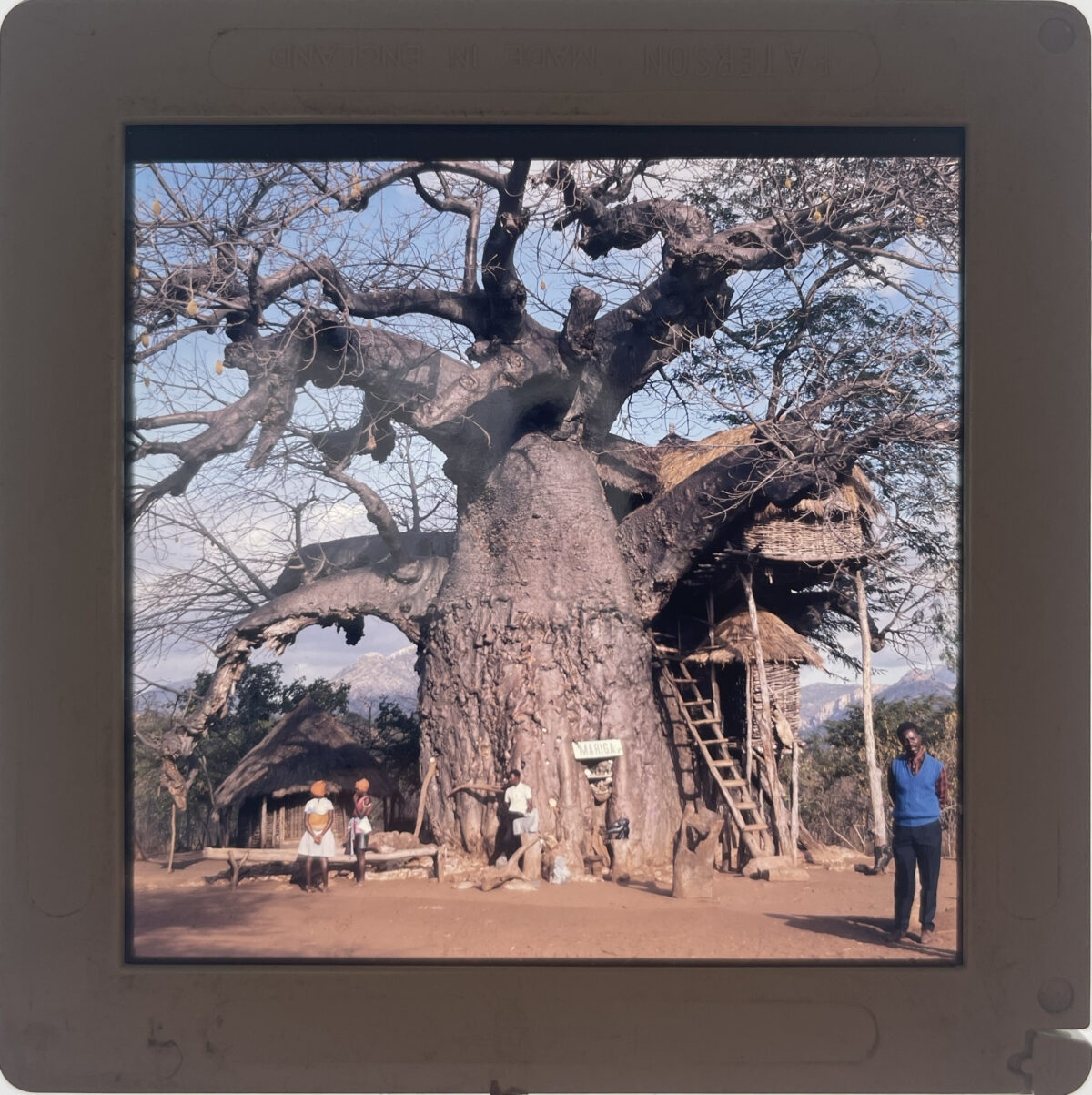
The Ford Foundation declined the grant. But beyond its paternalism and its questionable assumptions about African art, Rubin’s letter reveals something more consequential. The phrase “airport art” was not Rubin’s invention; it was McEwen’s term, and one he had been actively cultivating through the 1960s as both a warning and a sales strategy—a way to stake the Workshop School, his own in-house training program and production, against a looming tourist market.2For more on the complicated historiography of the Workshop School, see the last section of this essay. Rubin learned the label from McEwen, and he deployed it here exactly as intended: to rule that this work was not that. In doing so, Rubin did more than offer aesthetic approval. He effectively ratified the very distinction McEwen had been working to enforce in order to promote the output of his Rhodesian Workshop School.
That distinction soon became certified by Western institutions. In 1968, sculptures from McEwen’s workshop began their world tour when they were shipped to New York; classified at customs “for exhibition purposes”; and insured, warehoused, and circulated by MoMA for two years across American universities and museums under the title New African Art: The Central African Workshop School. They were exhibited—and they were sold by MoMA. Within a few years, Zimbabwean stone sculpture, often labeled “Shona sculpture,” had become one of the most visible and commercially successful contemporary art movement from the African continent in Europe and the United States.3While McEwen initially promoted the movement as “Shona sculpture,” the label has since attracted sustained scholarly critique—particularly regarding the extent to which these works can be taken as direct expressions of Shona belief or cultural continuity. I return to this problem in the final section of this essay. Throughout my text, I use “Shona sculpture” only when referring to McEwen’s promotional framing (or that of the actors who adopted it); otherwise, I refer more neutrally to the works as stone sculptures. For a critique of the term that explores the cultural heterogeneity of sculptors lumped into the category even though they are not Shona, see Carole Pearce, “The Myth of ‘Shona Sculpture,’” Zambezia: The Journal of the University of Zimbabwe 20, no. 2 (1993): 85–107.
This essay argues that the difference between what came to be known as “airport art” and “Shona sculpture” was neither simply rhetorical nor aesthetic. It was a matter of infrastructural control. In Salisbury (now Harare), production, pricing, exhibition, and sales were initially concentrated in a single institutional hub—the National Gallery and its Workshop School. When that hub was extended through MoMA’s circulating exhibitions apparatus, the circuit widened without becoming decentralized. In this system, authenticity was not the opposite of hybridity; it was the language that secured it. Together, these terms stabilized both aesthetic and financial value across the full chain of making, circulation, and display.
The Salisbury Hub: Concentrating Production, Distribution, and Display
Rubin repeats McEwen’s phrase as if it were already common sense. That is exactly the point. By the mid-1960s, “airport art” had moved from Salisbury into international discourse, in many ways thanks to Frank McEwen’s efforts. In his writings on the National Gallery of Salisbury and its Workshop School, McEwen began defining a foil against which his project could take shape. By the time of the First World Festival of Negro Arts in Dakar in 1966, the phrase had entered a broader discourse.4Prominent figures such as British anthropologist William Buller Fagg and Nigerian archaeologist Ekpo Eyo invoked McEwen’s terminology to warn about mass-produced carvings for tourists. See William Fagg, “Tribality,” in Colloquium: Function and Significance of African Negro Art in the Life of the People and for the People, March 30–April 8, 1966 (Présence Africaine, 1968), 115; and Epko Eyo, “Preservation of Works of Art and Handicraft,” in ibid., 585. What began as polemic was becoming a shared diagnostic for the state of contemporary African culture.5According to Peter Probst, the relative neglect of modern art from Africa was not incidental but structural: Euro-American institutions and scholarship long privileged so-called traditional or classical African art, while modern African production remained marginal to mainstream art-historical attention well into the late 20th century—a divergence that only began to shift more decisively in the 1990s. Probst, What Is African Art? A Short History (University of Chicago Press, 2022), 95.
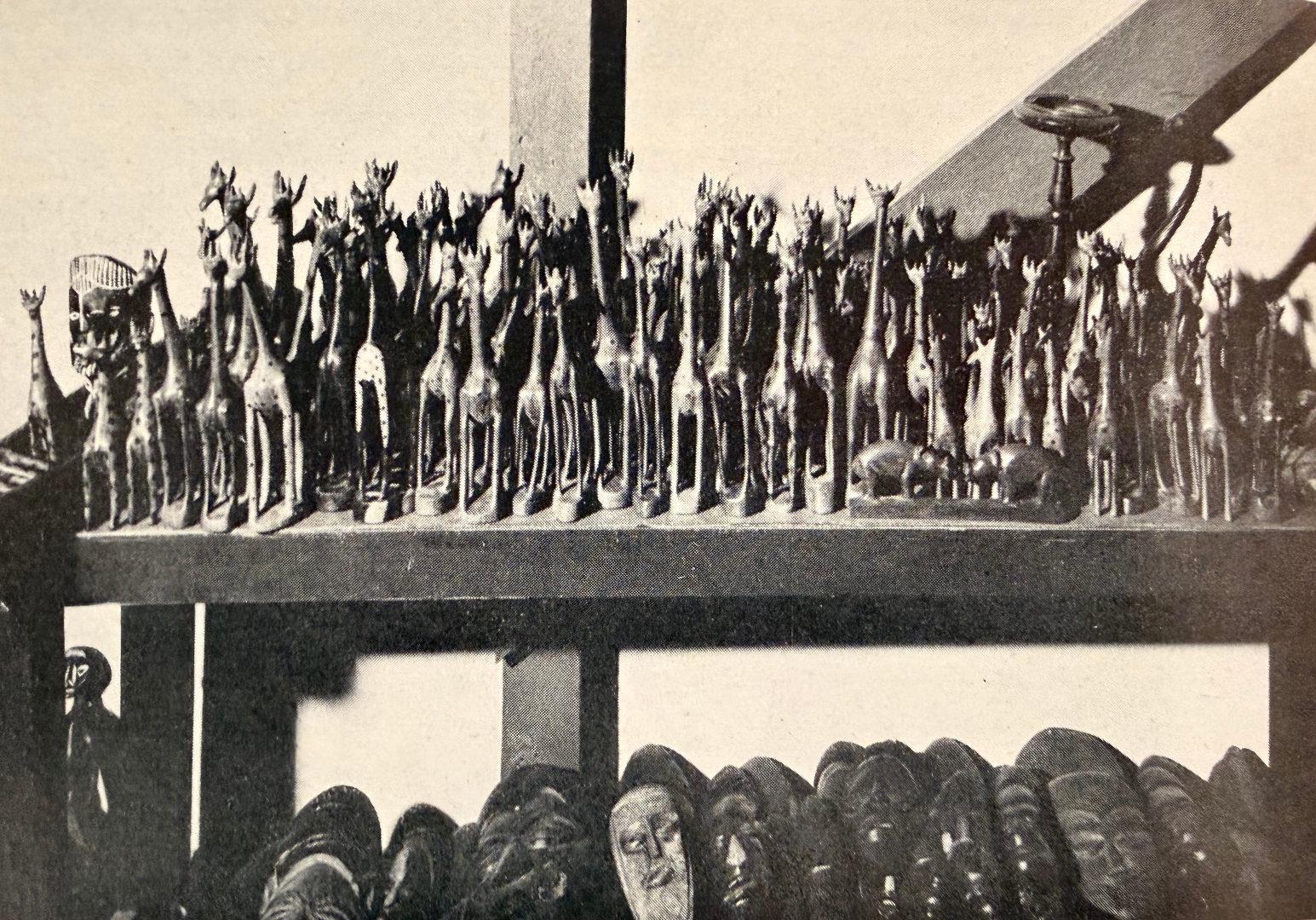
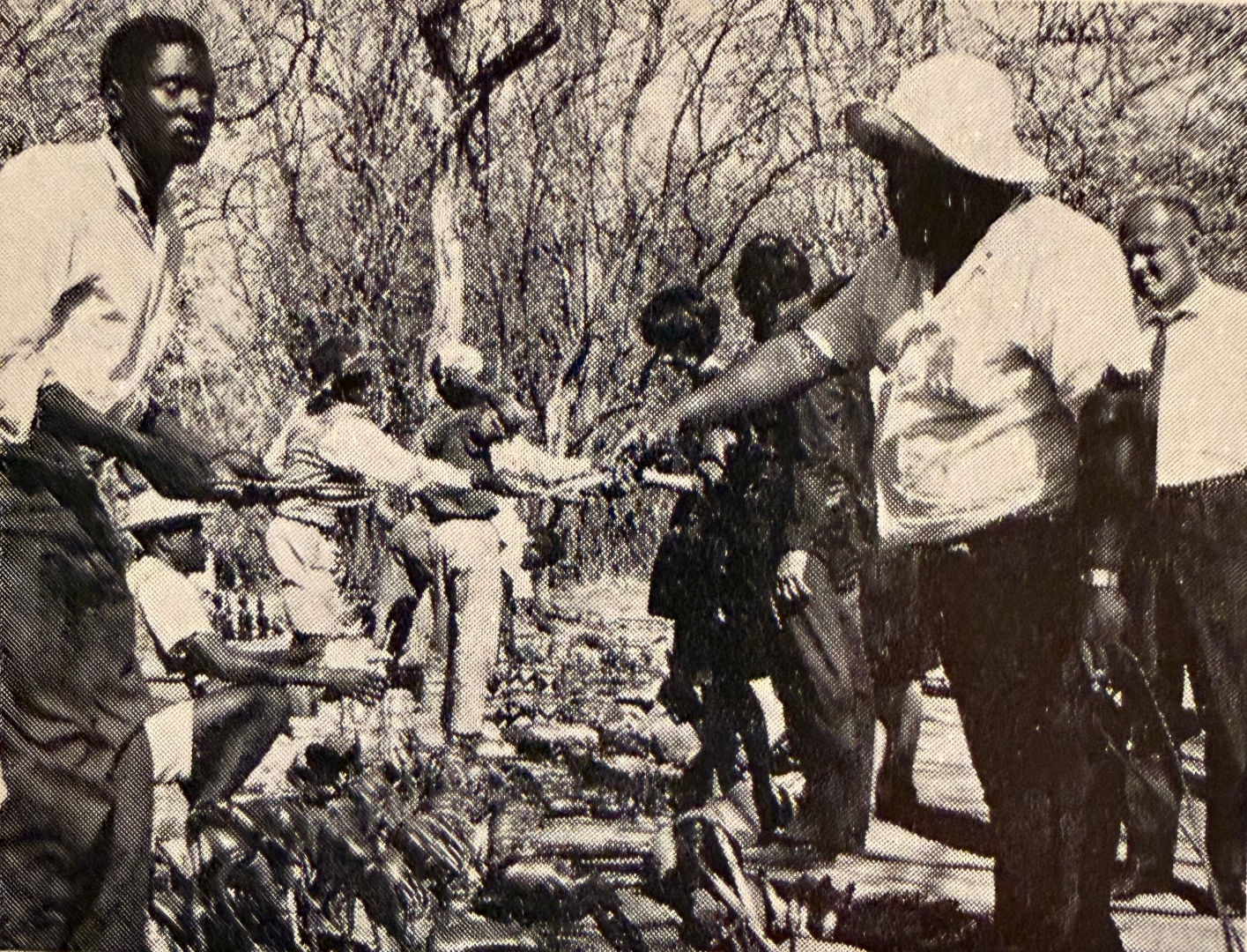
McEwen’s own definition was deliberately provocative. “Tourist art trade,” he wrote, is governed by “a base commercialization [that] controls the mass production of thousands of shiny wooden pseudo-African images. Lathes, calipers, sanders, polishers help exploit this form of art prostitution that tourists support.”6Frank McEwen, “The National Gallery of Salisbury and Its Workshop-School,” Museum 16, no. 3 (1963): 176. The rhetoric was accompanied by photographs: sculptures cramped together on small tables, lined up in repetitive rows, and thereby stripped of aura and individuality (figs. 2, 3). The imagery did as much work as the words. Airport art was congestion, mechanical repetition, excess supply.
For McEwen, the problem was not just that artists were “heavily exploited” by middlemen, the deeper danger was epistemic.7McEwen, “The National Gallery of Salisbury and Its Workshop-School,” 176. Tourist demand, he argued, had begun to dictate supply and corrupt vision. Airport art described an entire infrastructure that allowed the market to speak too directly.
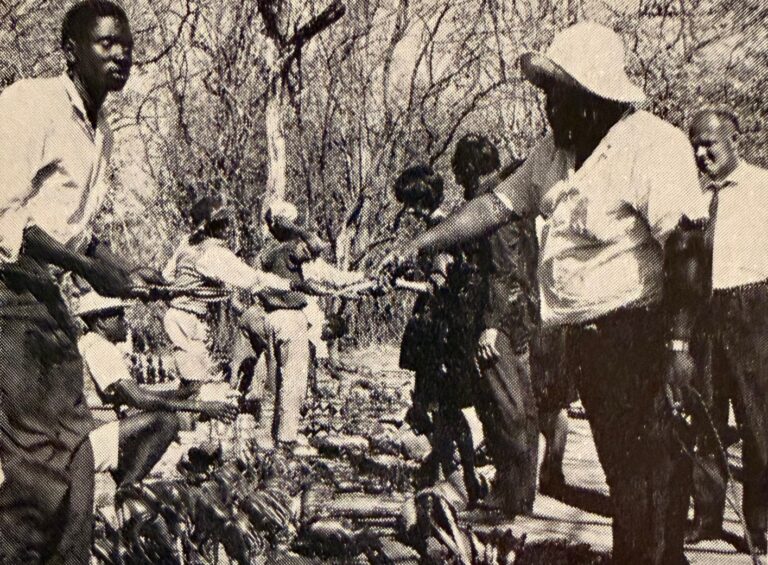
McEwen’s key move in 1963 was that he framed the Workshop School less as a romantic enclave and more as a local counter-infrastructure “to develop a whole cycle of effective art production and protection.”8McEwen, “The National Gallery of Salisbury and Its Workshop-School,” 177. This cycle involved gatekeeping talent, standardizing materials, reinforcing the pedagogical myth of non-teaching, creating “an international market . . . on itinerant exhibitions,” and having a strict “sales policy.”9McEwen, “The National Gallery of Salisbury and Its Workshop-School,” 177 Crucially, McEwen was not trying to eliminate the market; rather, he was trying to own the market interface (selection, narrative, and placement) so that tourist demand could not directly sculpt form and category. Under McEwen’s tutelage, production, exhibition, pricing, and distribution were brought under one institutional roof, functioning simultaneously as studio complex, exhibition venue, marketing apparatus, and gatekeeper.
Artists were initially invited to work in proximity to the museum or on its premises, but they were not independent entrepreneurs. The National Gallery took a percentage of sales—initially around 50 percent—and retained authority over pricing and selection.10From the early 1960s onward, McEwen struggled to find new revenue streams for the National Gallery of Salisbury as many of the museum’s white patrons began boycotting his support of Black artists. Elizabeth Morton, “Frank McEwen and Joram Mariga: Patron and Artist in the Rhodesian Workshop School Setting, Zimbabwe,” in African Art and Agency in the Workshop, ed. Sidney Littlefield Kasfir and Till Förster (Indiana University Press, 2013), 275. Those who did not meet the aesthetic and commercial expectations would lose access to studio space.11Later in the 1960s, at Vukutu and Tengenenge, two new production sites hundreds of miles away from McEwen’s museum, the business structure became even more formalized. At Vukutu, for instance, revenue was divided into thirds among the sculptors, the enterprise, and the National Gallery. The irony is that many of the artists McEwen helped promote later turned to so-called airport art distributors precisely because they could earn more through those channels than through the National Gallery’s system. For an overview of the complicated relationship between McEwen’s ventures and Tom Blomefield’s forays into stone sculpture at his Tengenenge farm, see Ben Joosten, Sculptors from Zimbabwe: The First Generation (Galerie de Strang, 2001), 28. Whatever its self-proclaimed laissez-faire pedagogy of “teachers who do not teach,” the system was tightly managed.
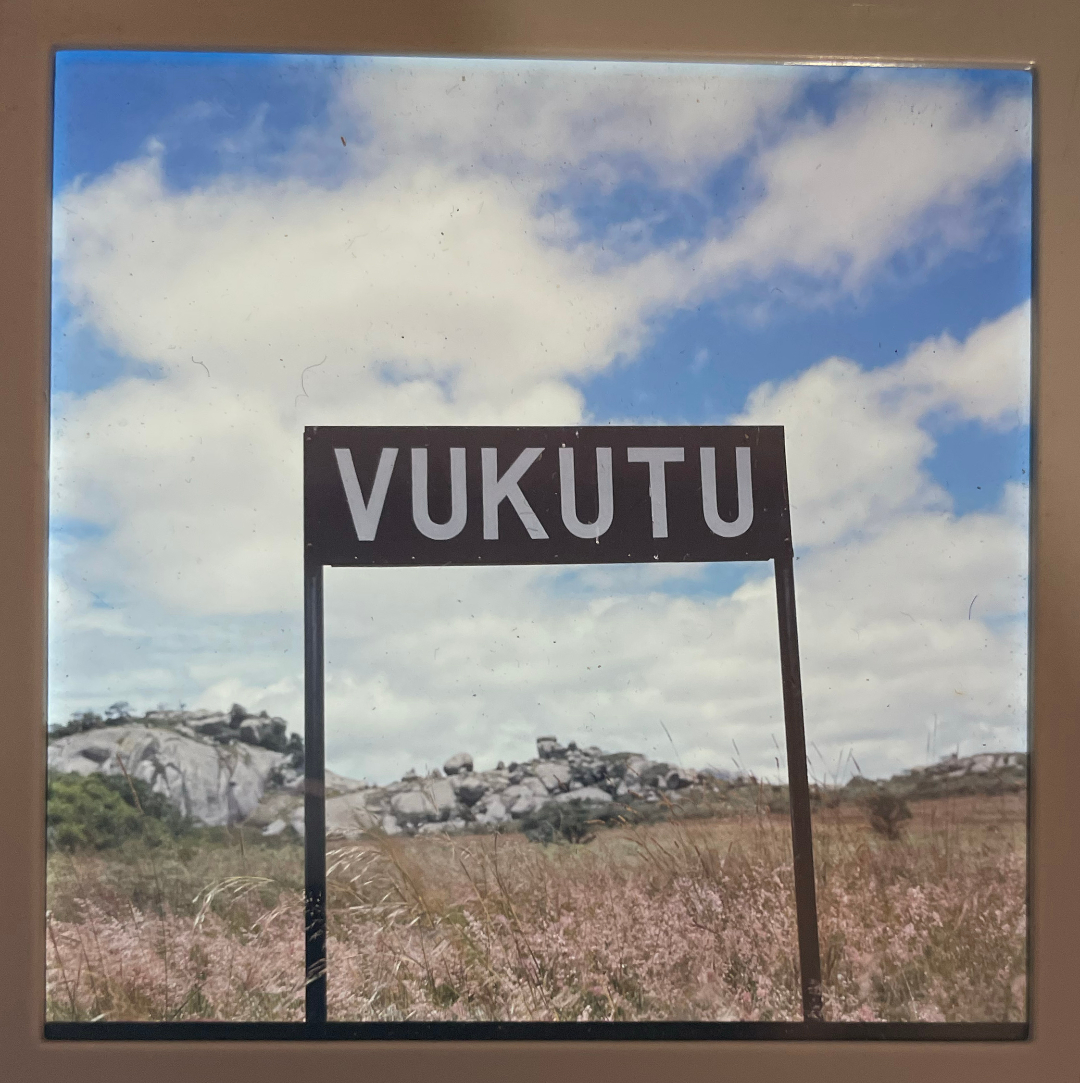
The crucial difference between airport art and what McEwen promoted as Zimbabwean “Shona sculpture” thus lay in the control of commerce. In McEwen’s National Gallery, production was centralized, exhibition carefully staged, pricing disciplined, and distribution mediated through a single hub. Tourist demand could not directly address the artist, now shielded in “quarry-factories” like Vukutu hundreds of miles away from the site of display (fig. 4). The National Gallery did not reject the market, it filtered it.
MoMA as Transnational Extension
If Salisbury concentrated production, pricing, and exhibition under one roof, MoMA scaled that structure when the sculptures arrived in New York. Indeed, the Museum translated McEwen’s hub into an institutional system of customs classification, valuation, touring logistics, and controlled sales.
In February 1968, six crates weighing more than 3,100 pounds arrived in the United States. As one internal memo to Rubin put it, “[McEwen] has had over 300 sculptures shipped here from Rhodesia, mainly to get them out of the country.”12Inez Garson to William Rubin, March 29, 1968. Department of Circulating Exhibitions Records, C/E 68-1: New African Art: The Central African Workshop-School, Work Folder 1, II.2.145.1.1, The Museum of Modern Art Archives, New York. In fact, timing mattered: The shipment arrived just months before Rhodesian exports faced an intensified embargo due to its apartheid regime.13Although “apartheid” usually designates a specific South African legal regime, Southern Rhodesia from 1965 onward was widely characterized—by international bodies and legal observers—as an illegal white “racist minority” government that enforced systematic racial hierarchy through segregationist land and labor regimes and political exclusion. For more context, see Alois S. Mlambo, A History of Zimbabwe (Cambridge University Press, 2014). To enable the import, MoMA’s staff did more than process paperwork. Through letters from Waldo Rasmussen (Director of the Department of Circulating Exhibitions) and William Rubin, the works were imported under tariff item number 765.2000 and 765.0300, allowing the Museum to pay as little as $55 import duty on freight that it had insured for over $50,000.
The reason for the tariff exemption is twofold: For one, Rasmussen made clear in his letter to the customs officials that the shipment was only for “for exhibition purposes.”14Waldo Rasmussen to customs officials, undated. Department of Circulating Exhibitions Records, C/E 68-1: New African Art: The Central African Workshop-School, Work Folder 1, II.2.145.1.1, The Museum of Modern Art Archives, New York. On paper, they were loans. In practice, however, they were also inventory for sale. On the other hand, William Rubin’s letter to the customs officials added, somewhat laconically, “These [sculptures] are serious, and in most cases, very good works of art which should not be in the least confused with ‘ethnic’ craft objects of the type sometimes produced outside the centers of Western art.”15Rubin to customs officials, February 7, 1968. Department of Circulating Exhibitions Records, C/E 68-1: New African Art: The Central African Workshop-School, “Imports”, II.2.145.1.4, The Museum of Modern Art Archives, New York. Customs, in other words, did not merely facilitate border crossing, it contributed to the sharpening of aesthetic policing. The import process became a site where “serious art” was administratively distinguished from its contemporary others—whether labeled “ethnic” craft or dismissed as “airport art.”
From customs, the exhibition entered MoMA’s Circulating Exhibitions apparatus, where Rasmussen’s department created the tour package: a title, a brochure, press material, and sales documentation.16Most histories of MoMA still foreground the development of its curatorial departments, collections, and exhibitions in the main building, and in doing so tend to treat infrastructural arms such as the Department of Circulating Exhibitions as peripheral rather than constitutive to the museum’s institutional growth and reach. A notable corrective is Caroline Riley, MoMA Goes to Paris in 1938: Building and Politicizing American Art (University of California Press, 2023. The title—New African Art: The Central African Workshop School—was itself a strategic distortion. It redirected attention away from Southern Africa and Rhodesia, names increasingly associated in the US media with the violence of white minority rule, and toward a safer, generalized geography of “new” and “Central African.”
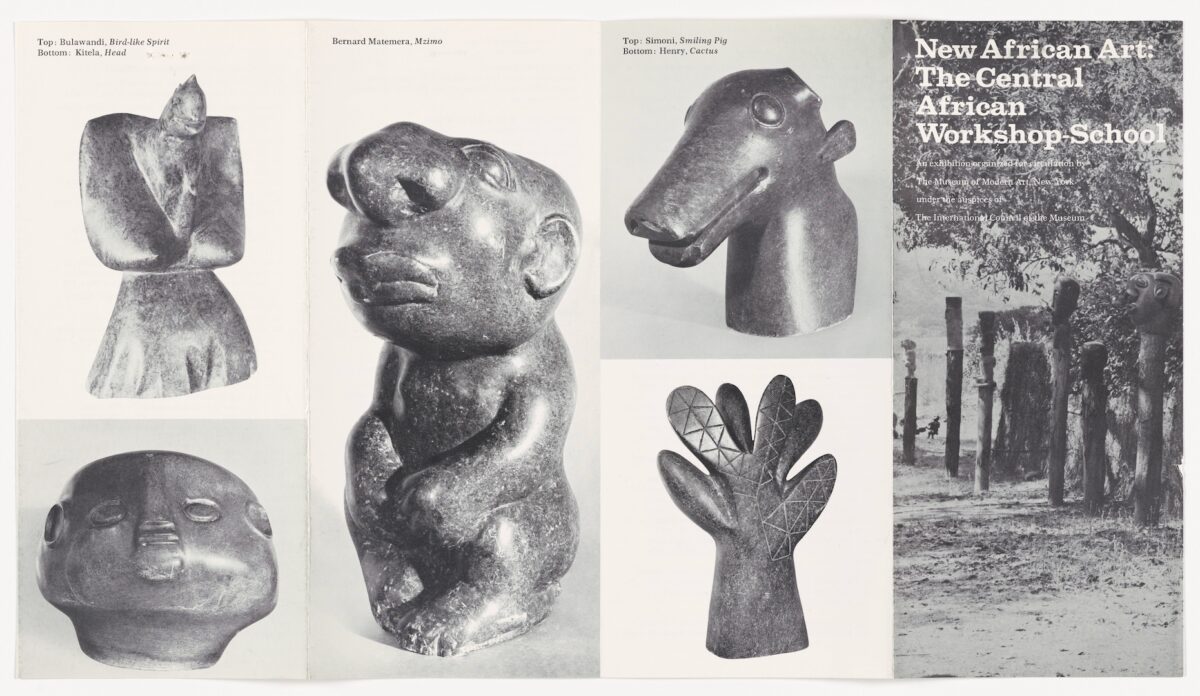
The brochure text had a double function here, producing individuality and collectivity at once. For one, it individuated the sculptors: Each artist is named (alphabetically), with a birth year and a place of work, alongside title and medium. These biographical coordinates establish them as authors in contrast to their “airport art” competitors. On another, the same brochure folds those authors back into a collective identity. McEwen’s heavily shortened text supplies a developmental narrative that converts these artists into a single “school.” They are cast as “deeply immersed” in folklore, ritual, and “magic” then mapped in a staged progression—from “adult-child art,” through “heavy primitivism” and a “pre-Columbian” phase, “before achieving personal sophistication.”17Exhibition brochure. Department of Circulating Exhibitions Records, C/E 68-1: New African Art: The Central African Workshop-School, Work Folder 1, II.2.145.1.1, The Museum of Modern Art Archives, New York. Strongly reminiscent of narratives around Pablo Picasso’s creation of Cubism, the result is a familiar modernist story of maturation and refinement, one that renders stylistic change legible as individual aesthetic progress—while making “the Workshop School” appear as the shared engine behind the individual authors.
The brochure also standardizes formal looking, making sure that viewers will notice the same sculpture’s features. It identifies recurring elements—enlarged heads, frontal poses, vertical emphasis, “relaxed tension,” and integrated bases—while treating variation as local content (“spirit images”) within a shared visual grammar.18Exhibition brochure. Department of Circulating Exhibitions Records, C/E 68-1: New African Art: The Central African Workshop-School, Work Folder 1, II.2.145.1.1, The Museum of Modern Art Archives, New York The point was not only to describe the sculptures, but also to stabilize what would count as their defining qualities as the objects moved from venue to venue.
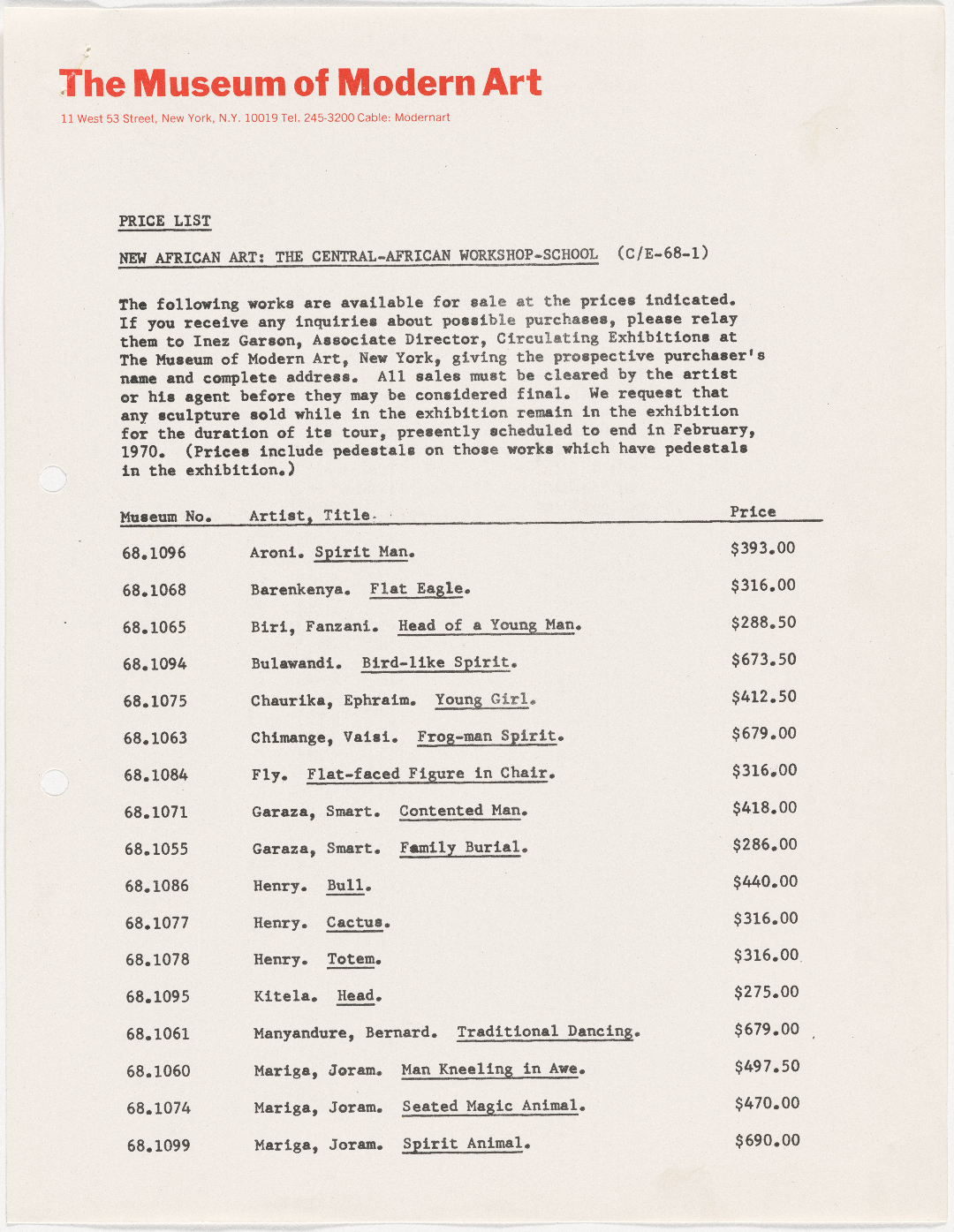
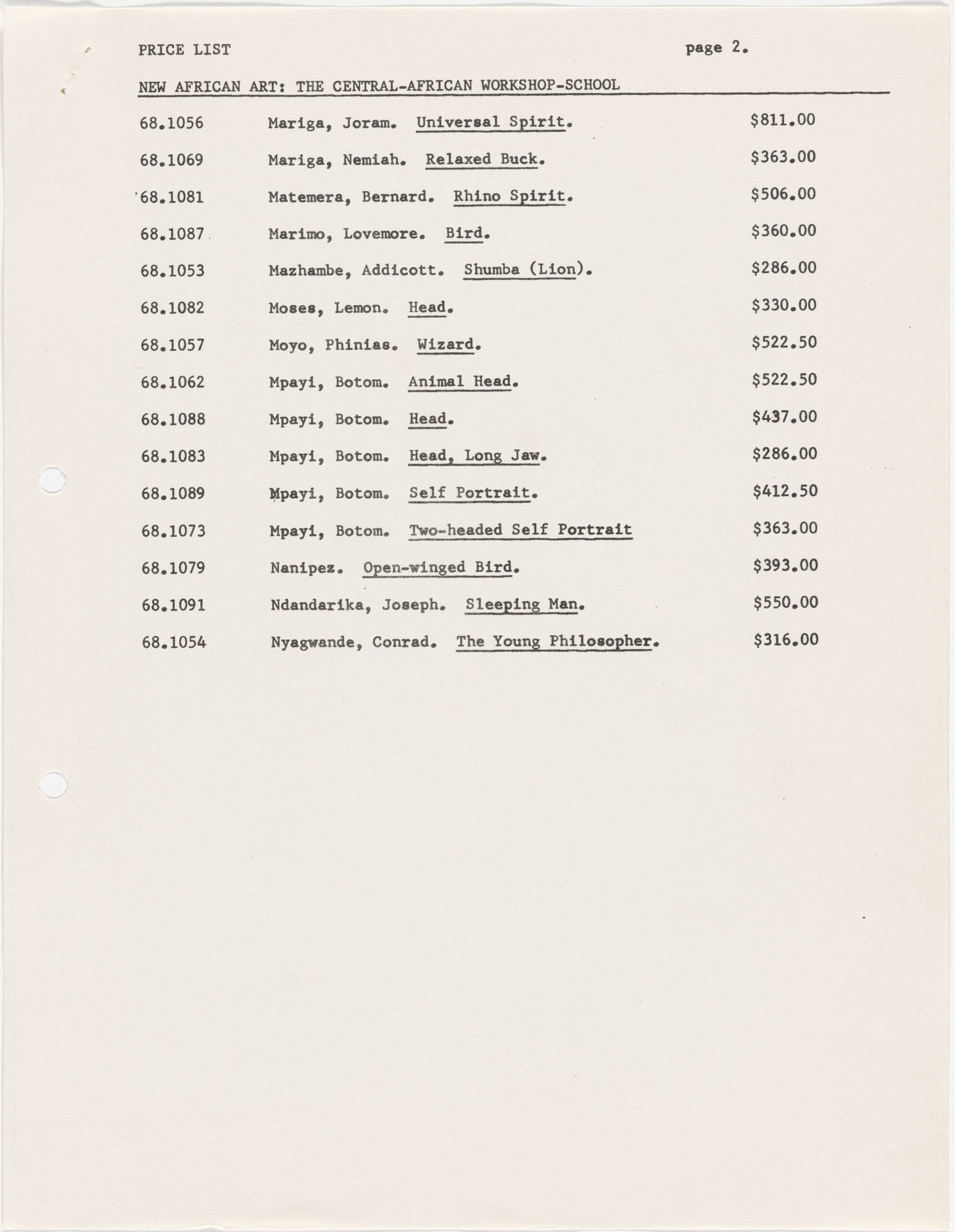
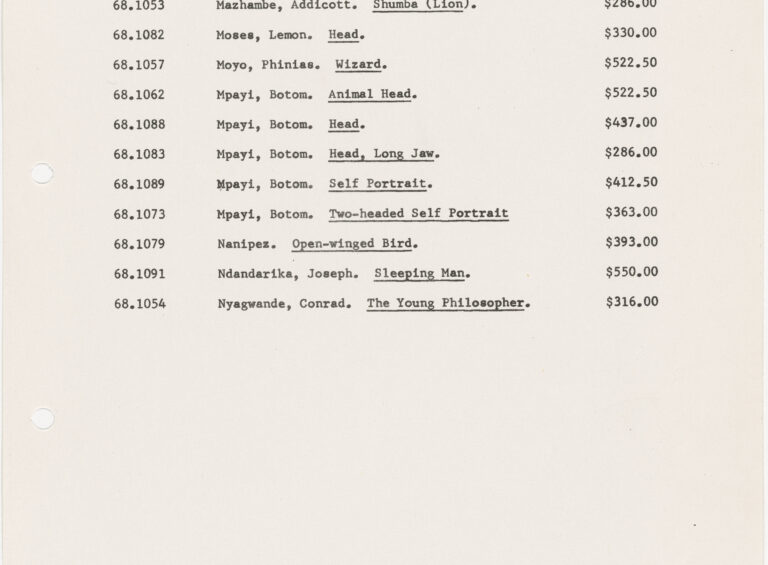
Where text and image reinforced that stabilization, pricing gave it teeth. The brochure circulated alongside a price list and other sales materials for prospective buyers (fig. 5), and the price schedule tracks the implicit hierarchy more closely than it does medium or scale. Most works cluster around roughly $350, suggesting a baseline “serious sculpture” price, while the upper tier appears reserved for artists positioned as more “advanced.”
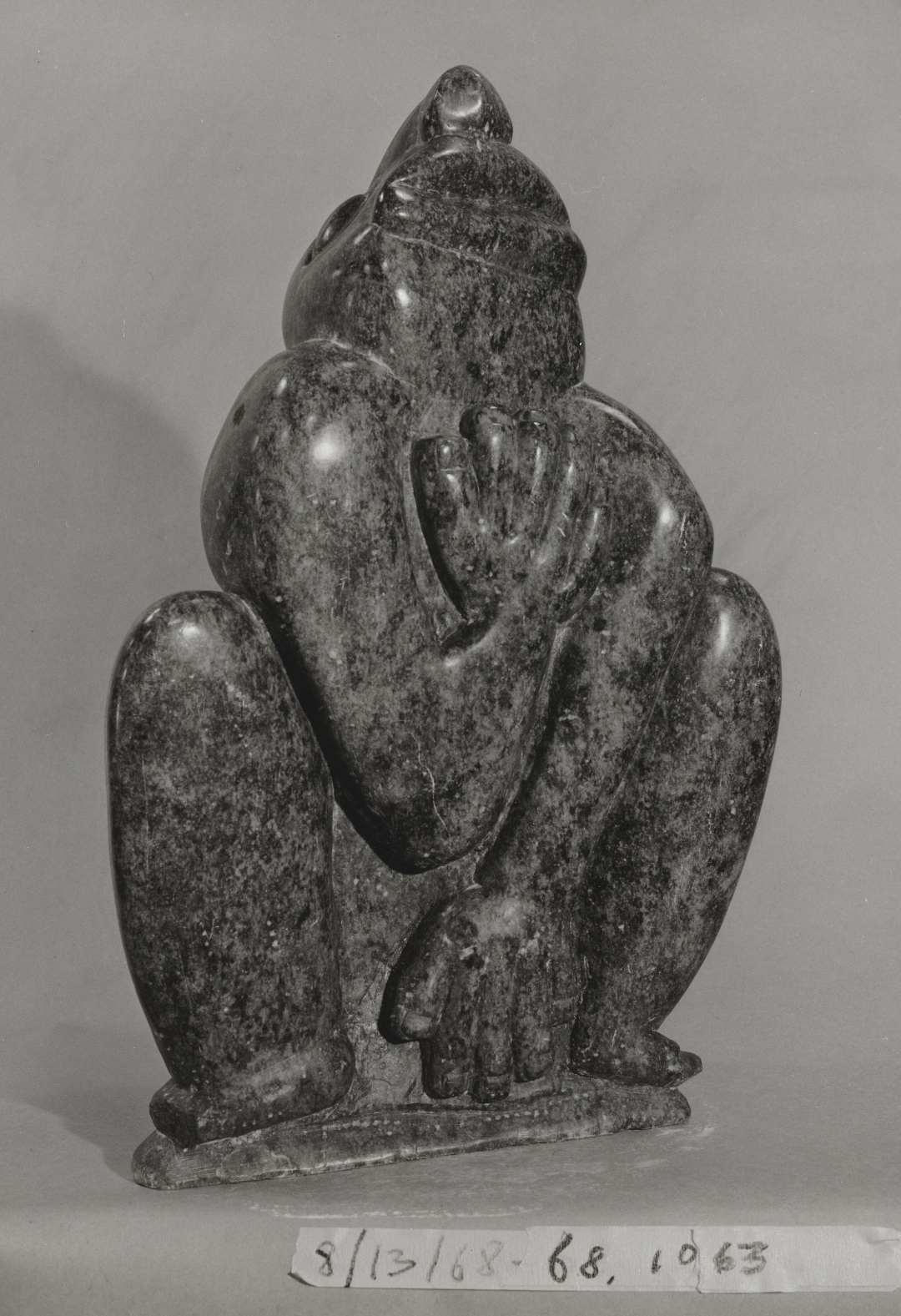
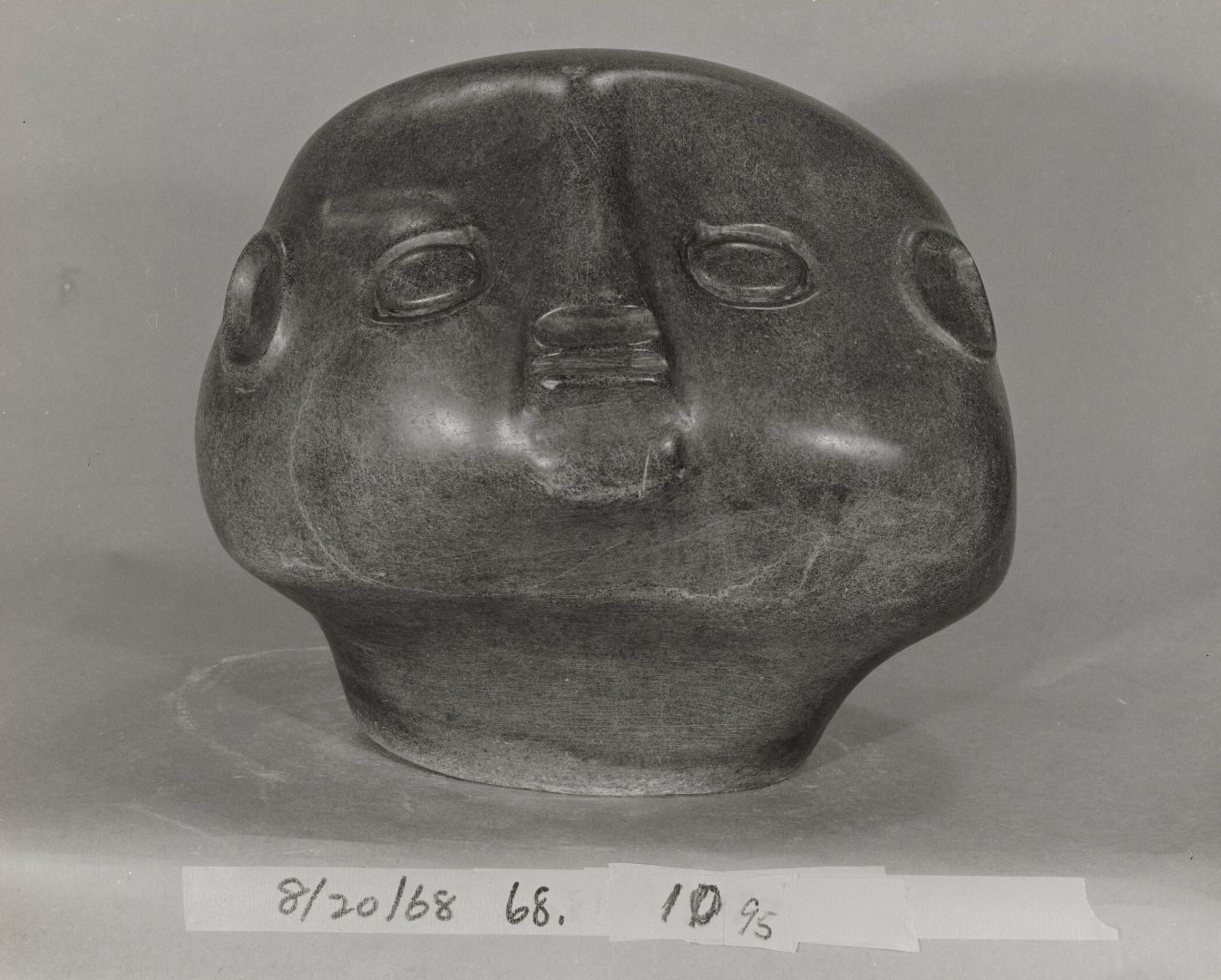
Joram Mariga’s Universal Spirit (n.d.) sits at the top of the list at $811, consistent with his status in the literature as an early catalyst for stone carving.19Joram Mariga’s Nyanga/Nyatate circle (with early students such as Bernard Manyandure, Eric Chigwanda and Frank Vanji) became one of the reference points through which McEwen reframed the Workshop School’s trajectory from painting toward sculpture in the early 1960s. Joosten, Sculptors from Zimbabwe, 20–24. Next come Bernard Manyandure’s Traditional Dancing (n.d.), one of the largest works in the exhibition, and Vaisi (Vais) Chimange’s Frog-man Spirit (n.d.), both priced at $679 (fig. 6). Chimange is especially instructive: Born in Mozambique, only 24, and a recent entrant to stone carving, he complicated any simple equation of “sophistication” with age and made “Shona” a shaky explanatory anchor for the categories being built around the work. At the low end, Kitela’s Head ($275; fig. 7)—a medium-size brown steatite sculpture not dramatically smaller than Chimange’s and carved in the same material. Embodying neither the vertical emphasis nor relaxed tension, its price suggests that quality was assessed according to ranked authorship and McEwen’s formal criteria more than medium or dimensions.
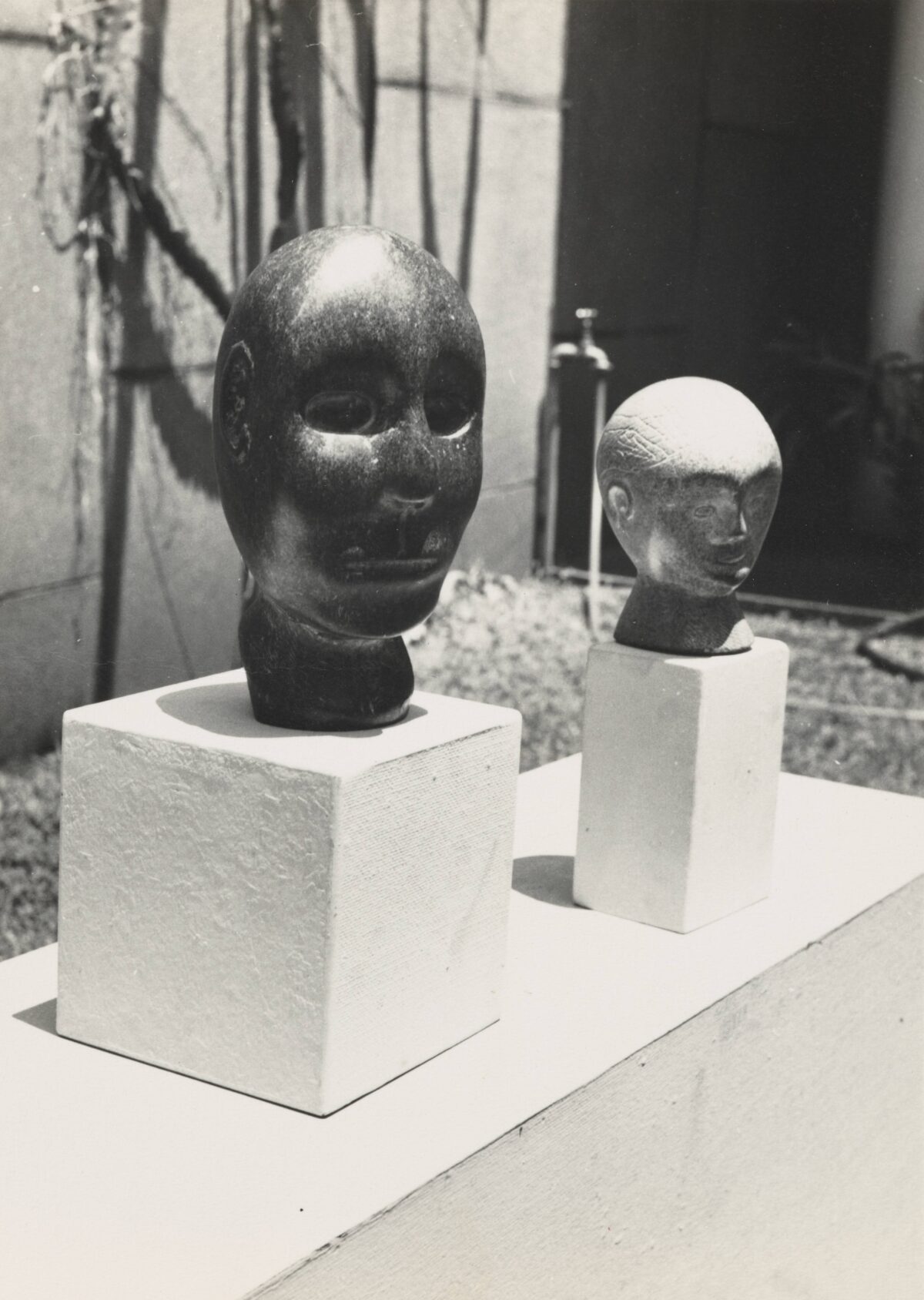
Photographs for prospective buyers staged the works outdoors—including images implying MoMA’s sculpture garden, even though they were never exhibited there as if to suggest to install it outside after acquisition (fig. 8).20In April 1968, Rubin declined to take curatorial responsibility for the exhibition and ensured that the sculptures would not be presented in MoMA’s main galleries. Curatorial oversight ultimately fell to Dorothy Miller who, about to retire as curator of the collection, selected the works for the touring checklist and arranged a brief viewing in the Art Lending Service. Similarly, the cover of the brochure depicts the sculptures placed on tree trunks, highlighting verticality in a setting that would have read to many viewers like it read to Rubin, namely as “the bush” (fig. 9). These choices did quiet work: They suggested origin, authenticity, and installability at the same time, while keeping the objects visually distinct from more commercial environments.
The exhibition traveled to eight venues across the United States, typically staying three to four weeks at each stop. University galleries and museums paid fees scaled to institutional status between $100 and $500 in addition to covering the shipping fees. Pedestals were fabricated. Sculptures were drilled for stability. Condition reports tracked chips and cracks; repairs were ordered; damage was evaluated against insured value. This was not incidental administration. It was the material infrastructure that allowed the works to circulate as “serious sculpture” within a curated circuit.
Throughout the tour, the works remained available for purchase. MoMA took a 10 percent commission on sales, with an additional $30 markup on objects requiring plinths.21The sales process was administered by Inez Garson, associate director of the Department of Circulating Exhibitions. Liz Tweedy to Miss Dudley, October 1, 1968. Department of Circulating Exhibitions Records, C/E 68-1: New African Art: The Central African Workshop-School, Work Folder 1, II.2.145.1.1, The Museum of Modern Art Archives, New York. Administratively, the objects could be filed as loans. Functionally, they operated as managed inventory: curated, toured, and sold through institutional mediation. Demand did not speak directly to the sculptor but with the Department of Circulating Exhibitions; it was filtered through a system designed to buffer the feedback loops McEwen feared. The central hub in Salisbury was geographically displaced but structurally preserved.
In this mediation, MoMA assumed multiple roles simultaneously: It was customs broker, classifying the works to ensure favorable entry. It was insurer, establishing and revising monetary value. It was warehouse manager, responsible for storage and handling. It was touring coordinator, structuring the itinerary and institutional framing. It was commissioned seller. And above all, it was validator.
Press responses suggest the system worked as intended. Reviews repeatedly echoed the brochure’s language and interpretive frame: formal traits (enlarged head, verticality, “relaxed tension”) and claims of cultural isolation, folklore, and “ancient” heritage.22See, for example, press clippings from the Cincinnati Enquirer from January 5, 1969, and the Los Angeles Times from November 2, 1969. Department of Circulating Exhibitions Records, C/E 68-1: New African Art: The Central African Workshop-School, Work Folder 2, II.2.145.1.2, The Museum of Modern Art Archives, New York. In one instance, a local art history department chair even went on the record, lending his institutional authority to repeat the brochure almost verbatim.23Macon Telegraph, October 5, 1969. Press clippings found in the Department of Circulating Exhibitions Records, C/E 68-1: New African Art: The Central African Workshop-School, Work Folder 2, II.2.145.1.2, The Museum of Modern Art Archives, New York. Meaning traveled as reliably as the crates did.
Hybridity, Formal Coherence, and the Historiography of Stone Sculpture
Across the primary and secondary literature, stone sculpture is typically organized through two overlapping sets of divisions: institutional centers and origin stories. On the one hand, survey accounts map the movement onto parallel, if not competing, hubs—most commonly McEwen’s National Gallery/Workshop School lineage and the Tengenenge farm under Tom Blomefield. On the other hand, revisionist histories redivide the field genealogically: Instead of an ex nihilo “Shona” flowering, they trace stone carving to earlier mission-based pedagogies (Cyrene and Serima) and then to a dispersed first generation whose biographies cluster by region (Cyrene, Serima, Harare, Nyanga, Tengenenge).24For an empirically rich genealogy, see Joosten, Sculptors from Zimbabwe.
My argument sits adjacent to (and slightly orthogonal to) the standard poles of the debate. Jonathan Leslie Zilberg’s influential formulation treats “Shona sculpture” as an engineered tradition, one shaped by McEwen’s intellectual templates and by intercultural traffic rather than ethnic continuity.25Jonathan Leslie Zilberg, “Zimbabwean Stone Sculpture: The Invention of a Shona Tradition” (PhD diss., University of Illinois at Urbana-Champaign, 1996). Later work complicates that account by reasserting artists’ agency and the thick reality of belief and training—whether through interview-based cultural contextualization and patronage analysis (Celia Winter-Irving and Elizabeth A. Morton), anthropological emphasis on identity-making and customary continuities (Joseph James Kinsella), or revisionist re-centering of African artist-teachers and system-level causality (Barnabas Muvhuti).26Celia Winter-Irving, Contemporary Stone Sculpture in Zimbabwe: Context, Content and Form (Craftsman House, 1993). Elizabeth A. Morton, “Missions and Modern Art in Southern Africa” (PhD diss., Emory University, 2003). Joseph James Kinsella, “Carving Identity: Artistic Traditions and Aesthetic Knowledge in Contemporary Zimbabwe” (PhD diss., University of New Mexico, 2005). Barnabas Muvhuti, “Revisionist Narratives: Locating Six Black Artist-Teachers onto the Map of Twentieth-Century Modern Art in Zimbabwe” (PhD diss., Rhodes University, 2023). I add to this conversation a third term: “circulatory infrastructure as a generator of form.” Rather than adjudicating whether aesthetic form originates in indigenous “spirit” or modernist “invention,” I treat form as the repeatable outcome of touring, insurance, photography, installation standardization, and market buffering. What looks like “style” is also a set of solutions to photography, packing, customs, insurance, reinstallation, and sale—an aesthetic that crystallized under the economic discipline of circulation.
The features most frequently highlighted by McEwen and the press make this clear. Frontality is not only a compositional preference, it is also is a media strategy. A frontal figure reproduces cleanly in brochures and newspapers and remains legible at a glance—especially when reduced to black-and-white halftone. The claim that the stand is built into the sculpture similarly functions as both ontology and logistics: It renders the work self-sufficient while making it easy to install, reinstall, and stabilize across changing venues. Scale performs as portable monumentality—large enough to command a pedestal, compact enough to fit predictable crate dimensions and touring schedules. Material decisions—shifts toward harder serpentine and granite—also read differently when paired with documentation: Durability reduces loss and repair; the rarity of hard stone supports “anti-fake” branding; and a stable material profile simplifies valuation and insurance. McEwen’s much-emphasized polished surfaces became an interface between form and paperwork: Finish registers as quality in photographs and can be described, compared, and verified in condition reports. Verticality, often treated as purely expressive, can be understood as another touring form. Upright figures maximize presence while minimizing footprint: They store efficiently, stabilize easily on pedestals, and hold a crisp silhouette under varied lighting conditions.
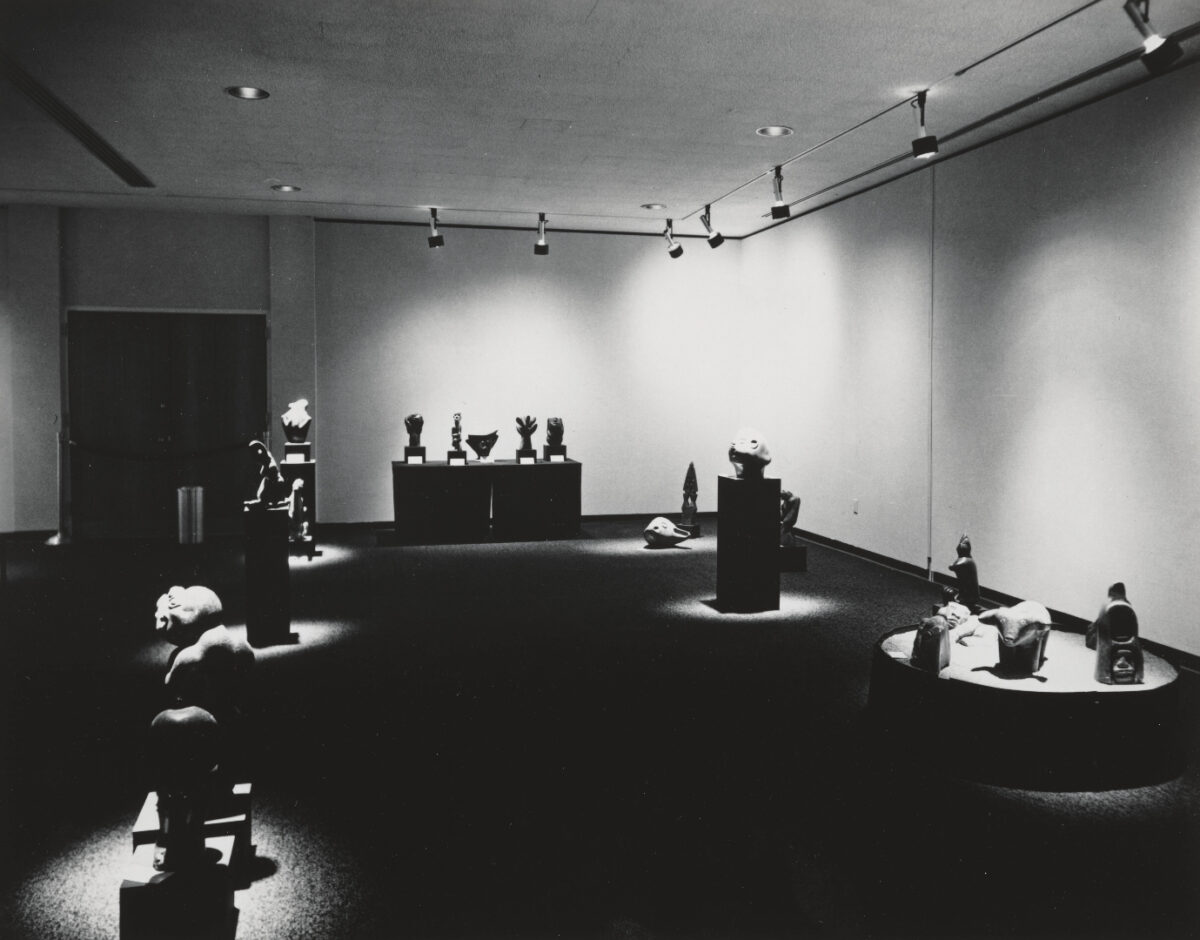
The installation photograph from the West Virginia University Gallery iteration makes the infrastructural logic visible (fig. 10). The works are dispersed across pedestals and a curved platform, each isolated by dramatic lighting into a discrete, readable unit. Nothing relies on a complex environment or contextual explanation; each object is made to “hold” its own display conditions—self-supporting, immediately legible, and resistant to visual noise. Even the museum’s standardized tools (track lights, plinths, open sight lines) seem anticipated by the sculptures’ compact massing and restrained protrusions.
Seen as a whole, the story is less about stylistic evolution than it is about a value chain that continuously converts risk into form and form into value. McEwen’s Salisbury hub concentrated production, selection, pricing, and narrative; MoMA extended that hub transnationally by translating “seriousness” into customs categories, insurance schedules, touring contracts, installations, commission-based sales, and the press. “Shona sculpture” operated as a circuit in which authenticity rhetoric and modernist legibility worked together to make circulation profitable without appearing commercial. Once the chain was visible end to end, formal traits stopped reading as timeless cultural signatures and began to register as logistical achievements: frontality that photographs, integrated bases that reinstall, vertical silhouettes that pedestal and pack, hard stone and polish that insure and reproduce. This is not to cast Zimbabwean sculptors as passive outputs of a system, but to mark the conditions within which they made decisions—navigating, negotiating, and at times exploiting the constraints and opportunities of touring, documentation, and sale—as part of their artistic practice. As Bernard Takawira, who was only 20 years old at the time of the exhibition and would later become one of its most internationally successful participants, put it: “Sculpting is not a train station: It is the journey itself.”27Bernard Takawira, interview in 1991 by Olivier Sultan, quoted in Life in Stone: Zimbabwean Sculpture by Olivier Sultan and Peter Fernandes (Baobab Books, [1992]), 23. Modern art here is not a look so much as a route—made in and through the conditions of circulation.
Every effort has been made to contact the copyright holders for Figures 2 and 3 in this article. If you hold the rights to any of the material used and have not been contacted, please reach out to contact_c-map@moma.org so that proper credit can be attributed or the material removed.
- 1William Rubin to the Ford Foundation, September 29, 1967. Department of Circulating Exhibitions Records, C/E 68-1: New African Art: The Central African Workshop-School, Work Folder 1, II.2.145.1.1, The Museum of Modern Art Archives, New York. ↩︎
- 2For more on the complicated historiography of the Workshop School, see the last section of this essay. ↩︎
- 3While McEwen initially promoted the movement as “Shona sculpture,” the label has since attracted sustained scholarly critique—particularly regarding the extent to which these works can be taken as direct expressions of Shona belief or cultural continuity. I return to this problem in the final section of this essay. Throughout my text, I use “Shona sculpture” only when referring to McEwen’s promotional framing (or that of the actors who adopted it); otherwise, I refer more neutrally to the works as stone sculptures. For a critique of the term that explores the cultural heterogeneity of sculptors lumped into the category even though they are not Shona, see Carole Pearce, “The Myth of ‘Shona Sculpture,’” Zambezia: The Journal of the University of Zimbabwe 20, no. 2 (1993): 85–107. ↩︎
- 4Prominent figures such as British anthropologist William Buller Fagg and Nigerian archaeologist Ekpo Eyo invoked McEwen’s terminology to warn about mass-produced carvings for tourists. See William Fagg, “Tribality,” in Colloquium: Function and Significance of African Negro Art in the Life of the People and for the People, March 30–April 8, 1966 (Présence Africaine, 1968), 115; and Epko Eyo, “Preservation of Works of Art and Handicraft,” in ibid., 585. ↩︎
- 5According to Peter Probst, the relative neglect of modern art from Africa was not incidental but structural: Euro-American institutions and scholarship long privileged so-called traditional or classical African art, while modern African production remained marginal to mainstream art-historical attention well into the late 20th century—a divergence that only began to shift more decisively in the 1990s. Probst, What Is African Art? A Short History (University of Chicago Press, 2022), 95. ↩︎
- 6Frank McEwen, “The National Gallery of Salisbury and Its Workshop-School,” Museum 16, no. 3 (1963): 176. ↩︎
- 7McEwen, “The National Gallery of Salisbury and Its Workshop-School,” 176. ↩︎
- 8McEwen, “The National Gallery of Salisbury and Its Workshop-School,” 177. ↩︎
- 9McEwen, “The National Gallery of Salisbury and Its Workshop-School,” 177 ↩︎
- 10From the early 1960s onward, McEwen struggled to find new revenue streams for the National Gallery of Salisbury as many of the museum’s white patrons began boycotting his support of Black artists. Elizabeth Morton, “Frank McEwen and Joram Mariga: Patron and Artist in the Rhodesian Workshop School Setting, Zimbabwe,” in African Art and Agency in the Workshop, ed. Sidney Littlefield Kasfir and Till Förster (Indiana University Press, 2013), 275. ↩︎
- 11Later in the 1960s, at Vukutu and Tengenenge, two new production sites hundreds of miles away from McEwen’s museum, the business structure became even more formalized. At Vukutu, for instance, revenue was divided into thirds among the sculptors, the enterprise, and the National Gallery. The irony is that many of the artists McEwen helped promote later turned to so-called airport art distributors precisely because they could earn more through those channels than through the National Gallery’s system. For an overview of the complicated relationship between McEwen’s ventures and Tom Blomefield’s forays into stone sculpture at his Tengenenge farm, see Ben Joosten, Sculptors from Zimbabwe: The First Generation (Galerie de Strang, 2001), 28. ↩︎
- 12Inez Garson to William Rubin, March 29, 1968. Department of Circulating Exhibitions Records, C/E 68-1: New African Art: The Central African Workshop-School, Work Folder 1, II.2.145.1.1, The Museum of Modern Art Archives, New York. ↩︎
- 13Although “apartheid” usually designates a specific South African legal regime, Southern Rhodesia from 1965 onward was widely characterized—by international bodies and legal observers—as an illegal white “racist minority” government that enforced systematic racial hierarchy through segregationist land and labor regimes and political exclusion. For more context, see Alois S. Mlambo, A History of Zimbabwe (Cambridge University Press, 2014). ↩︎
- 14Waldo Rasmussen to customs officials, undated. Department of Circulating Exhibitions Records, C/E 68-1: New African Art: The Central African Workshop-School, Work Folder 1, II.2.145.1.1, The Museum of Modern Art Archives, New York. ↩︎
- 15Rubin to customs officials, February 7, 1968. Department of Circulating Exhibitions Records, C/E 68-1: New African Art: The Central African Workshop-School, “Imports”, II.2.145.1.4, The Museum of Modern Art Archives, New York. ↩︎
- 16Most histories of MoMA still foreground the development of its curatorial departments, collections, and exhibitions in the main building, and in doing so tend to treat infrastructural arms such as the Department of Circulating Exhibitions as peripheral rather than constitutive to the museum’s institutional growth and reach. A notable corrective is Caroline Riley, MoMA Goes to Paris in 1938: Building and Politicizing American Art (University of California Press, 2023. ↩︎
- 17Exhibition brochure. Department of Circulating Exhibitions Records, C/E 68-1: New African Art: The Central African Workshop-School, Work Folder 1, II.2.145.1.1, The Museum of Modern Art Archives, New York. ↩︎
- 18Exhibition brochure. Department of Circulating Exhibitions Records, C/E 68-1: New African Art: The Central African Workshop-School, Work Folder 1, II.2.145.1.1, The Museum of Modern Art Archives, New York ↩︎
- 19Joram Mariga’s Nyanga/Nyatate circle (with early students such as Bernard Manyandure, Eric Chigwanda and Frank Vanji) became one of the reference points through which McEwen reframed the Workshop School’s trajectory from painting toward sculpture in the early 1960s. Joosten, Sculptors from Zimbabwe, 20–24. ↩︎
- 20In April 1968, Rubin declined to take curatorial responsibility for the exhibition and ensured that the sculptures would not be presented in MoMA’s main galleries. Curatorial oversight ultimately fell to Dorothy Miller who, about to retire as curator of the collection, selected the works for the touring checklist and arranged a brief viewing in the Art Lending Service. ↩︎
- 21The sales process was administered by Inez Garson, associate director of the Department of Circulating Exhibitions. Liz Tweedy to Miss Dudley, October 1, 1968. Department of Circulating Exhibitions Records, C/E 68-1: New African Art: The Central African Workshop-School, Work Folder 1, II.2.145.1.1, The Museum of Modern Art Archives, New York. ↩︎
- 22See, for example, press clippings from the Cincinnati Enquirer from January 5, 1969, and the Los Angeles Times from November 2, 1969. Department of Circulating Exhibitions Records, C/E 68-1: New African Art: The Central African Workshop-School, Work Folder 2, II.2.145.1.2, The Museum of Modern Art Archives, New York. ↩︎
- 23Macon Telegraph, October 5, 1969. Press clippings found in the Department of Circulating Exhibitions Records, C/E 68-1: New African Art: The Central African Workshop-School, Work Folder 2, II.2.145.1.2, The Museum of Modern Art Archives, New York. ↩︎
- 24For an empirically rich genealogy, see Joosten, Sculptors from Zimbabwe. ↩︎
- 25Jonathan Leslie Zilberg, “Zimbabwean Stone Sculpture: The Invention of a Shona Tradition” (PhD diss., University of Illinois at Urbana-Champaign, 1996). ↩︎
- 26Celia Winter-Irving, Contemporary Stone Sculpture in Zimbabwe: Context, Content and Form (Craftsman House, 1993). Elizabeth A. Morton, “Missions and Modern Art in Southern Africa” (PhD diss., Emory University, 2003). Joseph James Kinsella, “Carving Identity: Artistic Traditions and Aesthetic Knowledge in Contemporary Zimbabwe” (PhD diss., University of New Mexico, 2005). Barnabas Muvhuti, “Revisionist Narratives: Locating Six Black Artist-Teachers onto the Map of Twentieth-Century Modern Art in Zimbabwe” (PhD diss., Rhodes University, 2023). ↩︎
- 27Bernard Takawira, interview in 1991 by Olivier Sultan, quoted in Life in Stone: Zimbabwean Sculpture by Olivier Sultan and Peter Fernandes (Baobab Books, [1992]), 23. ↩︎