Texts by Conceptual Artists from Eastern Europe: Hungary
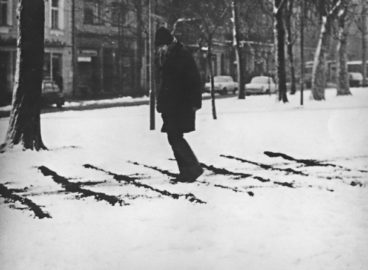
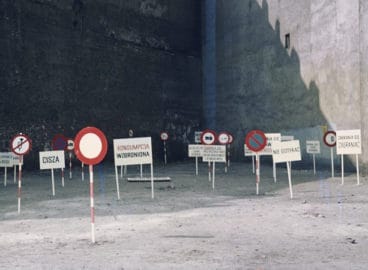
This series presents newly translated texts from the 1970s by Conceptual artists from Poland, Hungary, and Slovakia.
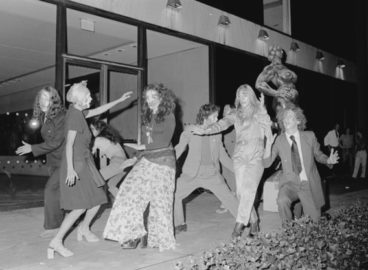
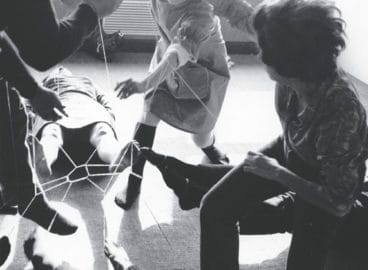
In the mid-1960s, Brazilian artist Lygia Clark turned from painting and sculpture to make participatory “proposições” (propositions). In the 1970s, she started “corpo coletivo” (collective body) experiments.
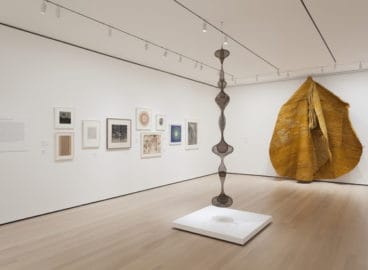
Yellow Abakan and Pregnant by Magdalena Abakanowicz engage with a diverse range of materials that address the limitations of working as a female sculptor under state socialism.
In the mid-1960s, Brazilian artist Lygia Clark turned from painting and sculpture to make participatory “proposições” (propositions). In the 1970s, she started “corpo coletivo” (collective body) experiments.
The essay focuses on four artist books by Mladen Stilinović (1947-2016). Several of the books are in an accordion-fold format, common for Stilinović’s photobooks and pamphlets that include drawings, word constructions, and collages.
This series presents newly translated texts from the 1970s by Conceptual artists from Poland, Hungary, and Slovakia.
Renowned Chilean critic Adriana Valdés talks about the Chilean art scene during the dictatorship and about the work of Eugenio Dittborn.
Since 1960, the North Korean government has constructed many buildings, monuments, and statues in Africa. These architectural structures have been covered by the international press since 2010, when the African Renaissance Monument was inaugurated in Senegal.
On contemporary artist Walid Raad’s work in his recent solo exhibition at MoMA and on the changing politics of presenting art from the Middle East in the region and around the world. Final part of three. This question of temporality is directly related to the problematic of taxonomy engaged by Scratching . . ., and epitomized by ongoing debates…
On contemporary artist Walid Raad’s work in his recent solo exhibition at MoMA and on the changing politics of presenting art from the Middle East in the region and around the world. Second part of three. As Raad has often acknowledged, his work is indebted to the writings of the Lebanese artist and philosopher Jalal…
On contemporary artist Walid Raad’s work in his recent solo exhibition at MoMA and on the changing politics of presenting art from the Middle East in the region and around the world. First part of three. Over the past decade, major museums in Cairo, Copenhagen, Detroit, Doha, Kuwait, London, New York, and other cities have…