South Asia

post Presents: Unsettled Dust—Archives, Epistemologies, Images

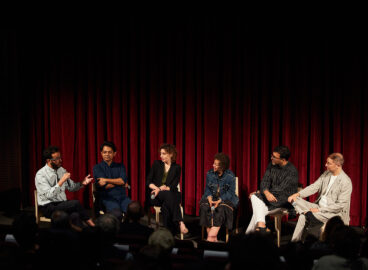
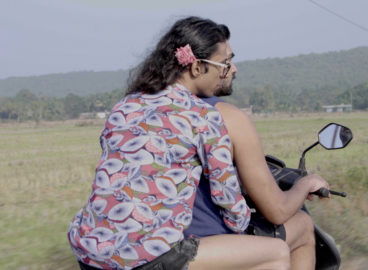
These presentations and panel discussion at MoMA brought together four filmmakers and artists who work in expanded documentary modes, using existing footage, archival research, interviews, and scripted narratives to produce imaginative accounts of transnational struggles, solidarities, and interventions. Using moving images, some of these practitioners interrogate the anti-colonial and anti-imperialist movements of the mid-late 20th…

In Memoriam: Kavita Singh (1964-2023)

Kavita Singh was a distinguished and beloved art historian, curator, and pedagogue. She passed away in New Delhi on July 30, 2023, following a brave battle with cancer. In this 5 Questions interview, conducted when she visited The Museum of Modern Art as a C-MAP Asia speaker in 2016, Singh shared her critical insights into questions of canonicity, location, representation, and translation in the era of globalization.

In Memoriam: Balkrishna V. Doshi (1927- 2023)

Balkrishna Vithaldas Doshi (1927-2023) was a pioneer of architectural modernism in India, and the first architect from the region to be awarded the Pritzker Prize in 2018. His work was prominently featured in the 2022 MoMA exhibition, The Project of Independence: Architectures of Decolonization in South Asia, 1947–1985, during which he participated in an online conversation with Martino Stierli, The Philip Johnson Chief Curator of Architecture and Design. Following Doshi’s passing at the age of 95, in January 2023, we are publishing this wide-ranging conversation accompanied by Stierli’s reflection on the architect’s life and legacy.

post Presents: Photographer Dayanita Singh in Conversation with Curator Sean Anderson

The ongoing COVID crisis in India has affected every aspect of daily life and every segment of Indian society. From her vantage point in Delhi, world-renowned photographer Dayanita Singh provides a first-person account of the realities of the current situation, her knowledge of its effects on her colleagues in arts communities, and indicates what and where help is most urgently needed.

Mulk Raj Anand

Mulk Raj Anand is perhaps best remembered as a cultural critic, writer, philosopher, and patron of the arts. But Rashmi Viswanathan turns her attention to his lesser known initiative to establish India’s First Triennale of Contemporary World Art in 1968. This essay explores Anand’s optimistic use of the triennale to shift international cultural relations and…

Gandhi’s Buildings and the Search for a Spiritual Modernity

Riyaz Tayyibji considers the little-known architectural collaborations of Mahatma Gandhi, charismatic leader of the Indian freedom movement, in light of discourses of modern architecture. Weaving in discussions of phenomenology, material, and a discipline of privacy, the essay explores aspects of Gandhi’s philosophical and political thinking that propose a notion of the modern with an ethical and spiritual underpinning for 20th century architectural practice.