post Presents: A Talk on Àsìkò: The Pan-African Alternative Art School
Bisi Silva discusses the history of the organization and how it serves to introduce theoretical discourse and build connections among practitioners across the continent.
Bisi Silva discusses the history of the organization and how it serves to introduce theoretical discourse and build connections among practitioners across the continent.
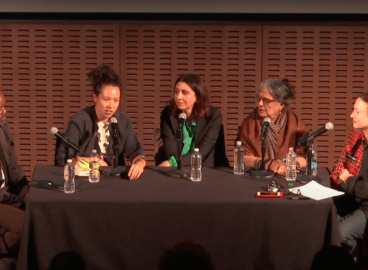
The roundtable discussion focuses on international networks that decenter, complicate, or even bypass Western-centric models.
During 2016 and 2017, more than 80 scholars, artists, and curators visited MoMA as C-MAP guests. n conjunction with the 5 Questions interview series, we asked them a sixth question: How can MoMA better approach international artistic production and exchange?
“In your practice, how do you approach the challenges that arise when presenting art from contexts that are not familiar to your audience?” With the dominance of the biennial model and the aggressive globalization of art institutions, such a question is as pertinent to a curator as it ever was.
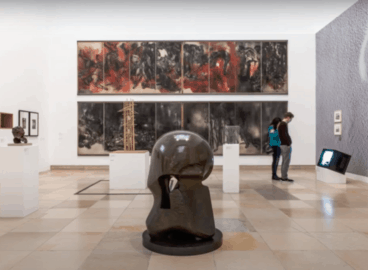
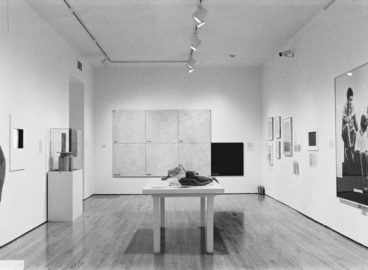
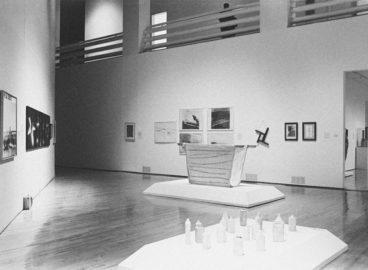
Postwar: Art Between the Pacific and the Atlantic, 1945-65, an exhibition on view at Haus der Kunst in Munich from October 2016 – March 2017, presents the period and its art as already global, multi-faceted, and modern.
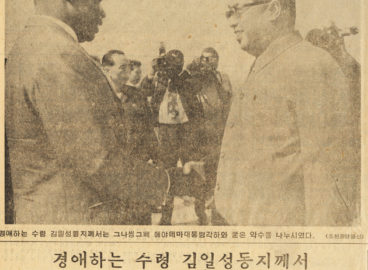
Since 1960, the North Korean government has constructed many buildings, monuments, and statues in Africa. These architectural structures have been covered by the international press since 2010, when the African Renaissance Monument was inaugurated in Senegal.
Rachel Weiss, curator, writer, and professor at the School of the Art Institute of Chicago, was invited to MoMA to speak about the exhibition Global Conceptualism: Points of Origin, 1950s–1980s, which she co-organized in 1999 with Jane Farver (who also came to talk on the subject), Luis Camnitzer, and an international team of curators: Okwei Enwezor,…
Jane Farver, curator and former Director of Exhibitions at the Queens Museum, was invited to MoMA to speak about the exhibition Global Conceptualism: Points of Origin, 1950s–1980s, which she co-organized in 1999 with Rachel Weiss (who also came to present on the subject), Luis Camnitzer, and an international team of curators: Okwei Enwezor, Reiko Tomii &…
Armin Linke (Italian, born 1966) is a traveler in search of strange, yet familiar frontiers; his photographs spring from a peripatetic practice that has taken him from the slopes of the massive infrastructural transformations rent by the Three Gorges Dam in China, to the technologically crafted snow-globe winters of Ski Dubai’s interiors. Each photograph forms…
David Harvey’s essay for the exhibition catalog of Uneven Growth Tactical Urbanisms for Expanding Megacities is published here on post to mark the opening of the exhibition. On the night of June 20, 2013, more than a million people in some 388 Brazilian cities took to the streets in a massive protest movement. The largest of these protests, comprising…
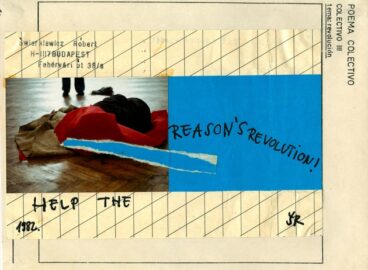
The mail art network connected hundreds of artists around the world, heralding art forms based on communication systems rather than objects. In 1981 in Mexico City, the artists’ group Colectivo 3 initiated Poema Colectivo Revolución in Mexico City in 1981 and drew upon the international mail art network, some of whose members had been exchanging artworks and…
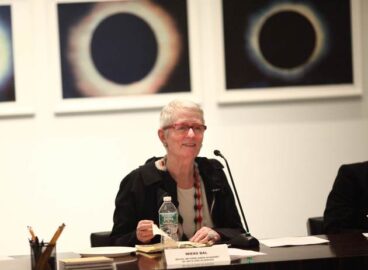
A few remarks about MoMA’s research project “Contemporary and Modern Art Perspectives in a Global Age.” Mieke Bal delivered this text as a response during the yearly C-MAP seminar that took place at The Museum of Modern Art in April 2013. Entitled “Global Networks,” this two-day long meeting of members of the three geographically oriented C-MAP…