post Presents: Decentering the Museum?

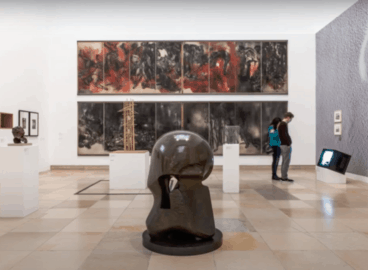
On May 1, post presented a roundtable discussion focused on international networks that decenter, complicate, or even bypass Western-centric models. Panelists Geeta Kapur, Joanna Mytkowska, Chika Okeke-Agulu, and Irene Small speak with Kathy Halbriech about how Western institutions can address art outside of their own contexts.

Kathy Halbreich is associate director and Laurenz Foundation Curator at The Museum of Modern Art. Geeta Kapur is a New Delhi-based critic and curator and the author of a number of widely anthologized essays on contemporary art, cultural theory, and curatorial initiatives across the global South. Joanna Mytkowska is a curator, art critic, co-founder of the Foksal Gallery Foundation, and director of the Museum of Modern Art in Warsaw. Chika Okeke-Agulu is associate professor of African and African Diaspora Art in the Department of Art and Archaeology at Princeton University and the author of Postcolonial Modernism: Art and Decolonization in Twentieth-Century Nigeria. Irene Small is assistant professor of Modern and Contemporary Art in the Department of Art and Archaeology at Princeton University and the author of Héllo Oiticica: Folding the Frame.
More in this theme

Challenging the Global: C-MAP Experts Respond

During 2016 and 2017, more than 80 scholars, artists, and curators visited MoMA as C-MAP guests. n conjunction with the 5 Questions interview series, we asked them a sixth question: How can MoMA better approach international artistic production and exchange?

Subscribe to our newsletter

Related Content

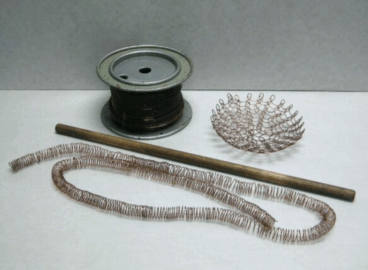
Open Loop: Reconsidering the Relationship Between Mexican Wire Baskets and Ruth Asawa’s Looped-Wire Sculpture

In creating a mesh by looping and interlocking single strands of wire, Asawa defined an intricate shape without precluding a view of its interior; instead, she foregrounded space itself. The artist had learned the basic premise of looping wire into permeable volumes during an American Friends Service Committee volunteer trip to Toluca, Mexico, where in 1947, she encountered—and briefly studied—a unique wire-basketry technique. While today, thanks to a series of critical analyses from 2006 onward, Asawa’s art sits comfortably within the trajectory of radical innovations of modernist sculpture, the Mexican origin and craft pedigree of her signature looped-wire creations are typically cast in a role subservient to the major narrative of the artist’s singular contributions.

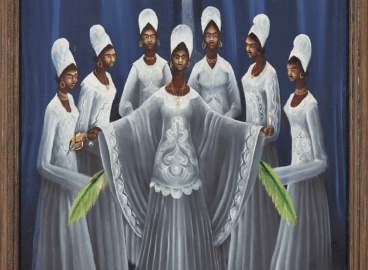
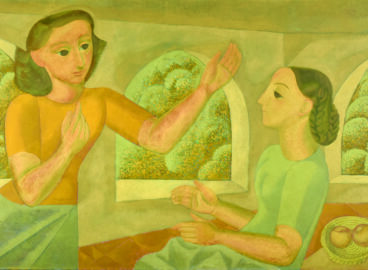
Female Approaches to the Divine: The Marian Representations of Norah Borges, María Izquierdo, and Miriam Inez da Silva / Acercamientos femeninos a lo divino. Las representaciones marianas de Norah Borges, María Izquierdo y Miriam Inez da Silva

“Mary is . . . a myth of a woman without a vagina,” proclaims queer theologian Marcella Althaus-Reid in Indecent Theology: Theological Perversions in Sex, Gender, and Politics. Moreover, Althaus-Reid declares that the adoration of the Virgin in Latin America in the…