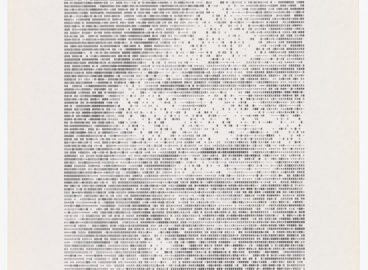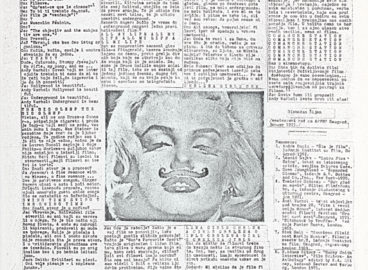
Who Is Shooting Over There: Slobodan Šijan’s Fanzine Film Leaflet (1976–79)
Aleksandar Bošković traces the Hollywood references and self-referential play in filmmaker Slobodan Šijan’s paracinematic Film Leaflet
Aleksandar Bošković traces the Hollywood references and self-referential play in filmmaker Slobodan Šijan’s paracinematic Film Leaflet
This essay argues that the Bauhaus and VKhUTEMAS operated independently of each other, with choice moments of mutual exchange, focusing on the site of the avant-garde magazine as evidence of this.
Waldemar Cordeiro’s work shifts from his involvement with Concrete Art in São Paulo (of which he was one of the central artists, critics, and curators), to landscape design, a unique take on Pop Art through his “Popcretos,” and his final 1970s experiments with computer art. Cordeiro’s 1970s works were produced while Brazil was ruled by a military dictatorship that was skilled and innovative in its manipulation of mass media to control society and manage dissent.
The interview with Zarina considers the artist’s life and work as a bridge between New Delhi and New York.
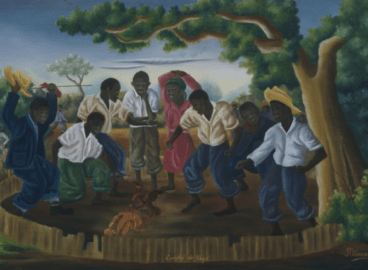
Through a close analysis of documents in the MoMA Archives, this essay challenges the dominant narrative about the development and internationalization of Haitian art in the 1940s.
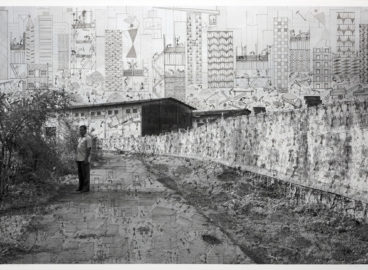
After following the work of Gauri Gill for many years and meeting with her in New Delhi, curator Sarah Suzuki acquired two works from Gill’s Fields of Sight series (in collaboration with Rajesh Vangad) for The Museum of Modern Art’s collection.
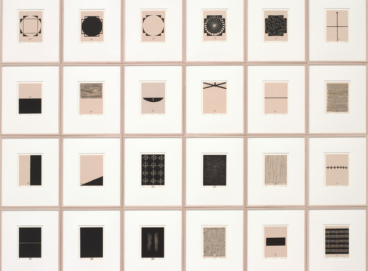
Sarah Suzuki examines Schendel’s use of Japanese paper in the work at Objeto Gráfico (1967).
Samantha Friedman comments on the importance of the work in the development of Brazilian modern art.
Acha established himself as a vigorous critical voice in Peru at a time when Conceptualist artistic approaches and political events such as the riots and military coup of 1968 strongly inflected the local art scene.
Twenty images of artworks and related materials by the Slovene group OHO from the MoMA Archives have been digitized and made accessible here.
In 2016, The Museum of Modern Art received a major gift from the Colección Patricia Phelps de Cisneros, which added more than 100 works of modern art by major artists from Latin America to the Museum’s collection and established the Patricia Phelps de Cisneros Research Institute for the Study of Art from Latin America.
The Museum of Modern Art has just received what is arguably one of the most transformative donations in its history: more than one hundred modern works produced by thirty-seven Latin American masters, which have entered the collection through the generosity of the Colección Patricia Phelps de Cisneros. This theme was developed to share information about…