post Presents: A Talk on Àsìkò: The Pan-African Alternative Art School
Bisi Silva discusses the history of the organization and how it serves to introduce theoretical discourse and build connections among practitioners across the continent.
José Roca examines institutional and social interaction with Latin American Art as a genre. He considers the development of Latin American cultural movements in relation to lagging North American and European artistic growth.
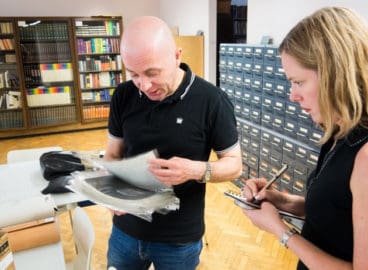
Michelle Elligott, Chief of Archives, Library, and Research Collections at MoMA, speaks with Maciej Cholewiński, Archivist at Muzeum Sztuki in Łodz (MSŁ).
Eda Čufer, art historian and member of the art collective Neue Slowenische Kunst (NSK), sheds light on the challenges in negotiating between canonical art histories and local specificities in Eastern Europe, specifically in the countries of former Yugoslavia.
Artist and art historian Camilo Leyva considers how the practices of artists in the 1960s opened up many paths for contemporary artists in Colombia today.
Artist Bernardo Ortiz discusses questions of overarching art historical narratives and local practices and histories of the Colombia art scene, highlighting the responsibility an artist has in dealing with such constructions as they make work.
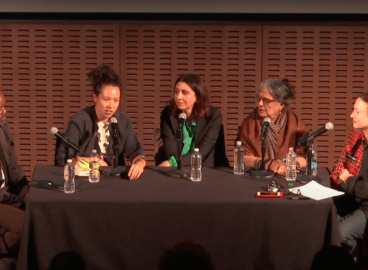
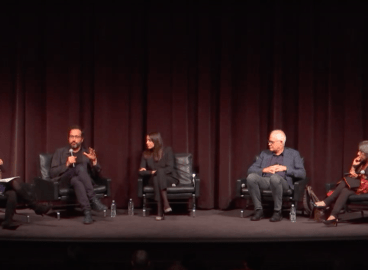
The roundtable discussion focuses on international networks that decenter, complicate, or even bypass Western-centric models.
Film curator La Frances Hui attended the International Film Festival of Kerala and follows up with this discussion of the award-winning Malayalam feature Sexy Durga by Sanal Kumar Sasidharan.
Art historian Anthony Gardner reminds us to think of art historical categories as broad and flexible, and identifies exhibition histories in the former Yugoslavia, as a rich area of interest.
Art historian Emilia Terracciano examines the possibility of developing and de-colonizing narrative tools for the writing of (Indian) art history.
During 2016 and 2017, more than 80 scholars, artists, and curators visited MoMA as C-MAP guests. n conjunction with the 5 Questions interview series, we asked them a sixth question: How can MoMA better approach international artistic production and exchange?
Art historian April Eisman looks at art produced in the German Democratic Republic (GDR) from the context of multiple canons.