Two Biennials: The Planetary Garden. Cultivating Coexistence and We Don’t Need Another Hero
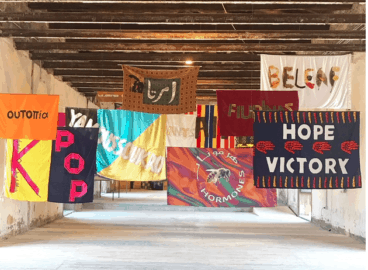
Roxana Marcoci records her impressions of the 10th annual Berlin Biennale and offers a comparative perspective with Manifesta 12 in Palermo.
Roxana Marcoci records her impressions of the 10th annual Berlin Biennale and offers a comparative perspective with Manifesta 12 in Palermo.
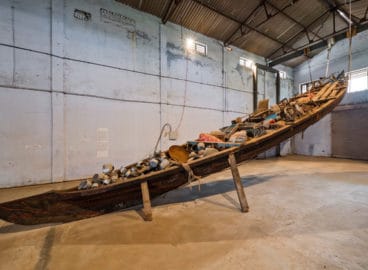
The Kochi-Muziris Biennale has produced three exhibitions since its inception in 2012, with its fourth edition opening in December 2018. This essay sites the biennale within the historical context of the twin port cities of Kochi and Muziris, as well as within the recent burgeoning of the biennial as a international format for viewing “global” art and representing local identities.
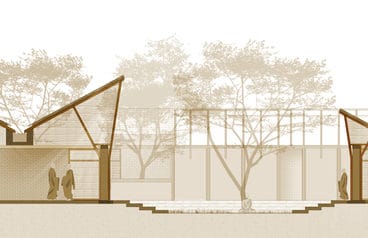
The recent documentary “Reading Architecture” (2017) explores the contemporary history of design in India across five practices in Mumbai. Sameep Padora, one of five featured architects, is the founder of Sameep Padora & Associates (sP+a), a Mumbai (India) based architecture studio. In 2016, he initiated sPare, a research arm of the studio.
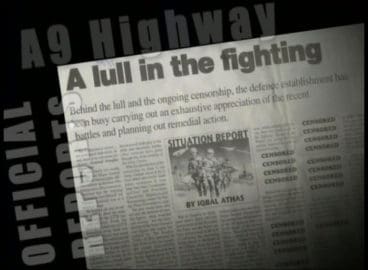
This essay charts the emergence of Colombo Art Biennale and Colomboscope in Sri Lanka, based on a talk that the author gave on February 10, 2018 at the panel “Writing Recent Exhibition Histories of Large Scale Recurring Exhibitions in South Asia” at the Dhaka Art Summit (DAS).
MoMA’s C-MAP research program developed an extended focus on historical alliances such as Bandung, the Non-Aligned Movement (NAM), pan-Africanism, pan-Arabism, and other south-south, east-east, and Third World nexuses. This conversation addresses such pasts, and their reverberations in the present, as they appear in Mohaiemen’s media-based practice.
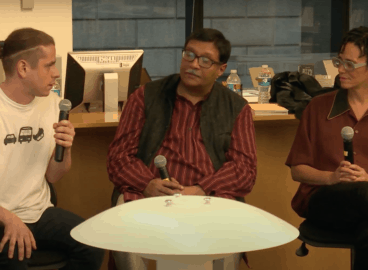
Artists can be activists but can art be activism? C-MAP presents a forum at the Museum of Modern Art with Coco Fusco, Oleksiy Radynski, and Ram Rahman—artists who have all engaged with activist practices—who discuss relations between art and politics in Cuba, Ukraine, and India.
independent curator and contemporary art researcher Santiago Rueda discusses the importance of understanding local art histories in Colombia and broader artistic developments and narratives as interrelated processes.
Artist, writer, and educator Lucas Ospina thoughtfully approaches the promotion of Latin American art much like, he says, any good translator who knows that certain information cannot be translated accurately.
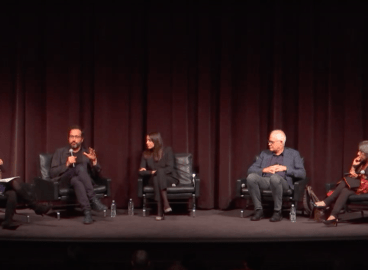
As part of an ongoing collaboration between the Jaipur Literature Festival and MoMA, this post Presents discussion “Patriot Games: Contextualizing Nationalism” explores nationalism around the world, with panelists Urvashi Butalia, Bouchra Khalili, Bruce Robbins, Eyal Weizman, and moderator Marie Brenner.
Bisi Silva discusses the history of the organization and how it serves to introduce theoretical discourse and build connections among practitioners across the continent.
José Roca examines institutional and social interaction with Latin American Art as a genre. He considers the development of Latin American cultural movements in relation to lagging North American and European artistic growth.
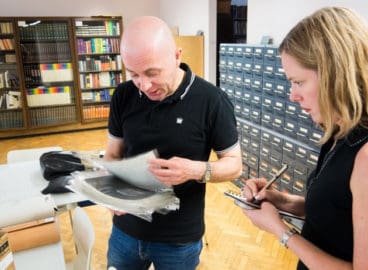
Michelle Elligott, Chief of Archives, Library, and Research Collections at MoMA, speaks with Maciej Cholewiński, Archivist at Muzeum Sztuki in Łodz (MSŁ).