Advertisement as Collaboration in the Central European Avant-Garde Magazines
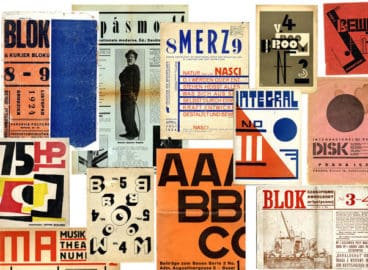
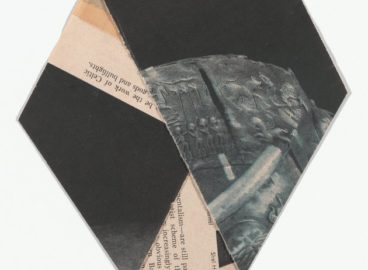
Meghan Forbes examines the ways interwar periodicals blurred the boundaries between art and advertisement, creating international networks of exchange.
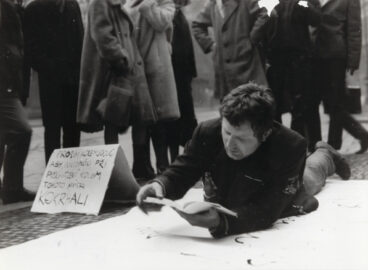
Art historian Klara Kemp-Welch draws parallels between artists of disparate avant-gardes whose claims over spaces in the 1960s and 1970s were political gestures. How are we to navigate the historical fields of experimental art in state socialist Eastern Europe and under Latin American military dictatorships? What happens when pedagogy, poetry, sculpture, and sociability bleed into…
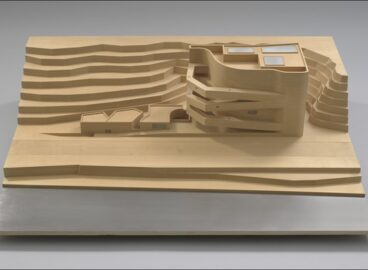
The Iberê Camargo Foundation, a museum in Porto Alegre designed by Álvaro Siza Vieira (Portuguese, 1933–) and devoted to one of Brazil’s most renowned artists, features nine galleries stacked in a vertical volume from which undulating passages in white concrete cantilever to connect the building’s different public levels. The building’s form reveals a multiplicity of…
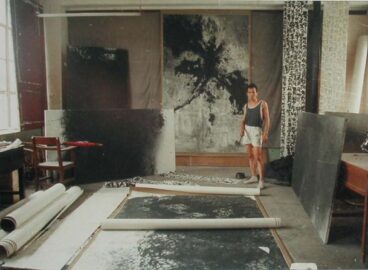
“A Conversation with Yang Jiechang” is available in Chinese and English. Yang talks about his “art education” during the Cultural Revolution, when he served as a Red Guard in a small village, and describes how the study of calligraphy extinguished his enthusiasm for revolution and political propaganda. Read the English translation here. 巴黎楊詰蒼工作室 24 June 2014…
Luis Pérez-Oramas, MoMA curator and leader of the C-MAP Latin America group, discusses the challenges of collecting art from a region that complicates the art historical narratives by presenting a dynamic archipelago of modernities. I would like to start this essay with a picture of the current Painting and Sculpture Galleries on the fourth floor…
Luis Pérez-Oramas, the Estrellita Brodsky Curator of Latin American Art at MoMA, talks with artist Natalia Babarovic about the meaning of painting and its ominous and constant ‘returning.’ Barbarovic also commented on the peculiarities of being a painter in Chile, both in contemporary times and during the years of the dictatorship, and spoke about what…
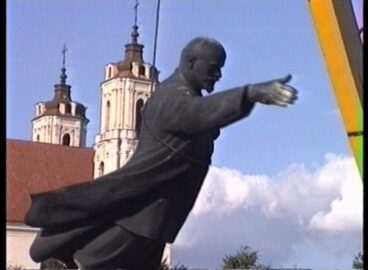
Once in the XX Century, an eight-minute film by Deimantas Narkevičius shows a larger-than-life statue of Vladimir Lenin being erected in Vilnius’s main square to the cheers of a large crowd. MoMA acquired the film in 2011, and in 2013, it was included in the Museum’s Performing Histories (1), an exhibition of recent time-based art…
After presenting during a C-MAP Latin America session at MoMA, artist Catalina Parra joined independent critic and curator Julia Herzberg for a conversation about her work. Herzberg, long-time researcher of Parra’s production, conducted an interview that went from politics to education and from Chile to Germany, with occasional stops in New York and Buenos Aires.…
During the Central and Eastern Europe C-MAP group trip to Moscow in June 2015, the participants met with Ilya Budraitskis, who spoke to them about the crisis facing Russia today and its effects on art and culture. Budraitskis’ argument is presented here alongside drawings by Sveta Shuvaeva, an artist whom the C-MAP Group also met…
Since around 1977 when Gilbert and Lila Silverman began to develop their Fluxus Collection, Jon Hendricks has played a central role in fostering the formation of that renowned collection that bears their names.
Architect, astrophysicist, scholar, and Valparaiso-aficionado Ann Pendleton-Jullian talks about Chile, Chilean architecture and landscape, and the “ad hoc, ongoing work of art” that is Ciudad Abierta. Pendletton-Jullian, author of Road that Is Not a Road and the Open City, Ritoque, Chile, visited MoMA to talk to the C-MAP Latin America group about her 28+ year…
We live in a world filled with images that are captured, edited, and published at hyper speeds, images referring to images. Our political, ethical, and intimate lives are constructed around images, through images, and in images. In situations of war and mass violations of human rights, it is our hyper-mediatized world that creates the typical…