Álvaro Siza Vieira’s Iberê Camargo Museum

The Iberê Camargo Foundation, a museum in Porto Alegre designed by Álvaro Siza Vieira (Portuguese, 1933–) and devoted to one of Brazil’s most renowned artists, features nine galleries stacked in a vertical volume from which undulating passages in white concrete cantilever to connect the building’s different public levels. The building’s form reveals a multiplicity of international influences. Though the inner space evokes Frank Lloyd Wright’s Solomon R. Guggenheim Museum in New York, the white, cast concrete establishes an important cultural dialogue with the work of Brazilian architectural masters, including Oscar Niemeyer and Lina Bo Bardi. In this sense, the building signals Siza Vieira’s capacity to articulate architecture’s cultural memories from north and south alike, while simultaneously maintaining a commitment to innovation in spatial features as well as an architectural program.
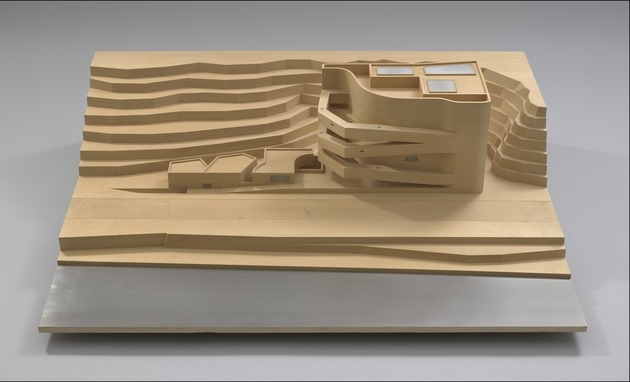
Álvaro Siza Vieira. Iberê Camargo Museum, Porto Alegre, Brazil (Scale model 1:100), 1998-2008

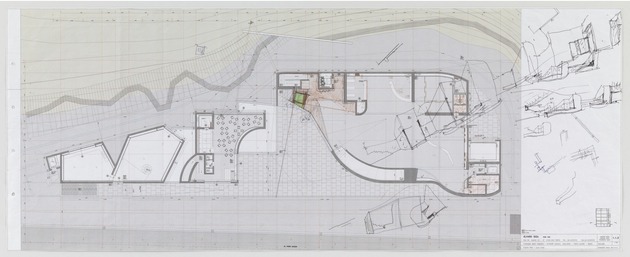
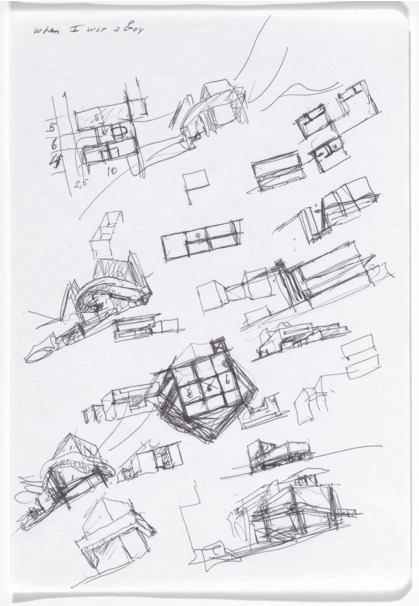
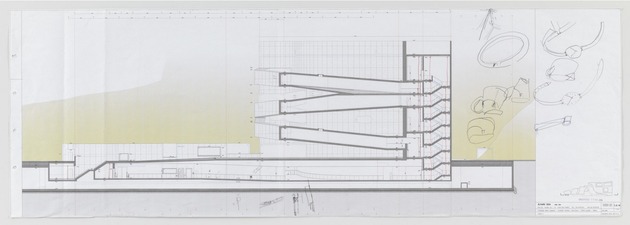
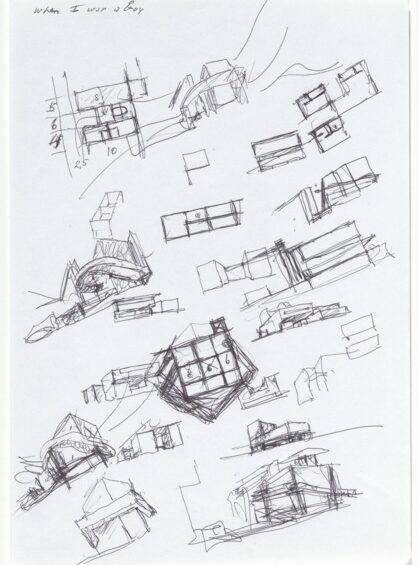
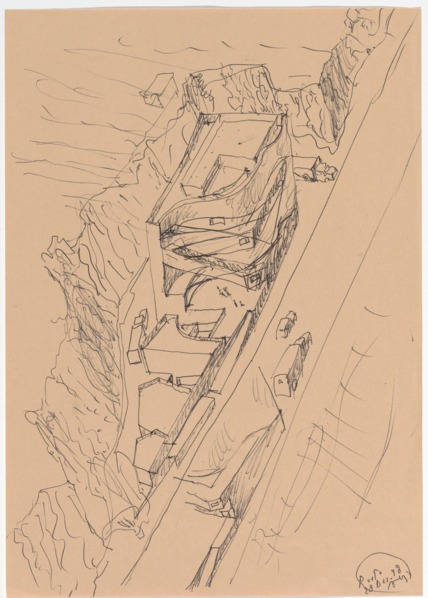
MoMA is fortunate to own several works that capture the spirit of the Iberê Camargo Foundation museum, a project honored with a Golden Lion award at the Venice Architecture Biennale in 2002. In addition to annotated working drawings and an important model in wood, the collection includes important original sketches, which were acquired from Siza Vieira’s personal archive. They reveal how the building, simultaneously more rigorous and baroque than his previous works, is also more truthful to the free-associative, hand-drawn drafts where the structure initially took shape.
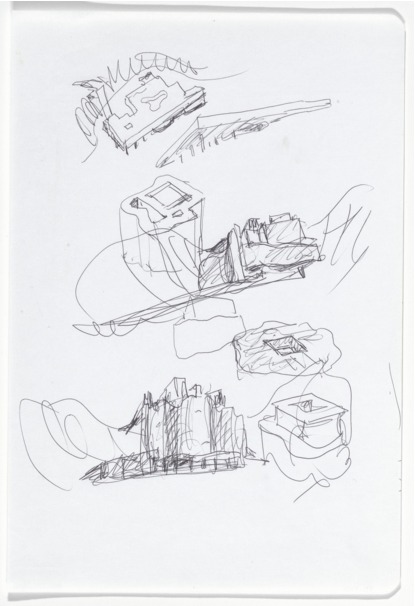
Álvaro Siza Vieira. Iberê Camargo Museum, Porto Alegre, Brazil (Perspective sketches), 1998-2008
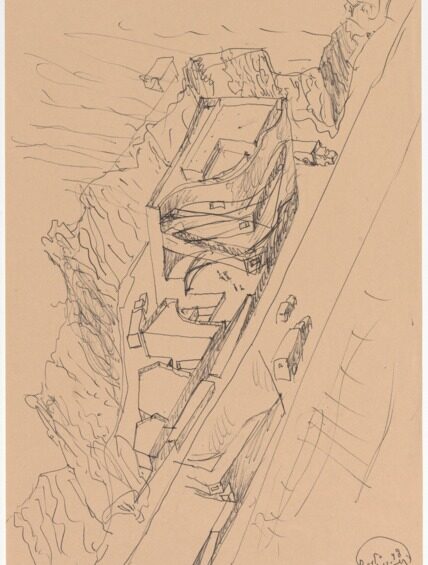
Álvaro Siza Vieira. Iberê Camargo Museum, Porto Alegre, Brazil (Aerial perspective sketch), 1998-2008

More in this theme

From Modulor to “L’Unitor”: Justino Serralta’s Spatial Diagrams

Justino Serralta (Uruguayan, 1919–2011) initially studied under the master of Uruguayan modernist architecture, Julio Vilamajó, but left for Paris upon graduating in 1947 to work with Le Corbusier on two of the Swiss architect’s signature projects: the Unité d’Habitation (1952) housing complex in Marseille and the famous Chapelle Notre-Dame du Haut in Ronchamp (1955). Along…

Subscribe to our newsletter

Related Content

Open Loop: Reconsidering the Relationship Between Mexican Wire Baskets and Ruth Asawa’s Looped-Wire Sculpture

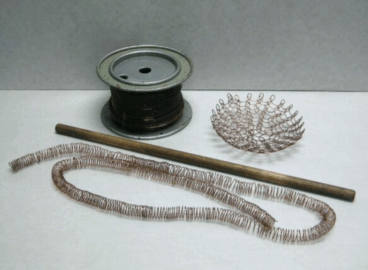
In creating a mesh by looping and interlocking single strands of wire, Asawa defined an intricate shape without precluding a view of its interior; instead, she foregrounded space itself. The artist had learned the basic premise of looping wire into permeable volumes during an American Friends Service Committee volunteer trip to Toluca, Mexico, where in 1947, she encountered—and briefly studied—a unique wire-basketry technique. While today, thanks to a series of critical analyses from 2006 onward, Asawa’s art sits comfortably within the trajectory of radical innovations of modernist sculpture, the Mexican origin and craft pedigree of her signature looped-wire creations are typically cast in a role subservient to the major narrative of the artist’s singular contributions.

Female Approaches to the Divine: The Marian Representations of Norah Borges, María Izquierdo, and Miriam Inez da Silva / Acercamientos femeninos a lo divino. Las representaciones marianas de Norah Borges, María Izquierdo y Miriam Inez da Silva

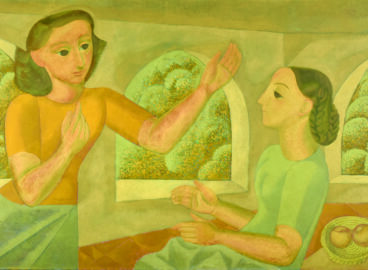
“Mary is . . . a myth of a woman without a vagina,” proclaims queer theologian Marcella Althaus-Reid in Indecent Theology: Theological Perversions in Sex, Gender, and Politics. Moreover, Althaus-Reid declares that the adoration of the Virgin in Latin America in the…