Letícia Parente’s Video In (1975) in Context
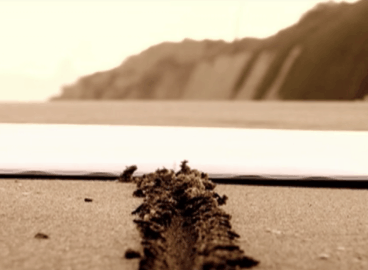
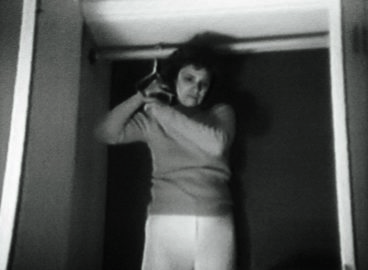
Widely distributed in recent years and now in MoMA’s collection, the two-minute video depicts Parente entering a closet and hanging up her sweater without first removing it from her body.
Widely distributed in recent years and now in MoMA’s collection, the two-minute video depicts Parente entering a closet and hanging up her sweater without first removing it from her body.
This text is a shortened version of a presentation made to C-MAP Africa group in October 2020 on Mozambican modernist, Malangatana Valente Ngwenya.
This conference series, organized by the Cisneros Institute, looks at the history of water management in the Americas through the interdisciplinary work of artists, theorists, historians, and local communities.
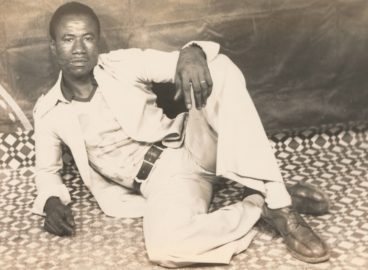
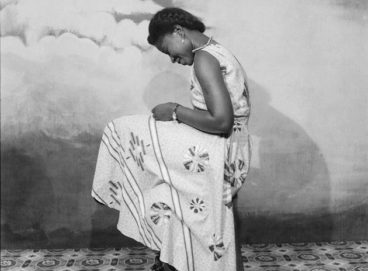
This essay considers the photographic work of Sanlé Sory and Ambroise Ngaimoko as part of the flourishing music, cinema, and art scenes in Burkina Faso and the Democratic Republic of Congo (DRC), where studio photography was a part of the creative expression and self-styling of these nascent republics.
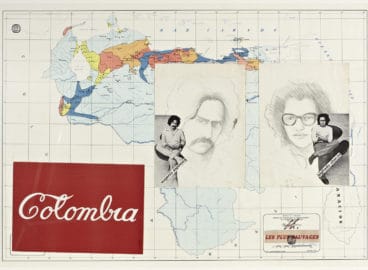
Beginning with the Autocurriculum, this essay examines Claudio Perna’s conceptual fixation on the fluid boundaries between documentation, artistic expression, and self-representation.
James Barnor (b.1929) is a pioneering figure in Ghanaian photography. He documented the decolonizing processes and realities of the postcolonial context in Ghana, as well as the diasporic, metropolitan life in London.
This source is an English translation by Stephanie M. Hohlios of a compelling 1971 memoir-essay by Japanese artist Okamoto Tarō—“Watashi to jinruigaku: pari daigaku minzoku gakka no koro (Anthropology and I: My Time at the University of Paris Department of Ethnology)”. Okamoto’s essay “Anthropology and I” sheds light on a widely recognized but little understood…
The session explores New York as a site of intersections of artists from around the world who have passed through or settled in the city.
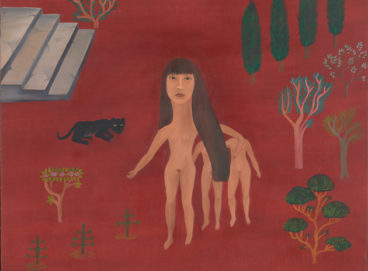
Composed of multiple bodies and body parts, human and animal, Cecilia Vicuña’s Pantera Negra y Yo (Black Panther and Me) doubles a painting that was destroyed and then recreated from memory. It is intimately connected with text, hinting at close connections between past, present, and future.
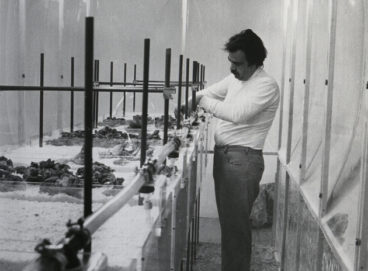
In 1972, Argentine artist Luis Fernando Benedit installed a hydroponic greenhouse environment, containing seventy tomato plants and fifty-six lettuce plants artificially supplied with light and a chemical growth formula, as well as an environment for white mice, “consisting of a maze, food source, material for burrowing, and an enclosed area for sleeping,” at MoMA.
Shot in Rio de Janeiro’s poorest red-light district, and the city’s financial district, Neville D’Almeida’s Mangue-Bangue, presents a portrait of the “normality” of marginalized and criminalized bodies during Brazil’s military dictatorship.
This essay is a rare glimpse into the alternative publications of East Germany in the 1980s. Through an overview of the magazines of the period, and a close reading of various images, advertisements, and visual poetry within them, this essay underscores the vibrancy of the underground print scene in the last decade of the GDR.