Across the 20th century, artists around the world organized themselves into circles, groups, and collectives as a means of mutual support, intellectual exchange, and public visibility. From the Blue Rider (Der Blaue Reiter) in Munich to the Bombay Progressive Artists’ Group, from Argentina’s Artistas del Pueblo to Beijing’s No Name Group and New Measurement Group, such formations articulated distinct aesthetic programs and political imaginaries shaped by the specific conditions of their historical context. African artists were no exception. Algiers’ Groupe Aouchem, Dakar’s Laboratoire Agit’Art, and the Sudanese Crystalist Group all exemplify how collectives functioned as laboratories for new ideas and as platforms for exhibition and discourse. In Nigeria, artistic associations emerged alongside new cultural institutions. The Art Society, founded in 1958 at the Nigerian College of Arts, Science and Technology, Zaria, advanced a decolonizing aesthetic later theorized as “Natural Synthesis.”Uche Okeke, “Natural Synthesis,” in Art in Development: A Nigerian Perspective (Documentation Centre, Asele Institute, 1982; repr., Asele Institute and Iwalewabooks, 2019), 23–24. Citations refer to the Iwalewabooks edition. In the same period, the Mbari Club and Mbari Mbayo Club in Ibadan and Osogbo, respectively, encouraged interdisciplinary exchange, while exhibition initiatives in Lagos consolidated a national art public. This ecosystem encouraged subsequent associations bound by friendship, shared training, and the pragmatic need to exhibit despite a volatile political economy. Among these, the Aka Circle of Exhibiting Artists, established in 1985 in Enugu, remains one of the most consequential yet under-studied artists’ groups.
By the early 1960s, in addition to Lagos and Ibadan, Enugu emerged as a vibrant hub of artistic production. Returning Zaria graduates, notably Uche Okeke (1933–2016), organized exhibitions, building a cultural infrastructure that complemented initiatives in Ibadan and Lagos. Okeke’s Art Center hosted solo and group shows for artists including Oseloka Osadebe (1934–2023) and Emmanuel Odita (1936–2025), and it collaborated with institutions like the British Council. The founding of the University of Nigeria, Nsukka, in 1960, with its Department of Fine and Applied Arts, further strengthened this network, enabling a steady flow of ideas between town and gown.
Nevertheless, the Biafran War (1967–70) abruptly interrupted this momentum. As the Eastern Region became the epicenter of the conflict, many artists were drafted into the Biafra state service. Even then, circles of poets, dramatists, and artists continued to gather for readings and performances wherever possible, moving from city to city as the Biafra region shrank. The Odunke Community of Artists, named after a multi-genre festival from Awka-Etiti in Anambra state, emerged from these wartime affinities.1Chukwuma Azuonye, “Reminiscences of the Odunke Community of Artists, 1966–1990,” African Literature Association Bulletin 17, no. 1 (1991): 20–26.
From 1970 onward, as the war ended, postwar reconstruction, the oil boom, and FESTAC ’77 stimulated renewed cultural activity. Nsukka consolidated its reputation as a center for art education and experimentation, while the Institute of Management and Technology (IMT) in Enugu (a few miles from Nsukka) launched its own art program. With two art schools nearby, a generation of academically trained artists gained new platforms for study and exhibition. By the early 1980s, however, economic decline under successive military regimes, an oil glut, and IMF-imposed Structural Adjustment policies created social precarity. Enugu’s economic status waned, and Nigeria’s art market relocated to Lagos, where a few galleries and cultural centers dominated exhibition opportunities. For artists outside Lagos, solo shows became prohibitively expensive. Consequently, the exhibition landscape shifted: While the 1960s and early 1970s favored solo presentations, the mid-1980s saw the rise of group exhibitions organized thematically or regionally. Collectives offered practical advantages, shared costs, pooled networks, and coordinated publicity, while preserving individual artistic identities.
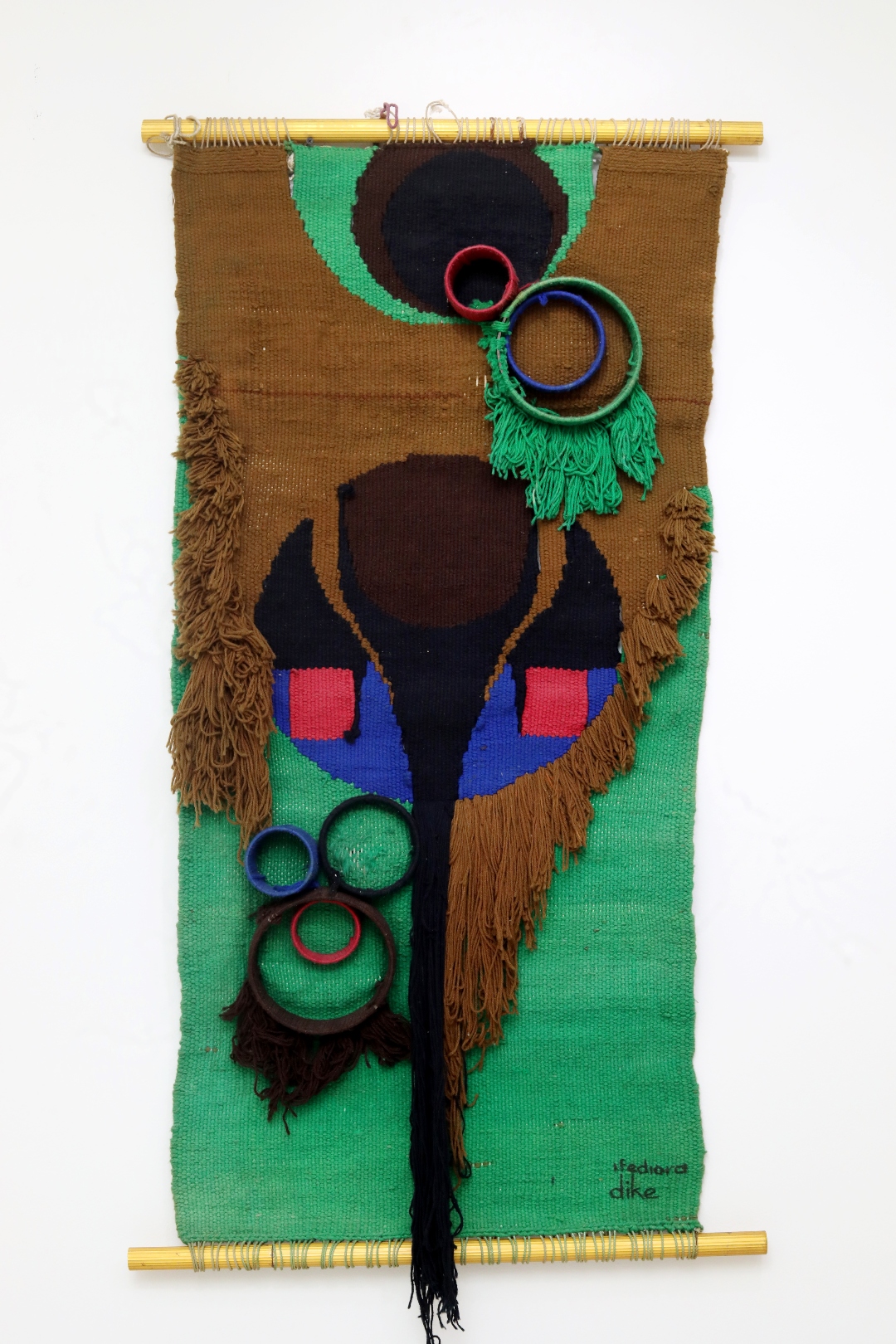
It was in this context that, in 1985, Obiora Udechukwu (b. 1946) and El Anatsui (b. 1944), seeking to sustain artists in Eastern Nigeria, proposed a formal association capable of organizing high-quality exhibitions in Lagos and beyond. According to Chike Aniakor (b. 1939), as Frank Aig-Imoukhuede notes, the group believed that “for the wheel of modern Nigerian art to continue to turn, and in the right direction, it needed the firm steps of collective effort.”2Frank Aig-Imoukhuede, preface to 10th Aka: A Decade in Furtherance of the Arts, exh. cat. (Aka Circle of Exhibiting Artists, 1995), 5. Drawing on earlier experiences, specifically Udechukwu’s Odunke Community and Anatsui’s involvement with TekArts in Kumasi, Ghana, they envisioned a flexible structure balancing individual autonomy with collective purpose. They invited artists with active studio practices and credible exhibition records to form the initial cohort. Early members included Chike Aniakor, Obiora Anidi (b. 1957), Chris Afuba (b. 1947), Bona Ezeudu (b. 1956), Tayo Adenaike (b. 1954), Boniface Okafor (b. 1950), Chris Echeta (b. 1953), Chike Ebebe (1948–2019), Samson Uchendu (1950–2024), Nsikak Essien (1957–2020), and Ifedioramma Dike (1947–2017). Later, artists such as Chika Okeke (now Chika Okeke-Agulu, b. 1966) and Tony Umunna (b. 1957) were admitted, expanding the group’s generational range.
Aka emphasized professional practice and regular exhibiting—not adherence to a stylistic doctrine. The group encouraged individual creative freedom within the stabilizing discipline of collective organization. In practical terms, members met in one another’s homes regarding planning exhibition schedules, establishing budgets, commissioning catalogues, and coordinating shipping and publicity. The group eschewed rigid hierarchy; leadership, when exercised, was largely procedural and rotated by task. Annual contributions financed group shows in Enugu, Lagos, and other cities, and commissions from sales sustained future activities.
It is worth clarifying that although some members of the group were affiliated with Nsukka, the Aka Circle was not an extension of the “Nsukka School.” Because many of the artists were trained or employed at the University of Nigeria, Nsukka, the Circle is often conflated with the Nsukka School—that is, with the art school, in the art historical sense, that is rooted in the decolonizing philosophy of Natural Synthesis. The overlap is real but misleading. Whereas the Nsukka School denotes an aesthetic formation anchored in the exploration of indigenous visual languages (notably Igbo Uli art, Igbo Mbari house mural designs, nsibidi, and other visual systems from across West Africa and beyond), the Aka Circle was a professional exhibiting organization, with some Aka artists, such as Boniface Okafor (fig. 9), Nsikak Essien, and Bona Ezeudu, pursuing creative paths outside the orbit of Nsukka aesthetics. Its purpose was not to propagate a doctrine but rather to create a sustainable platform for artists in Eastern Nigeria to present their work nationally and internationally.
In this sense, Aka exemplifies how, in the 1980s, collective action in Nigeria functioned as both an economic strategy and an institutional practice of self-organization. The name “Aka” (the Igbo word for “hand”) symbolized coordinated plurality. As the group stated in its 1986 exhibition catalogue, “In choosing Aka as the rallying symbol . . . one is also desirous that each artist retains his individuality. After all, the fingers of a hand are not identical.”3“A Note on ‘AKA,’” in AKA ’86: Inaugural Exhibition Catalogue of AKA Circle of Exhibiting Artists, exh. cat. (Aka Circle of Exhibiting Artists, 1986), 5. The hand gathers unlike parts into purposeful motion; likeness was never required for collective action. Aka thus became “a forum for the interaction of kindred spirits,” prioritizing regular production and public presentation over stylistic conformity.4“A Note on ‘Aka,’” 5. Hence, as members of the group maintained, they were not an art movement. What they shared were affinities in terms of training, sustained studio practice, and a restless drive for material and formal innovation.
Formal and Material Experimentation Among Aka Artists
One of the key threads connecting most Aka artists is their relentless material exploration and studio experimentation. The annual exhibitions, which continued through 1996 and then in 2000 and 2005, served as vital platforms for showcasing significant shifts and developments in each artist’s practice, and equally, they fostered a healthy sense of competition. Consider, for instance, the evolution of the works of three sculptors in the group—Chris Afuba, Obiora Anidi, Chris Echeta, and El Anatsui.

El Anatsui, the most studied of the Aka artists, embodies this spirit of experimentation. His practice evolved through intense material exploration, transitioning from wood to clay, back to wood again, and eventually to metal. Okwui Enwezor and Chika Okeke-Agulu have argued that the Aka artists’ drive for individual invention and courage directly influenced the rapid evolution of Anatsui’s oeuvre in the 1980s and 1990s.5Okwui Enwezor and Chika Okeke-Agulu, El Anatsui: The Reinvention of Sculpture, exh. cat. (Damiani, 2022), 85. During this period, key elements of his sculptural aesthetic—permeable, fragmentary, metamorphic, combinatory, and multimodal forms—became fully realized as he worked across various media.
After arriving in Nigeria in 1975, Anatsui immersed himself in the vibrant post–Biafra War intellectual and artistic environment at the University of Nigeria, Nsukka. Although his search for new sculptural approaches in Nigeria began with a deep engagement with clay, it was, however, in his multi-panel modular wood reliefs that his experimental rigor reached its full expression.
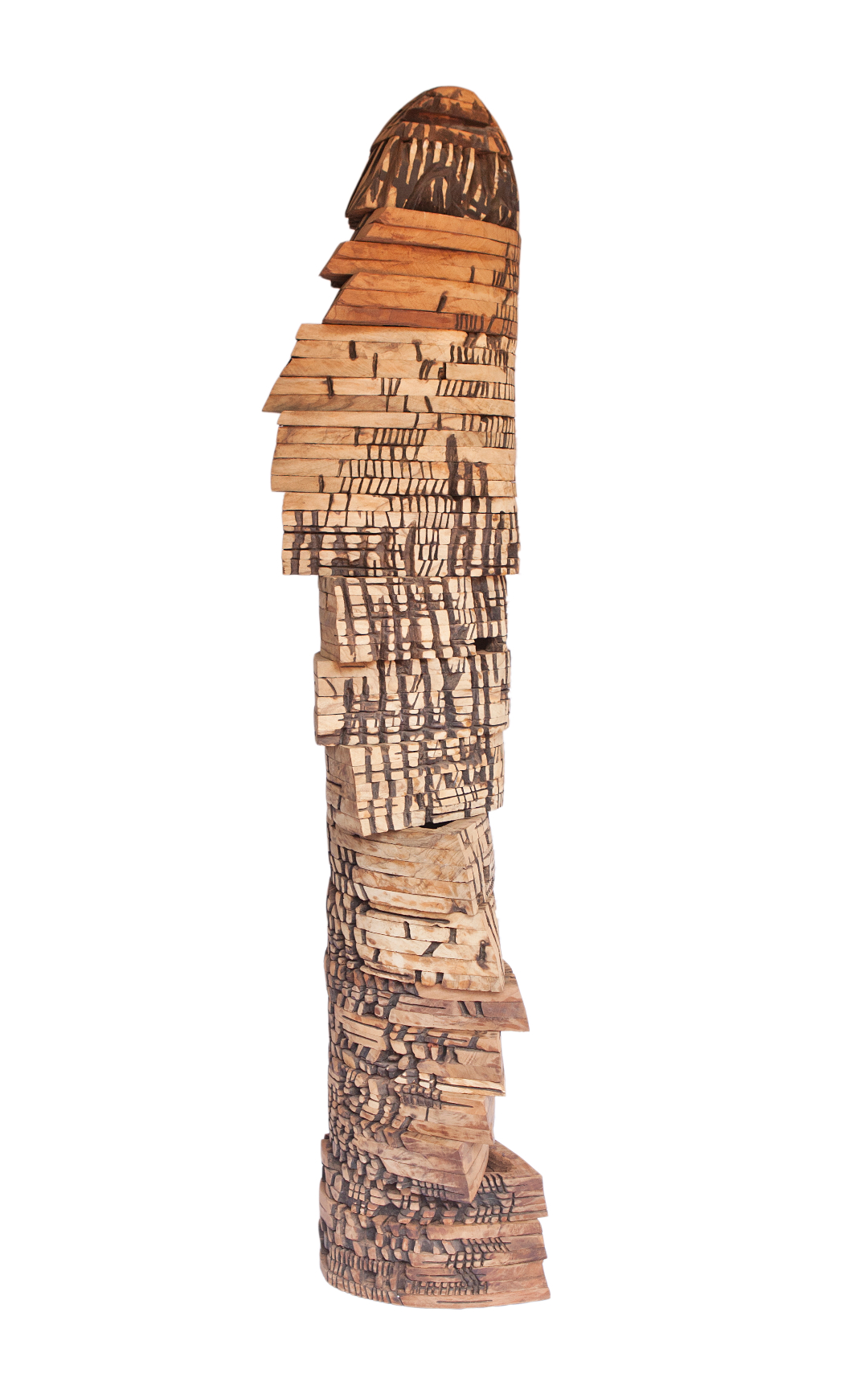
Initially, Anatsui’s wood reliefs evolved slowly, featuring chainsaw marks on multiple 12-inch planks. In the first five years of Aka, in 1985–90, his studio experiments with wood accelerated. By the fifth Aka exhibition in 1990, his search for sculptural form had expanded dramatically, as seen in works like Paw-prints of the tiger and other stories (1990) and Wonder Masquerade I (1990; fig. 1). In these works, Anatsui devised ways to rearrange planks into freestanding forms. It was also during the Aka period that he began to incorporate discarded wooden mortars, used in the Nsukka area for processing palm oil, and old wood that was sourced from the firewood market and evidenced minimal intervention beyond lacerated, burned, and marked surfaces. Works such as Adinsibuli Stood Tall (1995) and At the Ancestors’ Conference (1995) are good examples. True to the experimental ethos of the Aka Circle, Anatsui eventually moved beyond wood to explore various repurposed metal pieces, including the aluminum liquor bottle caps with which he makes his metamorphic sculptures.
Like Anatsui, Obiora Anidi began experimenting with materials before the founding of Aka. Seeking to escape what he called the “formal rigidity” of sculpture, he developed a series of narrative reliefs using scrap metal wires and sheets mounted on aluminum printing plates—works he termed “Live Wires” (see, for example, Egwu Onwa (Moonlight Play) [1983]). When photographed, the combination of thin black wires and plain aluminum sheets, resembles pen-and-ink drawings on paper. This likeness was intentional: Anidi aimed to animate line through sculpture. He saw metal wire as a medium that could lend physicality to drawing.6Obiora Anidi, “Artist Statement,” in Live Wires: Exhibition of Wire/Metal Relief and Sculptures (National Council for Arts and Culture, 1984), unpaginated.
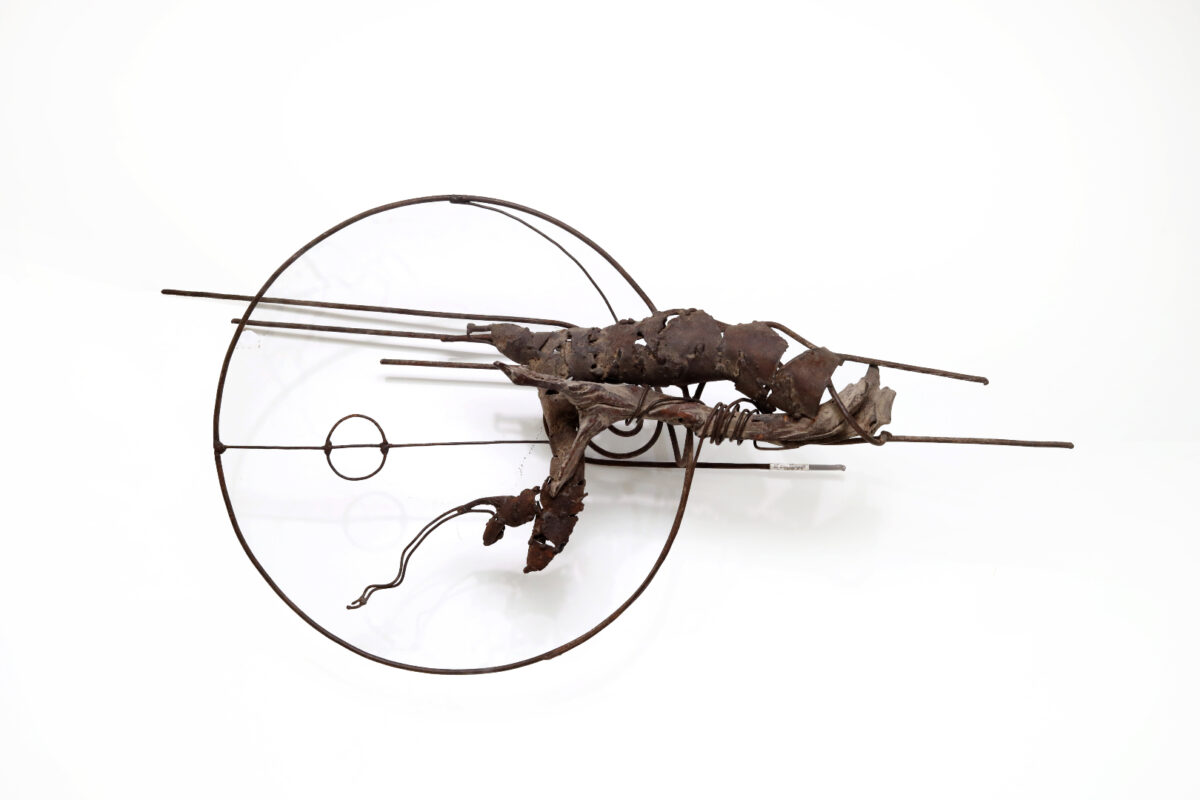
During the Aka period, Anidi also explored abstract three-dimensional forms, eventually settling on a mix of marble dust and concrete for smooth surfaces that contrasted with linear metal rods. From the second Aka exhibition, held in 1987, onward, he began extending curvilinear lines into mass and volume, combining wire structures with solid sculptural forms (see, for example, Reclining Figure III (Nightmare of the Deprived) [1991]; fig. 2). This evolution deepened his exploration of the tension between line, space, and organic forms.
Chris Afuba followed a similar experimental trajectory. As Anidi was developing his sculptural language, Afuba was also combining metal rods with solid forms, although he was using different techniques to do so. He began his professional studio practice with figurative concrete and wood sculptures, but by 1987, had shifted to abstract wood carvings and terra-cotta, marking a transition from figurative to abstract forms.
In the 1988 exhibition, Afuba introduced metal sculptures like Akala-Aka (Destiny) and Akala-Igwe (Lines of Force) alongside wood carvings. These works signaled a new phase in his practice, whereby he welded flat metal sheets and curved iron rods to evoke the fluidity of Uli-inspired drawings, and by 1989, his handling of metal had become more sophisticated, with intricate lines made from scrap metal. In The New Moon (1989), for instance, he welded fine wires into a landscape composition in which circular and crescent forms represent the moon, buildings, and foliage. His sculptures draw inspiration from natural forms like yam vines and tendrils, treating drawing as a sculptural method. By 1990, Afuba had grown bolder, as works like Rock: “…feel like I do?”. In 1991, he began incorporating found wood and tree branches into his reliefs, contrasting the clean lines of metal rods with the organic textures of timber (fig. 3). This shift marked a new phase in his studio evolution, as he developed more volumetric constructions that lift the sculptural lines off the wall. These high-relief works combine fine rods with rough scrap metal, creating tactile compositions in which clean geometric shapes are juxtaposed with raw, irregular forms. From the early 1990s until his return to wood carving in 1995 (see, for example, Umuoku II [1994]), Afuba’s work showed increasing mastery and boldness, continually expanding the experimental possibilities of wood and metal while exploring the many ways of combining the formal elements of line and mass. His investigations of found materials are as formal as they are conceptual. Indeed, his sculptures engage with issues of environmental degradation, deforestation, and pollution by junk metal.
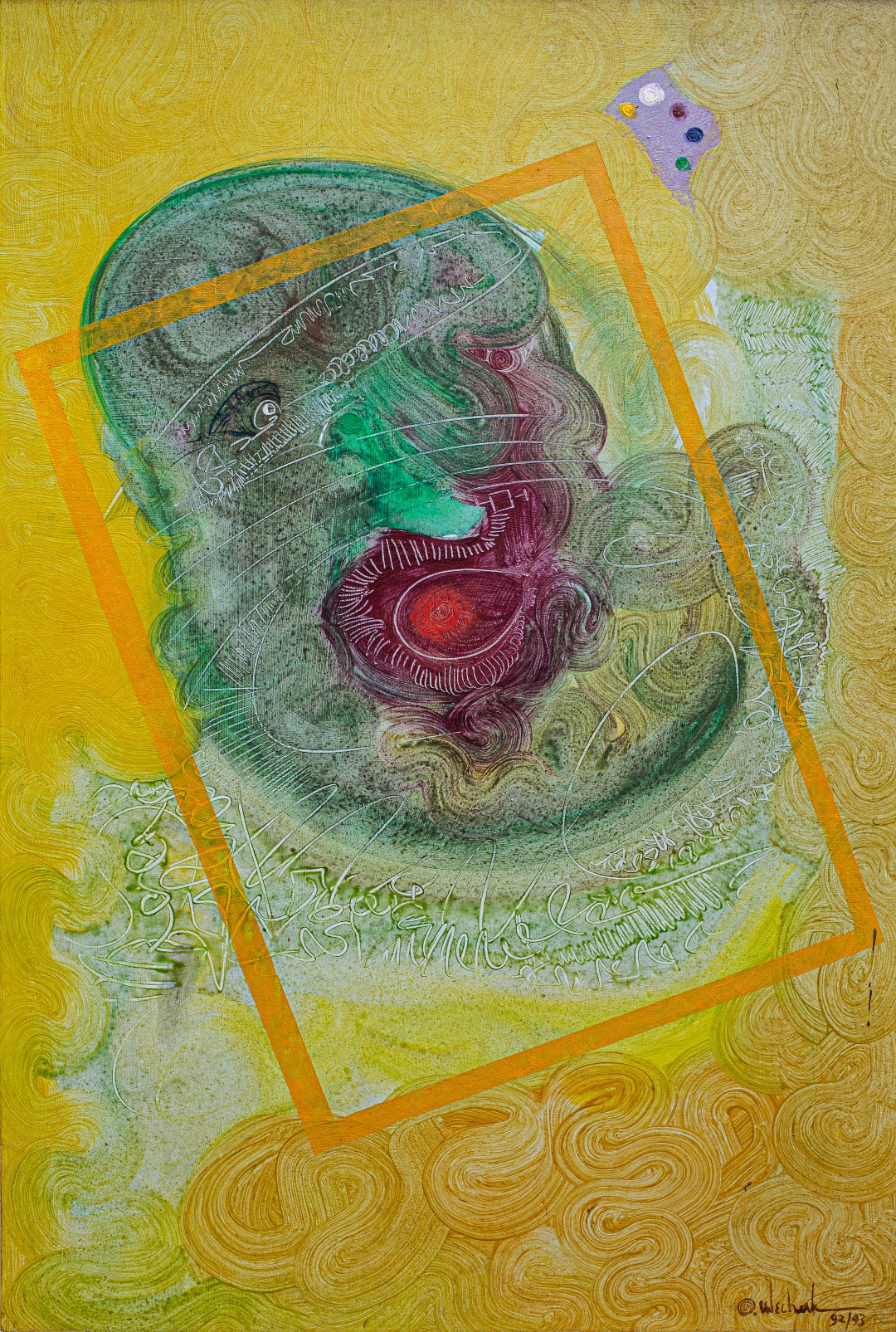
Figure 5. Obiora Udechukwu. Enigmatic Figure. 1992–93. Acrylic on board, 30 5/16 × 20 9/16" (77 × 52.3 cm). Photo courtesy of the artist © Obiora Udechukwu
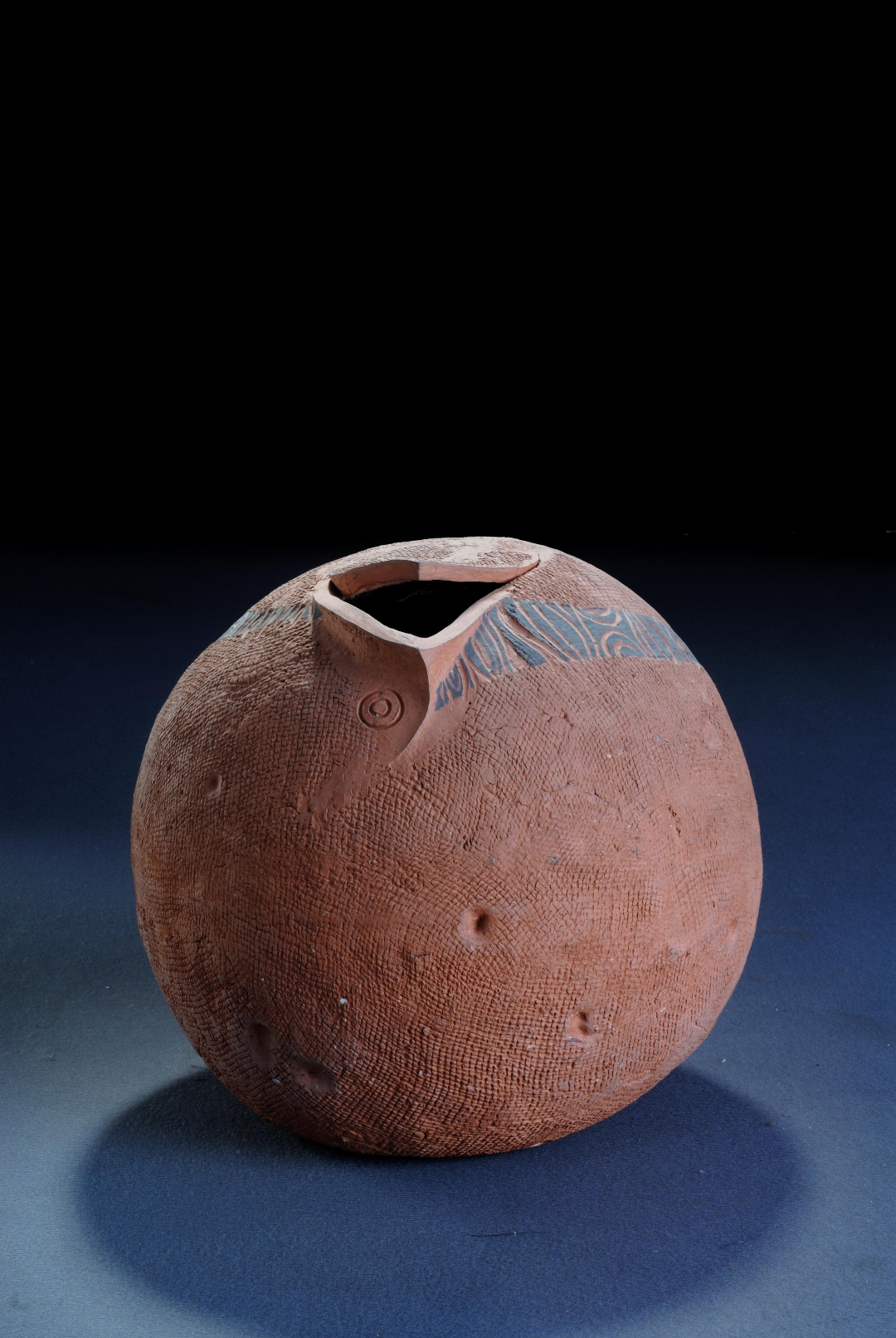
Chris Echeta represents another example of how Aka artists pushed the boundaries of traditional media, particularly ceramics. Inspired by El Anatsui’s Broken Pot series, Echeta approached clay not just as a medium for creating utilitarian wares but also as a tool for formal experimentation and sociopolitical critique. He adapted the linear Uli style of the Nsukka School into three-dimensional forms, exploring positive and negative space and the lyrical line.7Chike Aniakor, “What is Uli?: The Emergence of a Modern Art Idiom,” in Uli Art: Master Works, Recent Art, exh. cat. (Skoto Gallery, 1995), unpaginated; and Iheanyichukwu Onwuegbucha, “Translational Acts: Sculpture in the Nsukka School,” African Arts 58, no. 2 (2025): 48. Throughout the Aka period, Echeta worked in three principal modes: figurative relief slabs, often anthropomorphic; closed globular or oval forms with cutouts that create dramatic shadow play (fig. 4); and open hemispherical bowls with expressive edges and installations of multiple slabs such as New Breed Politicians (1990). His stylized motifs, knobs, ridges, and slits serve an expressive purpose as well as a functional one, aiding structural integrity and airflow during firing. Echeta’s primary contribution is his translation of flat shapes into solid masses that use curvilinear lines and organic forms to articulate both interior and exterior space through a formal vocabulary rooted in contrast, rhythm, and spatial balance.8Onwuegbucha, “Translational Acts,” 48.
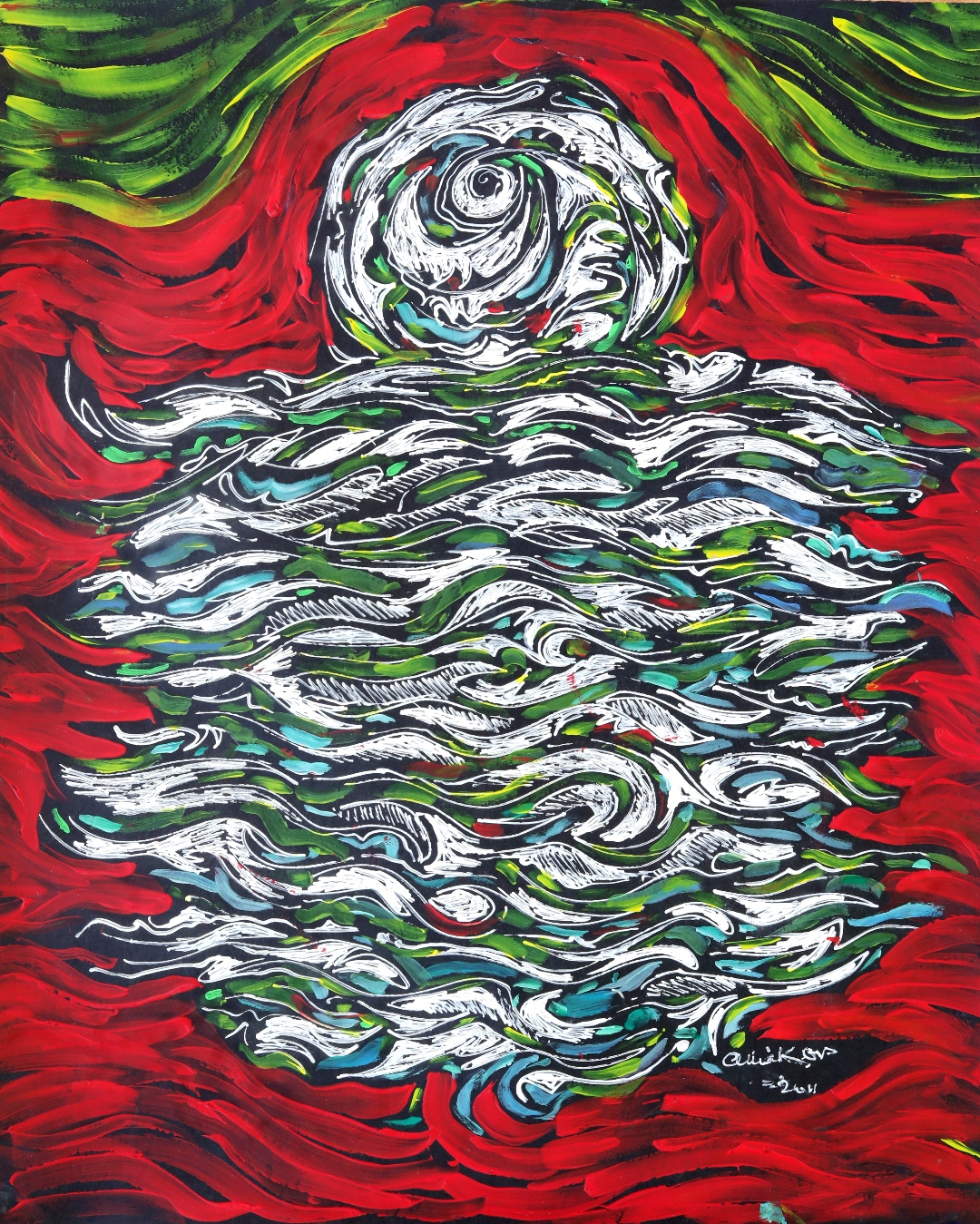
Among the painters, Obiora Udechukwu, Chike Aniakor (fig. 6), Tayo Adenaike, and later Chika Okeke-Agulu (then, Chika Okeke) also pushed the boundaries of drawing and watercolor painting as independent modes, while Nsikak Essien expanded easel paintings into relief sculptures, using unconventional supports and materials as pigments. Udechukwu’s pen-and-ink, watercolor drawings and later acrylic paintings (fig. 5) were formally rigorous and influential. Adenaike and Okeke-Agulu, both of whom were students of Udechukwu, extended his legacy through bold experimentation (figs. 7, 8). Their works, which explore the fluidity and texture of watercolor, are testament to their unusual control over the medium. When Okeke-Agulu joined Aka in the mid-1990s, after a couple of years of successful solo exhibitions in Enugu and Lagos, he had already began exploring various conventional drawing and painting media. His pencil drawings from the early 1990s show a mastery of the sensitive line. However, Okeke-Agulu’s genius lay in his use of a dry medium, such as graphite, to achieve a remarkable dexterity with lines that is as palpable as that achieved by Udechukwu in his pen-and-ink wash drawings. During the Aka period, Okeke-Agulu expanded his drawing practice by incorporating paper collage and charcoal, producing evocative works that reflect the sociopolitical climate of Nigeria at the time.
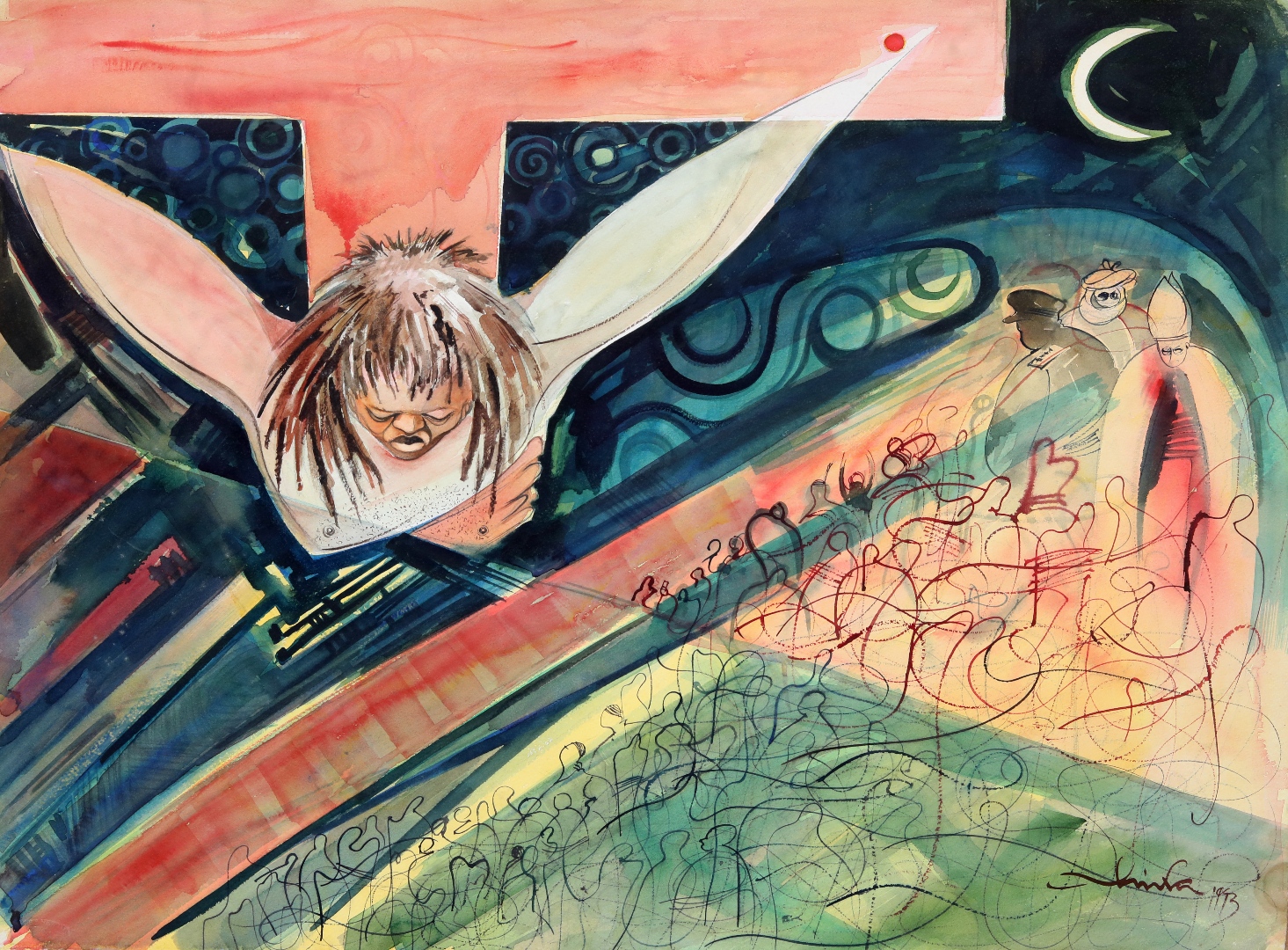
Figure 7. Chika Okeke-Agulu. Christus Nigeriana. 1993. Watercolor, 22 1/16 × 29 13/16" (56 × 75.8 cm). Photo courtesy of Kó Art Space © Chika Okeke-Agulu
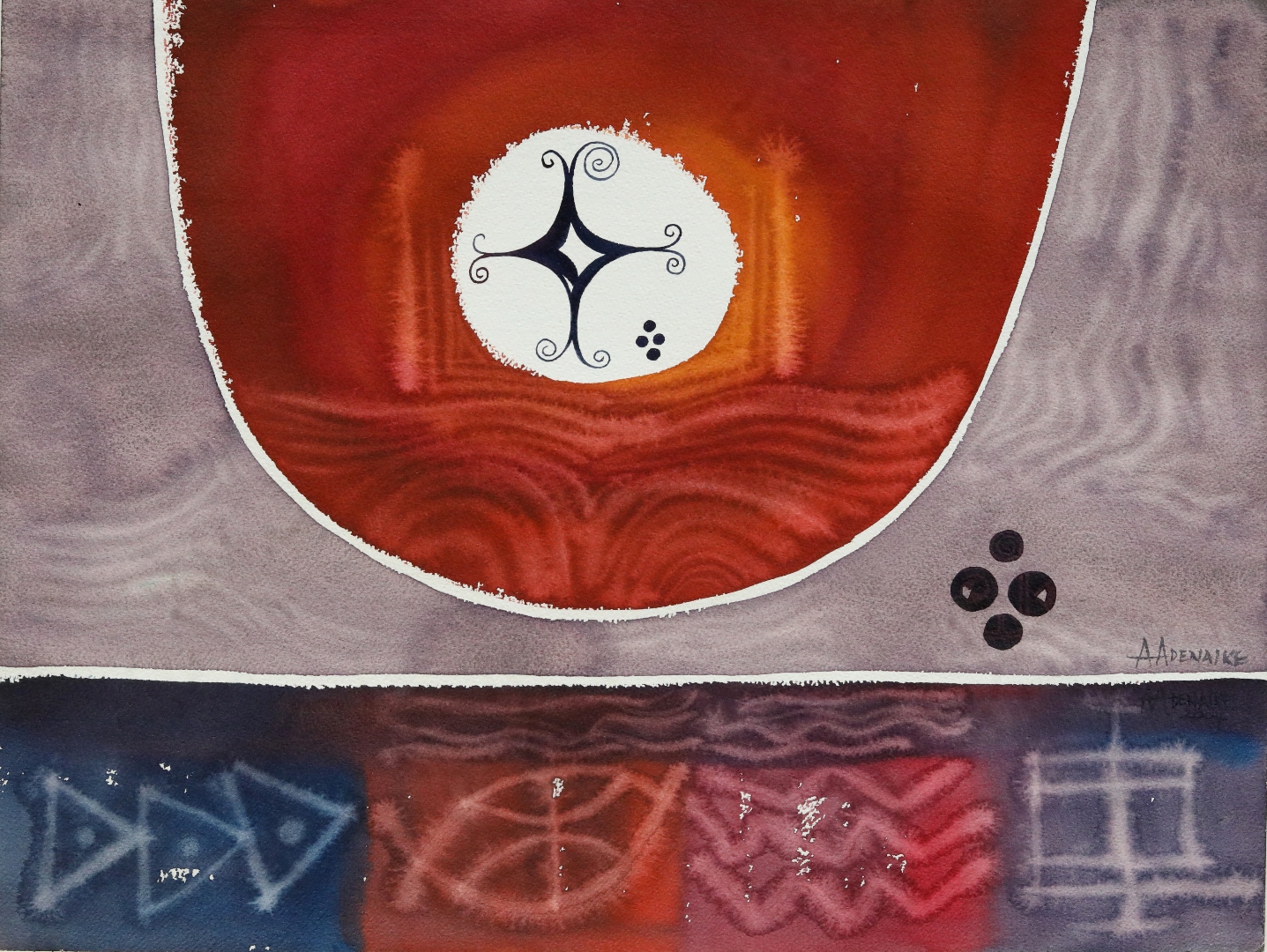
Thus, Aka exhibitions consistently foregrounded new developments in each artist’s practice and the evolving formal concerns they were pursuing. Exhibiting as a group provided a collective cover for members to show the results of their individual radical experimentations. This is especially significant given the unconventional nature of their work in the Nigerian art scene of the time.
Finally, across all 13 Aka exhibitions, beyond the sustained formal and material exploration, there was a shared concern for the human condition, society, and life. Over two decades, the Circle’s annual shows became visual diaries reflecting the volatile political landscape in Nigeria in the 1980s and 1990s, a period marked by flawed elections, military dictatorships, and social unrest. Their commentary extended beyond national issues to address global geopolitical issues including the human impact on climate change and the environment. In this way, Aka artists were ahead of their time, not only in their experimental use of materials but also in their engagement with pressing social and political issues. Indeed, the Aka Circle demonstrated how an artist collective, through regular exhibitions, can operate as a pragmatic economic solution and a sustained public record of artistic innovation and social critique.
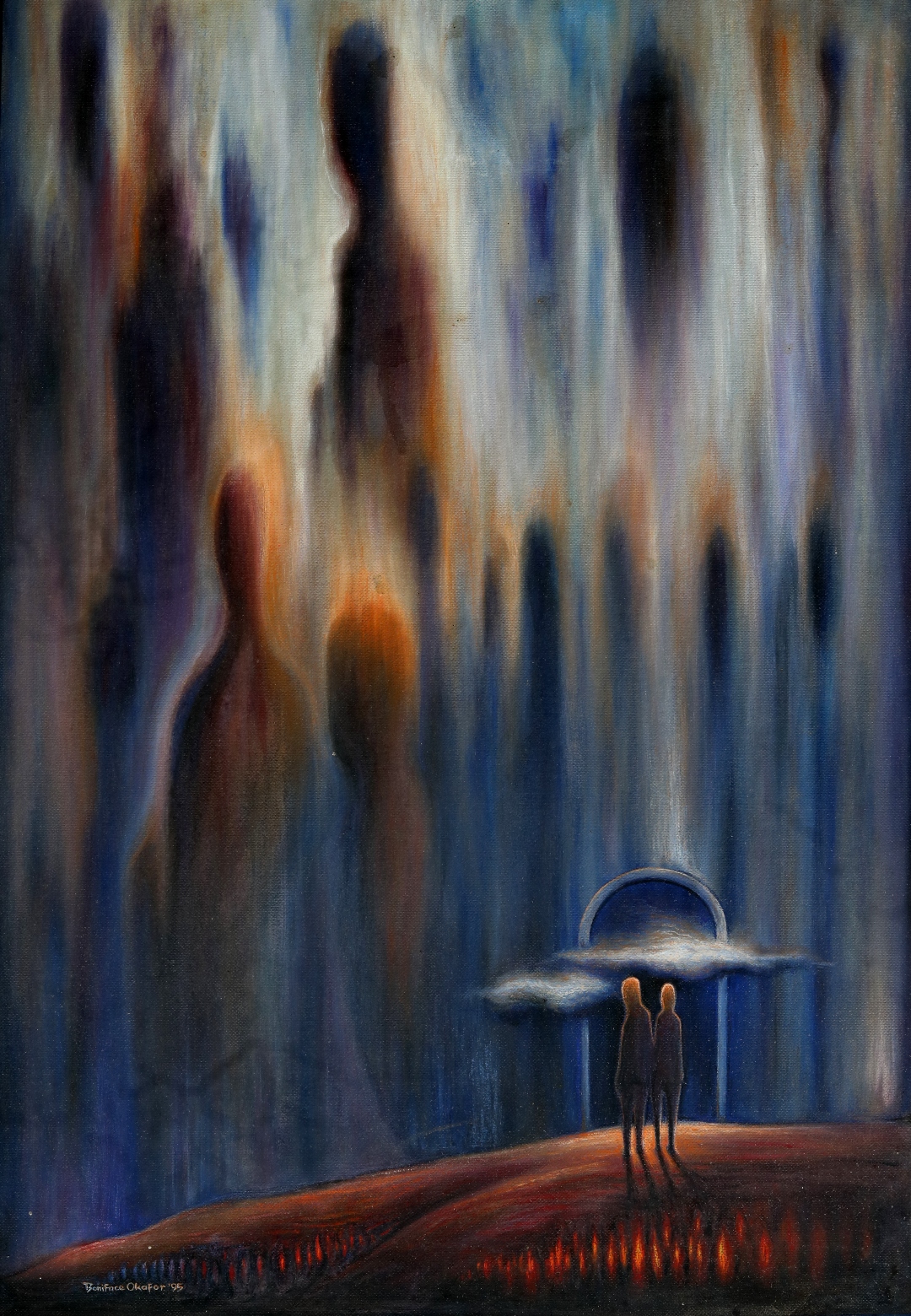
Figure 9. Boniface Okafor. Untitled. 1995. Oil on canvas board, 17 11/16 × 25 3/4" (45 × 65.5 cm). Photo courtesy of Kó Art Space © Boniface Okafor
- 1Chukwuma Azuonye, “Reminiscences of the Odunke Community of Artists, 1966–1990,” African Literature Association Bulletin 17, no. 1 (1991): 20–26. ↩︎
- 2Frank Aig-Imoukhuede, preface to 10th Aka: A Decade in Furtherance of the Arts, exh. cat. (Aka Circle of Exhibiting Artists, 1995), 5. ↩︎
- 3“A Note on ‘AKA,’” in AKA ’86: Inaugural Exhibition Catalogue of AKA Circle of Exhibiting Artists, exh. cat. (Aka Circle of Exhibiting Artists, 1986), 5. ↩︎
- 4“A Note on ‘Aka,’” 5. ↩︎
- 5Okwui Enwezor and Chika Okeke-Agulu, El Anatsui: The Reinvention of Sculpture, exh. cat. (Damiani, 2022), 85. ↩︎
- 6Obiora Anidi, “Artist Statement,” in Live Wires: Exhibition of Wire/Metal Relief and Sculptures (National Council for Arts and Culture, 1984), unpaginated. ↩︎
- 7Chike Aniakor, “What is Uli?: The Emergence of a Modern Art Idiom,” in Uli Art: Master Works, Recent Art, exh. cat. (Skoto Gallery, 1995), unpaginated; and Iheanyichukwu Onwuegbucha, “Translational Acts: Sculpture in the Nsukka School,” African Arts 58, no. 2 (2025): 48. ↩︎
- 8Onwuegbucha, “Translational Acts,” 48. ↩︎