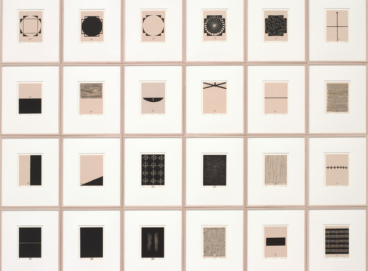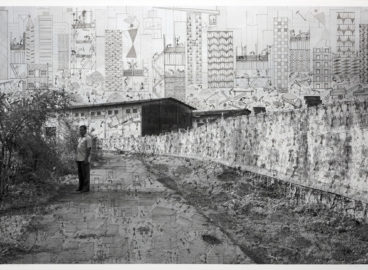
Feminism for Me Was About Equal Pay for Equal Work—Not About Burning Bras: Interview with Zarina
The interview with Zarina considers the artist’s life and work as a bridge between New Delhi and New York.
MoMA’s C-MAP research program developed an extended focus on historical alliances such as Bandung, the Non-Aligned Movement (NAM), pan-Africanism, pan-Arabism, and other south-south, east-east, and Third World nexuses. This conversation addresses such pasts, and their reverberations in the present, as they appear in Mohaiemen’s media-based practice.
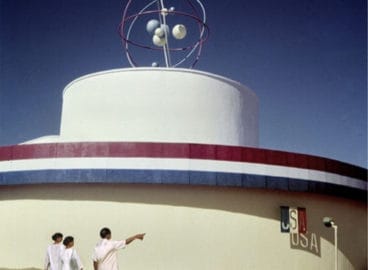
Shi Lu’s 1955 trip to India to oversee the design of the Chinese Pavilion at the Indian Industries Fair and his 1956 trip to Egypt for the Afro-Asian Art Conference offer a lens for understanding the PRC’s outreach and artistic diplomacy in the Cold War era.
This essay considers Robert Rauschenberg’s 1975 residency in Ahmedabad, India, which fostered an environment of exchange and collaboration between Rauschenberg and the Sarabhai family.
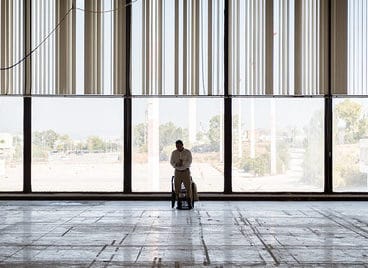
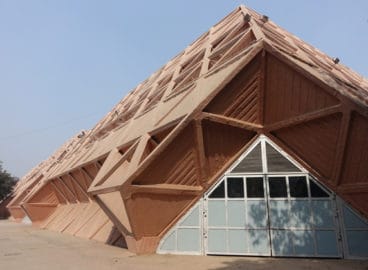
Despite protests and petitions from leading architects and architectural historians across the world, the Hall of Nations was surreptitiously demolished overnight on April 23-24, 2017. In this essay, Stierli bids farewell to architect Raj Rewal’s iconic building—a hallmark of modernist architecture in post-independence India.
Film curator La Frances Hui attended the International Film Festival of Kerala and follows up with this discussion of the award-winning Malayalam feature Sexy Durga by Sanal Kumar Sasidharan.
Art historian Emilia Terracciano examines the possibility of developing and de-colonizing narrative tools for the writing of (Indian) art history.
Art historian and curator Atreyee Gupta discusses the particularity and situatedness of perspectives, and presents the national and the regional as possibly conflicting categories, challenging us to unlearn both Western and Indian art history.
After following the work of Gauri Gill for many years and meeting with her in New Delhi, curator Sarah Suzuki acquired two works from Gill’s Fields of Sight series (in collaboration with Rajesh Vangad) for The Museum of Modern Art’s collection.
Film historian and curator Ashish Rajadhyaksha discusses the need for a canon, the year 1971, cracks in the bastion of the nation(al), the belated effects of censorship, and the pluralization of globalities
Karin Zitzewitz discusses significant impulses and influences on art production in South Asia, between the artists’ immediate context and practices or discourses of feminism and globalization, which have dominated since the 1980s.
Film historian Ashish Rajadhyaksha discusses major moments in the study of early Indian cinema, a history that is punctuated by fires both on the screen and off the screen.