5 Questions with Ashish Rajadhyaksha
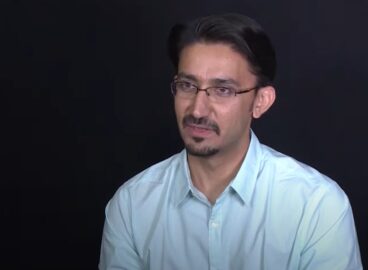
Film historian and curator Ashish Rajadhyaksha discusses the need for a canon, the year 1971, cracks in the bastion of the nation(al), the belated effects of censorship, and the pluralization of globalities
Film historian and curator Ashish Rajadhyaksha discusses the need for a canon, the year 1971, cracks in the bastion of the nation(al), the belated effects of censorship, and the pluralization of globalities
“In your practice, how do you approach the challenges that arise when presenting art from contexts that are not familiar to your audience?” With the dominance of the biennial model and the aggressive globalization of art institutions, such a question is as pertinent to a curator as it ever was.
Diana Campbell Betancourt, Artistic Director of Samdani Art Foundation and Chief Curator of Dhaka Art Summit, interviewed Syed Jahangir, artist and founder of the Asian Art Biennale, the oldest existing biennial of contemporary art in Asia.
Karin Zitzewitz discusses significant impulses and influences on art production in South Asia, between the artists’ immediate context and practices or discourses of feminism and globalization, which have dominated since the 1980s.
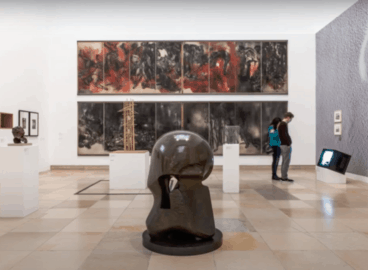
Postwar: Art Between the Pacific and the Atlantic, 1945-65, an exhibition on view at Haus der Kunst in Munich from October 2016 – March 2017, presents the period and its art as already global, multi-faceted, and modern.
Film historian Ashish Rajadhyaksha discusses major moments in the study of early Indian cinema, a history that is punctuated by fires both on the screen and off the screen.
Rashid Rana discusses curatorial plans for the inaugural Lahore Biennale with Glenn D. Lowry, Director of MoMA.
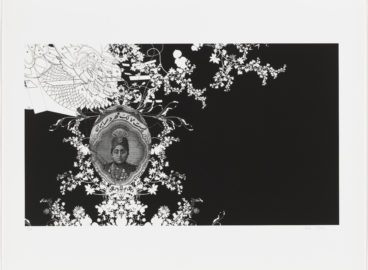
Last year in the exhibition Scenes for a New Heritage: Contemporary Art from the
Collection, we had the opportunity to show a selection of works from The Black Star
(2007), a portfolio of twelve digital prints by Seher Shah (Pakistani, born 1975).
Though acquired in 2008, the work was exhibited for the first time in this exhibition,
in a gallery devoted to the suggestion of using the past as a means of interrogating
the present.
In late January 2016, a team of seven from The Museum of Modern Art’s C-MAP Asia Group traveled to India and Bangladesh. The itinerary began in New Delhi, where the India Art Fair was underway, continuing on to Goa and Bangalore (with side-trips to Baroda and Bombay by individual group members), and concluding in Dhaka…
Since 1960, the North Korean government has constructed many buildings, monuments, and statues in Africa. These architectural structures have been covered by the international press since 2010, when the African Renaissance Monument was inaugurated in Senegal.
Diana Campbell Betancourt shares her thoughts on Bangladesh’s art history being written out of the dominant narratives of South Asia on account of its once being East Pakistani.
This interview featuring Asia Art Archive (AAA) Senior Researcher Sabih Ahmed is part of post’s new theme Challenging the Global: C-MAP Experts Respond to 5 Questions. Here, Ahmed shares his thoughts on considering practices from the ground up and looking to lateral associations.