post Presents: Curating Multiple Modernities

As museums move to put more geographically inclusive displays on view, a tension in emphasis–between cross-geographic correspondences and local particularities–is necessarily at stake. We convened a conversation between art historian, Alexander Alberro; curator, Doryun Chong; and museum director, Edit Sasvári, each with their own regional focus, to discuss the possibility of “the global museum,” what is gained and lost in the narrative of global modernism, and how local historiographies are best constructed in relation to international narratives and histories.

Introduction: Displaying Modernity
Part 2: Edit Sasvári
Part 3: Doryun Chong
Part 4: Alexander Alberro
Part 5: Discussion
Part 6: Q&A

More in this theme

Sound in Two Dimensions: Graphic Scenario of Performances by Zero Jigen in the 1960s

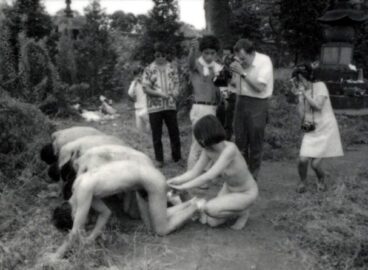
Zero Jigen (Zero Dimension), a performance collective active in the 1960s in Tokyo and Nagoya, Japan, has only recently become better known in the international art world through the following exhibitions and content: Tokyo 1955–1970: A New Avant-Garde (The Museum of Modern Art, New York, 2012–13) with screenings of the group’s performance documents; Great Crescent: Art and Agitation…

Thinking Back on Global Conceptualism

Rachel Weiss, curator, writer, and professor at the School of the Art Institute of Chicago, was invited to MoMA to speak about the exhibition Global Conceptualism: Points of Origin, 1950s–1980s, which she co-organized in 1999 with Jane Farver (who also came to talk on the subject), Luis Camnitzer, and an international team of curators: Okwei Enwezor,…

Subscribe to our newsletter

Related Content

On Vrishchik: A Conversation with Gulammohammed Sheikh 

Gulammohammed Sheikh (b. 1937) is an artist, pedagogue, and writer known for his prolific career across practices that include curating and publishing. Sheikh taught art history and painting at the Faculty of Fine Arts at the Maharaja Sayajirao University of Baroda—the foremost institute for avant-garde practice during the post-Independence period—for almost three decades, spearheading an…

Bagus Pandega: Aesthetic of Modularity

Bagus Pandega assembles various electronic components, musical instruments, found objects, and 3-D-printed custom parts and software into artworks that combine and generate kinetic, acoustic, and light elements in a modular way: Each of the constituent components can be replaced, modified, or exchanged to form another iteration. Despite the technical marvel of his installations, Pandega’s approach to artistic practice remains fundamentally DIY—an artistic ethos that intentionally bypasses industrial standards. Pandega has adopted this “maker” mentality—rooted in Indonesia’s 1990s media landscape—to reexamine the collision between society and nature, as seen in The Diasporic Mythology.