Abounaddara. The Right to the Image

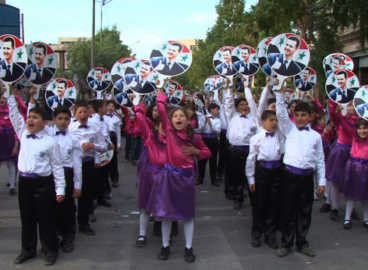
post is pleased to announce “Abounaddara. The Right to the Image,” an online art exhibition that seeks to illuminate the contemporary conditions of the Syrian revolution, show solidarity with civil society in Syria, and provoke new thinking about media representation. Organized by the Vera List Center for Art and Politics at The New School, Slought, and…

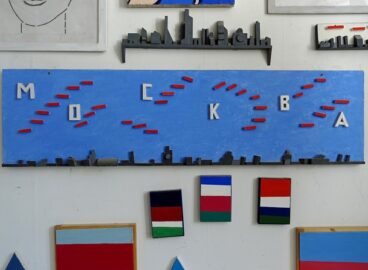
From the Red Square to the Black Square: Memos from Moscow

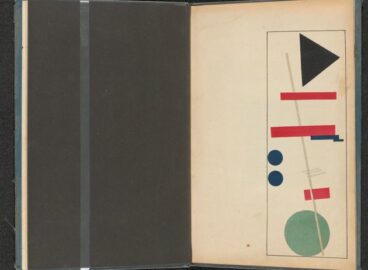
Just a few days into his trip to Moscow in the winter of 1927–28, Alfred Barr wrote in his diary, “Apparently there is no place where talent of an artistic or literary sort is so carefully nurtured as in Moscow. . . . We’d rather be here than any place on earth.”* He went on…

The Archival Impulse: Collecting and Conserving the Moving Image in Asia

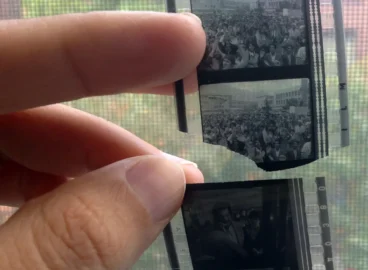
Since the 1950s, there has been an active production of experimental film, animation, and video art in Asia. Yet, much of this work has not been consistently conserved or shared with the public due to the lack of accessible archives or organized collections dedicated to its preservation and dissemination. The conference “The Archival Impulse: Collecting…

László Beke Looks Back: Thoughts on Global Conceptualism

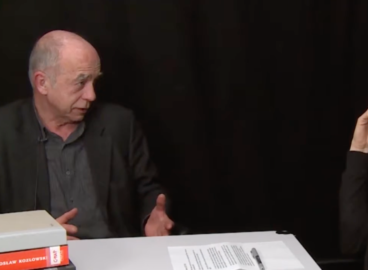
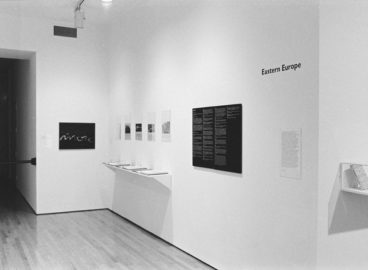
In this segment of the theme “Global Conceptualism Reconsidered,” the curators of the exhibition Global Conceptualism: Points of Origin, 1950s–1980s reflect upon their experiences organizing the exhibition. In the following interviews, they address the origins of the exhibition’s concept, the challenges faced in defining and presenting the variety of conceptualisms across the exhibition’s many international subsections, and…

Milan Knížák and Ken Friedman: Keeping Together Manifestations in a Divided World

One of the many intercontinental relationships to arise from Fluxus in the second half of the 1960s was the one between Milan Knížák and Ken Friedman, the two directors of Fluxus East and Fluxus West, respectively. When, in the 1980s, Dick Higgins and Ken Friedman outlined the basic ideas of Fluxus,1Dick Higgins, “Fluxus: Theory and…

“Revolution Not Only In The Arts, But In Connection.” Interview with Vytautas Landsbergis

Professor at the Lithuanian Conservatory of Music in Vilnius and scholar of the early 20th-century composer and painter Mikalojus Konstantinas Čiurlionis, Vytautas Landsbergis connected with the international Fluxus community in the 1960s via his childhood friend George Maciunas. As a result, he corresponded also with Ken Friedman in California and Mieko Shiomi in Tokyo, and…