1960s

Selections from Mário Pedrosa: Primary Documents

Mário Pedrosa is widely considered Brazil’s preeminent critic of art, culture, and politics and is one of Latin America’s most frequently cited public intellectuals. Three selections from his writings included here (“The Vital Need for Art”; “Environmental Art, Postmodern Art, Hélio Oiticica”; “The New MAM Will Consist of Five Museums”) come from the anthology Mário Pedrosa:…

Performing for the Camera in Central and Eastern Europe

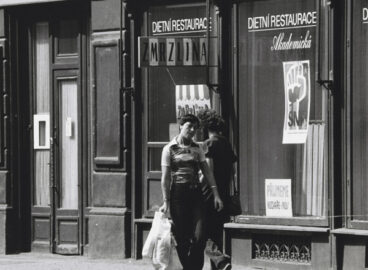
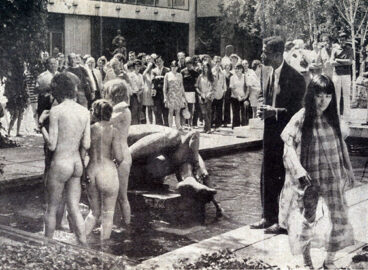
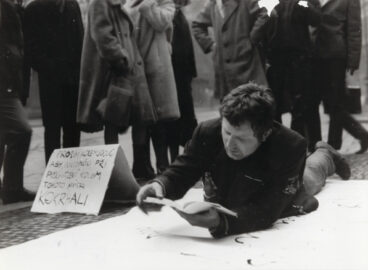
Photography provided a guaranteed witness to the burgeoning genre of performance art in the 1960s, when restrictions in Socialist societies sometimes created a far different relationship between performance and documentation than in the West. Art historian Amy Bryzgel highlights several key works of Central and Eastern Europeanperformance art from the MoMA Collection. Artists have been…

Cold War Modern: Raymond Loewy in the US and the USSR

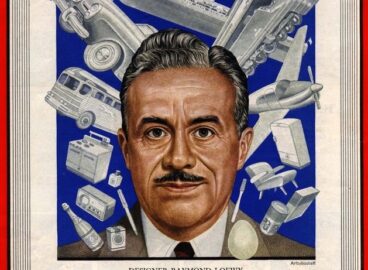
Juliet Kinchin, Curator of Architecture and Design, in consultation with Alexandra Sankova, Director of the Moscow Design Museum, looks into the Cold War transnational connections in Raymond Loewy’s work. “Scallops St. Tropez” was Raymond Loewy’s contribution to a book of celebrity recipes published in 1958. The book’s editor, Helen Dunn, introduced Loewy, as “perhaps the…

Environmental Art, Postmodern Art, Hélio Oiticica

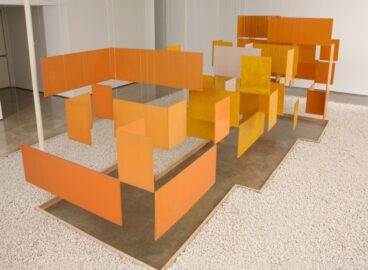
This 1966 essay is renowned for its early use of the term “postmodern.” Unlike later theorizations, the Brazilian critic Mário Pedrosa deploys the concept to discuss how immersive environments replace distanced visual perception in the artworks of Hélio Oiticica and Lygia Clark. New attention to the essay—where the text is interpreted as an alternate theoretical…

Photography and Modern Indian Architecture (1949-1990s)

Ram Rahman (photographer, designer, curator and activist) discusses key examples of modernist architecture in post-colonial India. Using photographic documentation and archival materials, he surveys the landscape of architects, designers, photographers, entrepreneurs, and intellectuals working (primarily in New Delhi) between the 1950s and 1990s. This presentation is excerpted from a closed-door session with MoMA’s C-MAP Asia…

Growing Up With Style

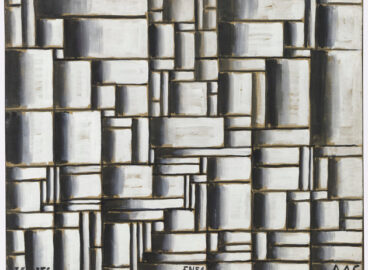
Artist and critic Luis Camnitzer discusses his personal relationship to the work and legacy of Joaquín Torres-García with special attention to his influential Taller and the recent exhibition at MoMA. I am at a point in my life when I have made complete peace with Joaquín Torres-García. It took a long time. Growing up in…

Species of Spaces in Eastern European and Latin American Experimental Art

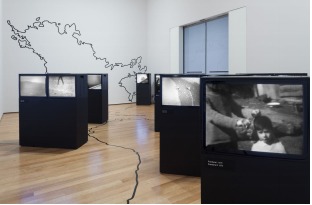
Art historian Klara Kemp-Welch draws parallels between artists of disparate avant-gardes whose claims over spaces in the 1960s and 1970s were political gestures. How are we to navigate the historical fields of experimental art in state socialist Eastern Europe and under Latin American military dictatorships? What happens when pedagogy, poetry, sculpture, and sociability bleed into…

Cildo Meireles’s “Virtual Spaces”

Assistant Curator Lilian Tone reflects on the origin of Brazilian artist Cildo Meireles’s Corners series. Virtual Spaces: Corner 1 (1967–68) simulates, with a twist, the corner of a domestic room, complete with parquet flooring, a painted baseboard, and canvas-covered walls. It is the first of a series of works that marked a breakthrough in Cildo…

Mediate Media: Buenos Aires Conceptualism

Art historian Daniel Quiles focuses on examples from the Transmissions exhibition to show how Argentine conceptualists of the late 60s converted information from one medium to another. This phenomenon shifted to the transmission of social and political information, causing artistic practices to leave national borders and connect beyond the region. One of the earliest Argentine…