An Interested Observer: Interview with Branko Vučićević
In this interview conducted during a C-MAP research trip to Belgrade in the spring of 2012, Vučićević speaks to Jon Hendricks and Gretchen Wagner about both art and life.
In this interview conducted during a C-MAP research trip to Belgrade in the spring of 2012, Vučićević speaks to Jon Hendricks and Gretchen Wagner about both art and life.
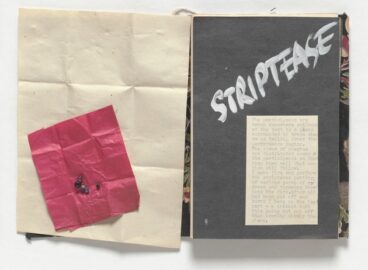
The book Striptease by Sonia Švecová (Czech, born 1946) is one of many little-known gems within the Gilbert and Lila Silverman Fluxus Collection Gift at MoMA . Švecová was born in 1946 in the former Czechoslovakia and was a central figure in Aktualní Umeni (also known as Aktual Art or simply Aktual), a small group of artists based in…
As museums move to put more geographically inclusive displays on view, a tension in emphasis–between cross-geographic correspondences and local particularities–is necessarily at stake. We convened a conversation between art historian, Alexander Alberro; curator, Doryun Chong; and museum director, Edit Sasvári, each with their own regional focus, to discuss the possibility of “the global museum,” what…
Tomislav Gotovac—the influential avant-garde filmmaker, conceptual artist, and anarchist leader of Croatian performance art—occupies an authorial position within the alternative New Art Practice of the late 1960s in the former Yugoslavia. After studying film directing at the Academy of Theater, Film, Radio, and Television in Belgrade, Gotovac made his first experimental films, inaugurating the golden…
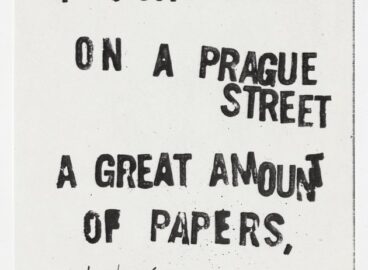
One of the most respected Czech artists in recent times, Jiří Kovanda created actions and installations in Prague’s public spaces in the mid-1970s and early ’80s. Self-taught, he was one of the few Czech action artists to work outdoors in the urban environment following the 1968 invasion of Czechoslovakia by Warsaw Pact troops. Most of…
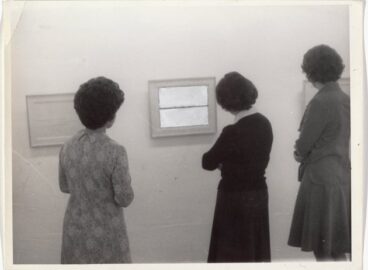
In 1959, the year he founded Gorgona with his friends and colleagues, Josip Vaništa staged a solo exhibition in Zagreb of his drawings from the 1950s. A black-and-white photograph commemorates the occasion; it shows three framed works on the wall, studied by three female visitors. The drawing on the left suggests the moody, delicate, somewhat…
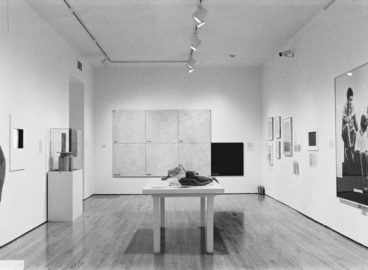
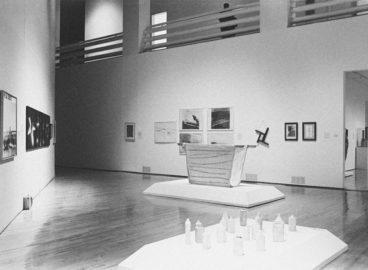
Rachel Weiss, curator, writer, and professor at the School of the Art Institute of Chicago, was invited to MoMA to speak about the exhibition Global Conceptualism: Points of Origin, 1950s–1980s, which she co-organized in 1999 with Jane Farver (who also came to talk on the subject), Luis Camnitzer, and an international team of curators: Okwei Enwezor,…
Jane Farver, curator and former Director of Exhibitions at the Queens Museum, was invited to MoMA to speak about the exhibition Global Conceptualism: Points of Origin, 1950s–1980s, which she co-organized in 1999 with Rachel Weiss (who also came to present on the subject), Luis Camnitzer, and an international team of curators: Okwei Enwezor, Reiko Tomii &…
Milan Knížák was a key figure in the development of action art and performance in Prague in the 1960s. His Performance Files, now in the collection of The Museum of Modern Art and published here in their entirety, constitute a tremendous resource, as they bring together images and texts related to many of the artist’s independent…
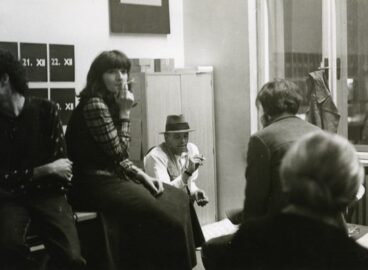
This story starts with a photograph of the young Marina Abramović sitting beside Joseph Beuys, smoking a cigarette. The year was 1974, and Beuys was in Belgrade to participate in April Encounters. This story starts with a photograph of the young Marina Abramović sitting beside Joseph Beuys, smoking a cigarette. The year was 1974, and…
David Harvey’s essay for the exhibition catalog of Uneven Growth Tactical Urbanisms for Expanding Megacities is published here on post to mark the opening of the exhibition. On the night of June 20, 2013, more than a million people in some 388 Brazilian cities took to the streets in a massive protest movement. The largest of these protests, comprising…
In an influential account written in 1986, a prominent British historian Timothy Garton Ash described Central Europe as “territory where peoples, cultures, languages are fantastically intertwined, where every place has several names and men change their citizenship as often as their shoes, an enchanted wood full of wizards and witches”. This evocative characterization challenged the…