5 Questions with Sara Blaylock
Art historian Sara Blaylock discusses experimental practices in the German Democratic Republic (GDR) during the 1980s within a global context.
Art historian Sara Blaylock discusses experimental practices in the German Democratic Republic (GDR) during the 1980s within a global context.
“In your practice, how do you approach the challenges that arise when presenting art from contexts that are not familiar to your audience?” With the dominance of the biennial model and the aggressive globalization of art institutions, such a question is as pertinent to a curator as it ever was.
Art historian Sarah James considers art produced in the German Democratic Republic (GDR), reflecting on its circulation in both international and local contexts.
The essay focuses on four artist books by Mladen Stilinović (1947-2016). Several of the books are in an accordion-fold format, common for Stilinović’s photobooks and pamphlets that include drawings, word constructions, and collages.
Ewa Partum gives a close readings of her work Autobiography in the MoMA collection and describes some of her earliest performances from the 1970s, including Active Poetry.
Curator and writer Nataša Petrešin-Bachelez wants us to look at art history from both sides—the canonical and the traditionally “uncanonical” or those areas and things outside the accepted parameters of a “Western” art history.
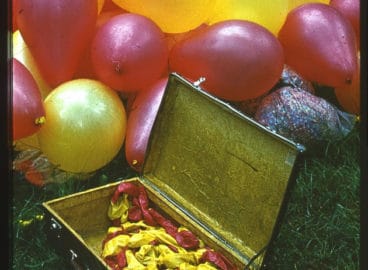
Art historian and curator Margarita Tupitsyn analyzes Balloon, a 1977 action by the Moscow-based Collective Actions Group (CAG), which entered the MoMA Collection in 2008 as a video work.
Curator Olga Kopenkina describes her curatorial practice, which moves away from grand historical narratives toward specific, national histories producing intersectionalities that she feels are missing in art history today.
Curator Anna Bitkina addresses the expanding role of the curator and art, specifically in Russia, where public space continues to be politically charged.
This series presents newly translated texts from the 1970s by Conceptual artists from Poland, Hungary, and Slovakia.
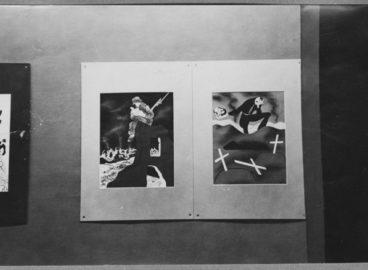
Art historian Anna Pravdová delves deep into the MoMA Archives to highlight the Museum’s first exhibition of Czech art.
Artist Gluklya (Natalya Pershina-Yakimanskaya) speaks about the importance of specific, local narratives for her work: “The experiments that I am doing… are the only reality, the only narrative that I can imagine.”