Asia

The Archival Impulse: Collecting and Conserving the Moving Image in Asia

Since the 1950s, there has been an active production of experimental film, animation, and video art in Asia. Yet, much of this work has not been consistently conserved or shared with the public due to the lack of accessible archives or organized collections dedicated to its preservation and dissemination. The conference “The Archival Impulse: Collecting…

New Audiences, New Energy: Producing and Exhibiting Contemporary Chinese Art in 1993

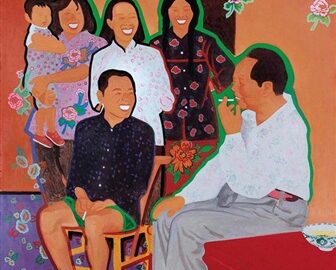
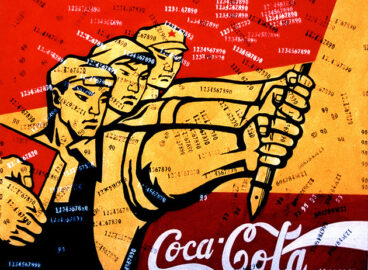
Did 1993 mark a watershed for “contemporary Chinese art” in the then increasingly globalized art world? In this essay Peggy Wang discusses exhibitions of contemporary Chinese art held overseas in the year 1993, notably China Avant-Garde in Berlin, China’s New Art, Post-1989 in Hong Kong, and the Venice Biennale. Analyzing various readings of works by artists such as Wang…

“Picabia Bothers Me Every Morning”: A Conversation with Atul Dodiya

Tyeb Mehta once warned Atul Dodiya against referencing Francis Picabia, who is but one reference on a long and abundant list that includes Jasper Johns, Robert Rauschenberg, Marcel Duchamp, and surprisingly Kazimir Malevich and Piet Mondrian—although Dodiya has never been an abstract painter. Dodiya also appropriates diverse forms and inspiration from daily life, such as…

Reiko Tomii Looks Back: Thoughts on Global Conceptualism

In this segment of the theme “Global Conceptualism Reconsidered,” the curators of the exhibition Global Conceptualism: Points of Origin, 1950s–1980s reflect upon their experiences organizing the exhibition. They address in the following interviews the origins of the exhibition’s concept, the challenges faced in defining and presenting the variety of conceptualisms across the exhibition’s many international subsections, and…

post Presents: Curating Multiple Modernities

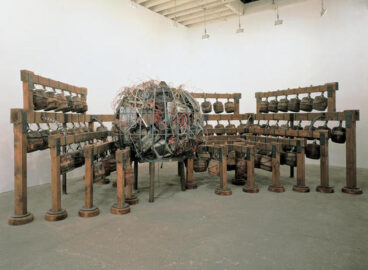
As museums move to put more geographically inclusive displays on view, a tension in emphasis–between cross-geographic correspondences and local particularities–is necessarily at stake. We convened a conversation between art historian, Alexander Alberro; curator, Doryun Chong; and museum director, Edit Sasvári, each with their own regional focus, to discuss the possibility of “the global museum,” what…

Sound in Two Dimensions: Graphic Scenario of Performances by Zero Jigen in the 1960s

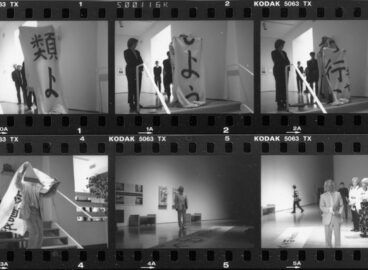
Zero Jigen (Zero Dimension), a performance collective active in the 1960s in Tokyo and Nagoya, Japan, has only recently become better known in the international art world through the following exhibitions and content: Tokyo 1955–1970: A New Avant-Garde (The Museum of Modern Art, New York, 2012–13) with screenings of the group’s performance documents; Great Crescent: Art and Agitation…

“Partition is what we are living even now”: A Conversation with Nalini Malani

This informal conversation took place in March 2015 in Nalini Malani’s studio in Mumbai during a C-MAP trip to India. Gayatri Sinha and Stuart Comer talked to Malani about her practice, spanning from the 1960s to the 1990s. The discussion focused on Malani’s early lens-based experiments, her interest in psychoanalysis, her activities in the 1980s…