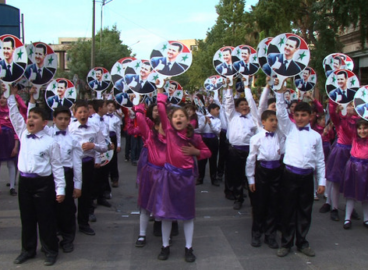
毛的圖像與余友涵的個人歷史
Read the english translation here.
Read the english translation here.
We live in a world filled with images that are captured, edited, and published at hyper speeds, images referring to images. Our political, ethical, and intimate lives are constructed around images, through images, and in images. In situations of war and mass violations of human rights, it is our hyper-mediatized world that creates the typical…
post is pleased to announce “Abounaddara. The Right to the Image,” an online art exhibition that seeks to illuminate the contemporary conditions of the Syrian revolution, show solidarity with civil society in Syria, and provoke new thinking about media representation. Organized by the Vera List Center for Art and Politics at The New School, Slought, and…
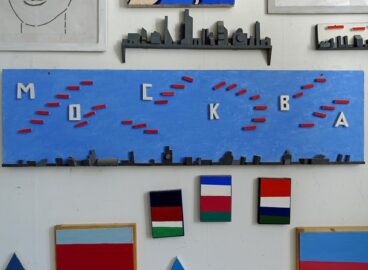
Just a few days into his trip to Moscow in the winter of 1927–28, Alfred Barr wrote in his diary, “Apparently there is no place where talent of an artistic or literary sort is so carefully nurtured as in Moscow. . . . We’d rather be here than any place on earth.”* He went on…
Since the 1950s, there has been an active production of experimental film, animation, and video art in Asia. Yet, much of this work has not been consistently conserved or shared with the public due to the lack of accessible archives or organized collections dedicated to its preservation and dissemination. The conference “The Archival Impulse: Collecting…
In this interview, conducted when Jarosław Kozłowski visited MoMA to meet with C-MAP Central and Eastern Europe, the artist speaks about the past challenges of communicating across the Iron Curtain, his continuing fascination with language as an art medium as well as what he sees as the danger of a solely political reading of art.
In this segment of the theme “Global Conceptualism Reconsidered,” the curators of the exhibition Global Conceptualism: Points of Origin, 1950s–1980s reflect upon their experiences organizing the exhibition. In the following interviews, they address the origins of the exhibition’s concept, the challenges faced in defining and presenting the variety of conceptualisms across the exhibition’s many international subsections, and…
Read the english translation here.
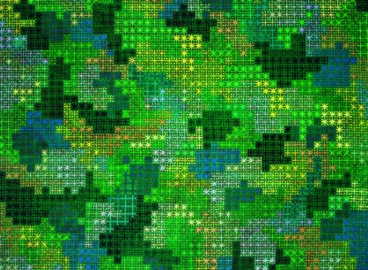
The name Ding Yi is associated with the cross, a symbol the artist, designer, and educator has used since the late 1980s in his investigation of abstraction. Ding’s allover painting fields are built from the manual, systematic repetition of horizontal and vertical strokes across a flat, canvas surface. Ding grew up during the Cultural Revolution,…
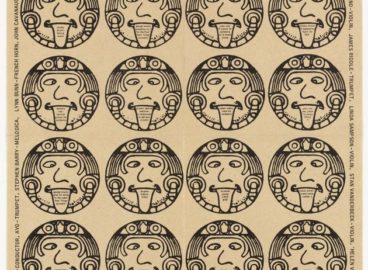
The posters, invitations, programs, and flyers in this selection have been selected to highlight the international range of Fluxus events from 1962 to 1977 and represent some of the most significant among them.
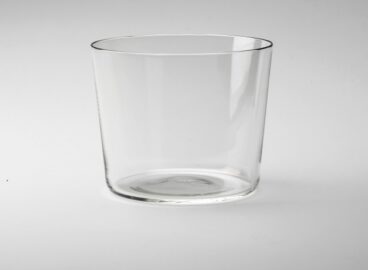
While going through MoMA’s Czech holdings during my Fulbright Research Fellowship at the Museum, I came across a surprising finding: the first Czech objects ever acquired by MoMA were a glass tumbler and two bowls designed by a young student, Věra Lišková (1924–1979) circa 1947, when Czechoslovakia was still part of the industrialized Western world.…
One of the many intercontinental relationships to arise from Fluxus in the second half of the 1960s was the one between Milan Knížák and Ken Friedman, the two directors of Fluxus East and Fluxus West, respectively. When, in the 1980s, Dick Higgins and Ken Friedman outlined the basic ideas of Fluxus,1Dick Higgins, “Fluxus: Theory and…