The Harvest of Evelyn Ashamallah
Evelyn Ashamallah (born 1948) presides over history from her small apartment in Talaat Harb in downtown Cairo. Across the past six decades, she has demonstrated a legacy of constant negotiation…
Evelyn Ashamallah (born 1948) presides over history from her small apartment in Talaat Harb in downtown Cairo. Across the past six decades, she has demonstrated a legacy of constant negotiation…
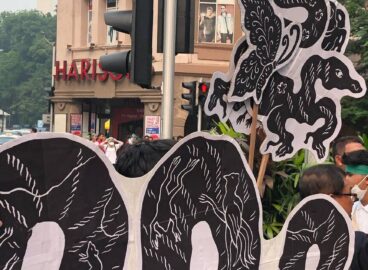
Sharon Chin is an artist and activist based in Port Dickson, Malaysia. Chin talks about how she has learned to cultivate a productive relationship between these two pursuits across two decades. The artist shares her thoughts about the locations and locutions of the political in her work.
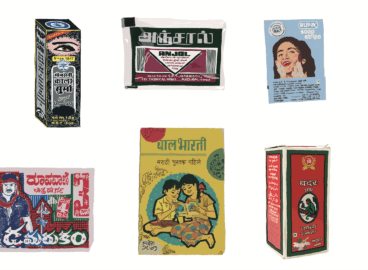
This interview with the sibling duo behind Bombay Duck Designs explores their omnivorous curiosity for the diversity of visual cultures in India and suggests that an embrace of what may, on the surface, seem chaotic reveals opportunities for understanding and connection. Paul Galloway: An aspect of your work that intrigues me is that it is steeped…
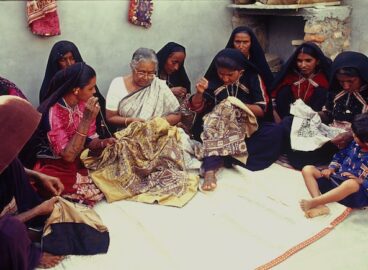
The concept of establishing a museum in a remote region of India—one that is not only geographically isolated but also prone to natural disasters such as earthquakes and cyclones—presents a complex set of challenges. Yet, it also offers a rare opportunity to engage deeply with the traditional knowledge systems of local communities. Located in Ajrakhpur,…
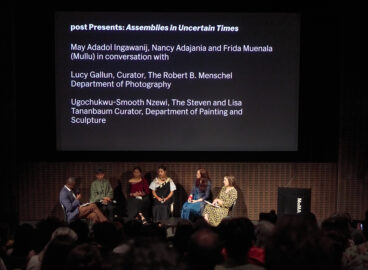
This public program brought together Nancy Adajania, May Adadol Ingawanij, and Frida Muenala from Mullu for an evening of inquiry into forms and practices of gathering. The speakers, who represent diverse practices in the cultural fields—from art making to curation to institutional leadership—and operate across vast geographies, unpacked their different approaches to assemblies. Among the…
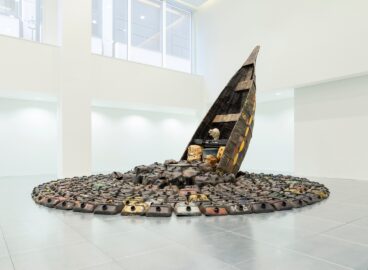
“The past must not be forgotten, but the present reminds us of the past, so we must take responsibility for it.” —Romuald Hazoumè Romuald Hazoumè (born 1962, Porto-Novo, Benin) began his artistic training unintentionally. Between the ages of 10 and 12, he made masks as part of…
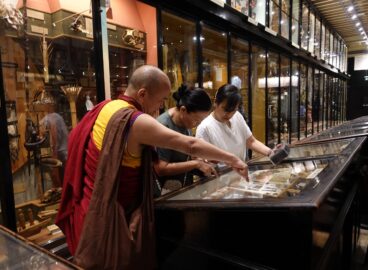
Debates around the ownership of cultural heritage and decolonizing museums have become increasingly visible and polarizing in the public domain, leading to attempts to redefine the term “museum” itself.1The International Council of Museums (ICOM) Extraordinary General Assembly approved the following new definition of “museum” at the 26th ICOM General Conference held in Prague in August…
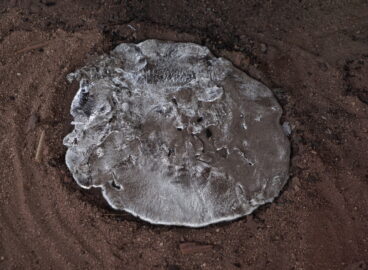
Across Pratchaya Phinthong’s more than two-decade practice, an idiom of materiality and form has emerged that aligns his artistic trajectory along a conceptualist vein. Phinthong discusses his relationship toward this categorization and shares how he approaches his artistic practice against and alongside conceptualist gestures and methods. This edited transcript comes out of two interviews conducted with the artist over video call in June 2024.
Au Sow Yee’s three-part video series The Extreme Journey of Perwira and the Calm Sea: In 3 Acts (2019–22) begins with a karaoke session. An introductory xylophone sequence announces the unfamiliar Song of Departure: a mash-up of lyrics and melodies from a Taiwanese conscription tune and cinematic theme songs. In conventional karaoke fashion, synchronized textual cues (in Japanese, Chinese, and English) accompany a montage of images, and from the song’s main refrain, we learn of its premise as well as its protagonist: ぼくらのハリマオ | 我們的 Harimau—in English, “our Tiger.”
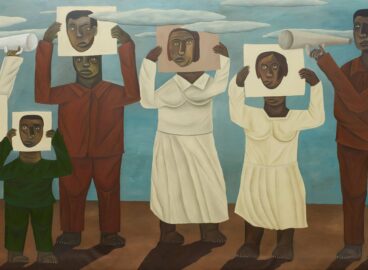
A work of openness and inscrutability, Salah Elmur’s Missing and Lost People’s Day (2021) commemorates a terrible moment in Sudan’s recent history: the massacre on June 3, 2019, when security forces opened fire on a peaceful protest in Khartoum. Hundreds were killed, injured, or arrested. In this painting, which Elmur made during a residency in…
This essay by art historian Gabriela Germana Roquez delves into the significance of landscape in the art of the Sarhua community in the Peruvian Andes and the Shipibo-Konibo people in the Amazon. Through her analysis, Germana Roquez illuminates how these artworks depict, embody, and summon the landscape, emphasizing the active role of the natural world…
In 1907, Oskar Kokoschka (1886–1980) was commissioned to create an illustrated fairy tale for the children of Fritz Waerndorfer, founding member and financial supporter of the Wiener Werkstätte, Vienna’s premier design workshop. In Die träumenden Knaben (The Dreaming Boys, 1917), Kokoschka produced a haunting narrative poem about the awakening of adolescent sexuality, set on distant islands, far removed from modern city life and bourgeois society. His meticulously crafted text draws on familiar tropes from classical and contemporary literature, including works by Johann Wolfgang von Goethe and Viennese writer Peter Altenberg. While nostalgia is an essential trope of the Romantic period, Kokoschka’s work subverts this emerging canon. His work transforms what should have been a Romantic-style evocation of nostalgia and passes traditional wisdom through myth into a critical dismantling of such a gesture. The designs in the artist’s lithographs exemplify the prevalent decorative style of fin de siècle Vienna, showcasing his adept integration of various “primitivist” trends in European art. This is evident in Die träumenden Knaben’s cloisonné-like outlines, unconventional perspectives, and flat color planes.