The Harvest of Evelyn Ashamallah
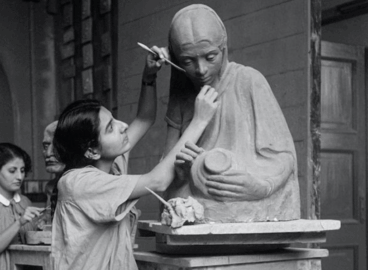
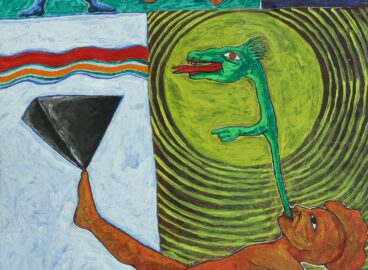
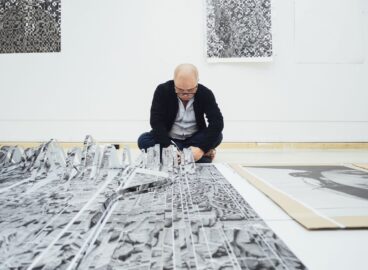
Evelyn Ashamallah (born 1948) presides over history from her small apartment in Talaat Harb in downtown Cairo. Across the past six decades, she has demonstrated a legacy of constant negotiation…
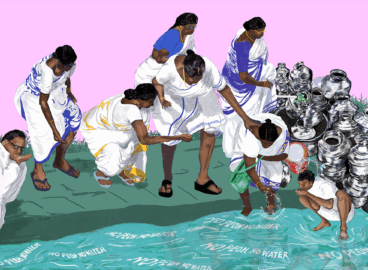
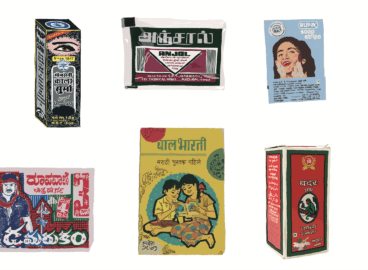
This interview with the sibling duo behind Bombay Duck Designs explores their omnivorous curiosity for the diversity of visual cultures in India and suggests that an embrace of what may, on the surface, seem chaotic reveals opportunities for understanding and connection. Paul Galloway: An aspect of your work that intrigues me is that it is steeped…
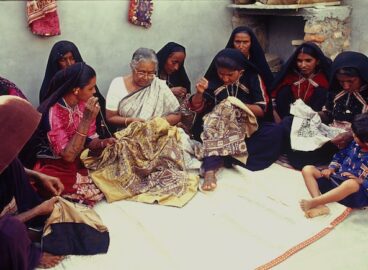
The concept of establishing a museum in a remote region of India—one that is not only geographically isolated but also prone to natural disasters such as earthquakes and cyclones—presents a complex set of challenges. Yet, it also offers a rare opportunity to engage deeply with the traditional knowledge systems of local communities. Located in Ajrakhpur,…
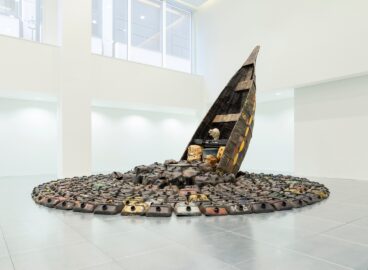
“The past must not be forgotten, but the present reminds us of the past, so we must take responsibility for it.” —Romuald Hazoumè Romuald Hazoumè (born 1962, Porto-Novo, Benin) began his artistic training unintentionally. Between the ages of 10 and 12, he made masks as part of…
Untitled (Soldiers at Rest) (2003) belongs to a body of work which resulted from Vietnamese American artist Dinh Q. Lê’s long-term archaeological investigation of the visual culture of the American War (known as the Vietnam War in the United States), via a traditional Vietnamese weaving technique. Lê learned the latter from his aunt who, when he was a child in Vietnam, wove grass mats, and he later adapted this traditional craft for his own purposes.
This essay by art historian Gabriela Germana Roquez delves into the significance of landscape in the art of the Sarhua community in the Peruvian Andes and the Shipibo-Konibo people in the Amazon. Through her analysis, Germana Roquez illuminates how these artworks depict, embody, and summon the landscape, emphasizing the active role of the natural world…
“Seyni Awa Camara doesn’t belong to any artistic school,” wrote art critic Massamba Mbaye in 2016. She resists any classification and has always considered herself a singular artist, whether in the context of her own country or in that of the international art…
On Conspiratorial Materialisms Firearms, Molotov cocktails, flags, and banners are some of the objects in an arsenal of protests and revolts. Alongside clenched fists and enraged bodies, these objects form an imaginary of human gestures associated with the uprising. Art historian and curator Georges Didi-Huberman dedicated the exhibition Uprisings (2016–17) to this theme, assembling artworks…
The Fragile Body and the Damaged Subject: A Decade of Crisis and Resistance (1998–2008) If in the early to mid-1990s, performative actions in Armenia were, to a large extent, launched by situational or strategic collectives and groups as interventions—as correctives to institutional operations of the state and the artworld—and motivated by the desire to communicate…
These presentations and panel discussion at MoMA brought together four filmmakers and artists who work in expanded documentary modes, using existing footage, archival research, interviews, and scripted narratives to produce imaginative accounts of transnational struggles, solidarities, and interventions. Using moving images, some of these practitioners interrogate the anti-colonial and anti-imperialist movements of the mid-late 20th…
Magdalene A. N. Odundo is a ceramic artist born in Kenya in 1950 but residing in Britain since 1971. Much has been made of her biography and the complexities of her education, training, and rigorous practice of creating beautiful vessels that speak to multiple associations and inspirations across the history of art and their resonances…
Articulations of the relational have been shifting in parallel with the recent turn in global contemporary art toward validating ecological and indigenous practices. This shift invites a consideration of what exactly constitutes the relational among artistic and curatorial efforts within the global contemporary. And among Southeast Asian exemplars, the multimedia practice of artist Araya Rasdjarmrearnsook…