The Harvest of Evelyn Ashamallah
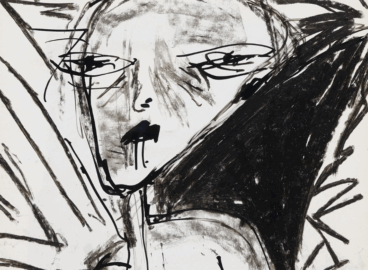
Evelyn Ashamallah (born 1948) presides over history from her small apartment in Talaat Harb in downtown Cairo. Across the past six decades, she has demonstrated a legacy of constant negotiation…
Karlo Kacharava (1964–1994), a prominent Georgian artist, writer, art critic, and poet, has been referred to as “the voice of his generation” and a “supernova.” In my contribution to the book Karlo Kacharava: Sentimental Traveller, published in 2023 on the occasion of Kacharava’s solo exhibition in Ghent at S.M.A.K., I discuss the intertwining of his “oceanic” body of work, both visual and written, with his short but extraordinary life.
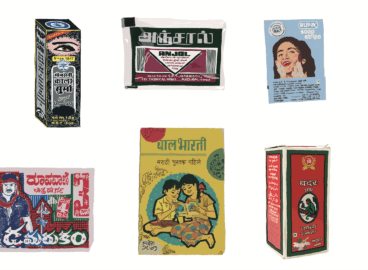
This interview with the sibling duo behind Bombay Duck Designs explores their omnivorous curiosity for the diversity of visual cultures in India and suggests that an embrace of what may, on the surface, seem chaotic reveals opportunities for understanding and connection. Paul Galloway: An aspect of your work that intrigues me is that it is steeped…
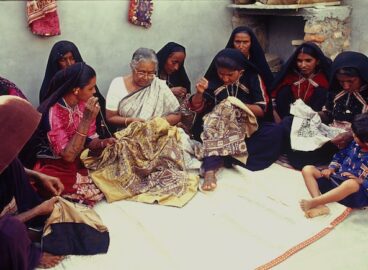
The concept of establishing a museum in a remote region of India—one that is not only geographically isolated but also prone to natural disasters such as earthquakes and cyclones—presents a complex set of challenges. Yet, it also offers a rare opportunity to engage deeply with the traditional knowledge systems of local communities. Located in Ajrakhpur,…
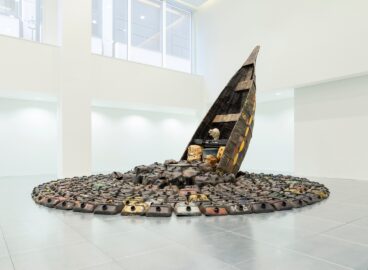
“The past must not be forgotten, but the present reminds us of the past, so we must take responsibility for it.” —Romuald Hazoumè Romuald Hazoumè (born 1962, Porto-Novo, Benin) began his artistic training unintentionally. Between the ages of 10 and 12, he made masks as part of…
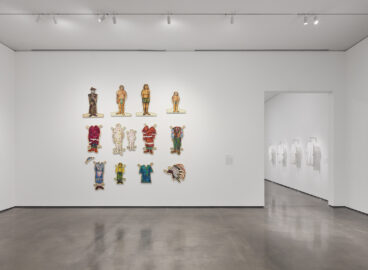
In a sketchbook that dates to her early student years at Framingham State College (now Framingham State University) in the mid-1970s, the artist Jaune Quick-to-See Smith (Citizen of the Confederated Salish and Kootenai Nation, 1940–2025) wrote, “[I] have a brainstorm . . . to do a series of paper dolls.”1Jaune Quick-to-See Smith, unpublished sketchbook, c.…
The performances conducted by the late Filipino artist Roberto Villanueva (1947–1995) prompted the effects and the facture of ritual. In 1989, a sprawling circular labyrinth constructed out of eight-foot runo reeds occupied the grounds of the Cultural Center of the Philippines (CCP) in Metro Manila. Inspired by a pattern found in the Cordilleran rice fields of northern Luzon, the labyrinth orchestrated a walk, or dance, toward the center, where one found a circular pit lined with river stones and presided over by totemic figures like the bulul, a carved wooden sculpture representing a guardian spirit. The center was an area resembling a dap-ay, a place for gatherings and rites, traditionally the foundation of Cordilleran learning. Archetypes: Cordillera Labyrinth, like many of Villanueva’s works, combined installation, chanting, magical invocations, and other ritualistic tropes drawn from Indigenous sources.
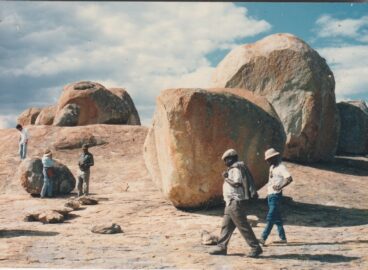
A few years after Algeria gained its independence from France in 1962, the artist Houria Niati (b. 1948) took up a position with the Ministry of Youth and Culture, where she taught painting, ceramics, and drawing to both adults and children. Art workshops were intended to help Algerians work through the trauma of the Algerian…
This essay by art historian Gabriela Germana Roquez delves into the significance of landscape in the art of the Sarhua community in the Peruvian Andes and the Shipibo-Konibo people in the Amazon. Through her analysis, Germana Roquez illuminates how these artworks depict, embody, and summon the landscape, emphasizing the active role of the natural world…
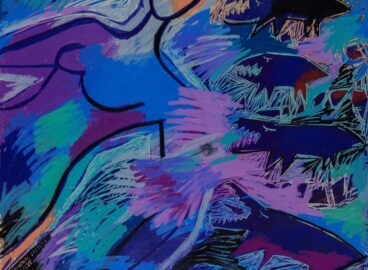
In the mid-1980s, over the course of three years and across three continents, feminist artist Everlyn Nicodemus (born 1954, Kilimanjaro, Tanzania) gathered together women to discuss their everyday experiences. From these conversations, which took place in Skive, Denmark; Kilimanjaro, Tanzania; and Calcutta (now Kolkata), India, she produced a series of seventy-five paintings and related poems that…
“Seyni Awa Camara doesn’t belong to any artistic school,” wrote art critic Massamba Mbaye in 2016. She resists any classification and has always considered herself a singular artist, whether in the context of her own country or in that of the international art…
On Conspiratorial Materialisms Firearms, Molotov cocktails, flags, and banners are some of the objects in an arsenal of protests and revolts. Alongside clenched fists and enraged bodies, these objects form an imaginary of human gestures associated with the uprising. Art historian and curator Georges Didi-Huberman dedicated the exhibition Uprisings (2016–17) to this theme, assembling artworks…