Hélio Oiticica’s Painting 9
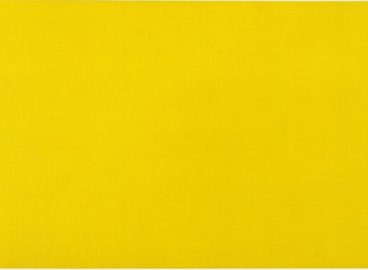
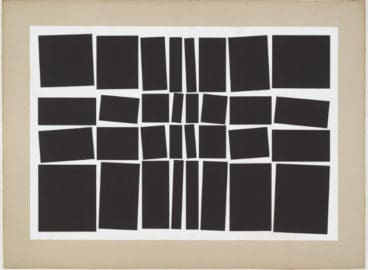
Painting 9 by Hélio Oiticica was made in 1959, at a pivotal moment for a new and quintessentially Brazilian form of modernism.
Painting 9 by Hélio Oiticica was made in 1959, at a pivotal moment for a new and quintessentially Brazilian form of modernism.
Samantha Friedman comments on the importance of the work in the development of Brazilian modern art.
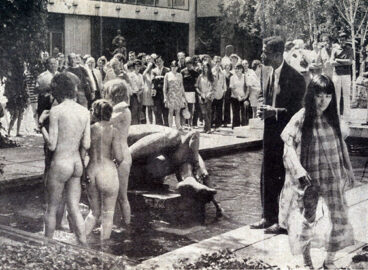
In this essay, Jennifer Tobias, Reader Services Librarian, MoMA Library looks at the history of MoMA through the direct engagement of the artist. This research was presented in her exhibition Messing With MoMA: Critical Interventions at the Museum of Modern Art, 1939–Now (July 1–November 29, 2015), which documented seven decades of interventions by artists, the general public,…
Ram Rahman (photographer, designer, curator and activist) discusses key examples of modernist architecture in post-colonial India. Using photographic documentation and archival materials, he surveys the landscape of architects, designers, photographers, entrepreneurs, and intellectuals working (primarily in New Delhi) between the 1950s and 1990s. This presentation is excerpted from a closed-door session with MoMA’s C-MAP Asia…
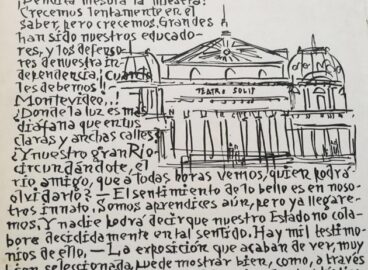
Jorge Schwartz discusses the prominence of the urban in Joaquín Torres-García’s visual and literary works. A major retrospective at MoMA, The Arcadian Modern, reveals a totalizing and structural vision of Joaquín Torres-García’s thinking, mainly through his painting, sculpture, objects, and, of particular interest to me, bibliographic production: his theoretical texts about Constructivism, autobiographical texts, manifestos,…
Architect, astrophysicist, scholar, and Valparaiso-aficionado Ann Pendleton-Jullian talks about Chile, Chilean architecture and landscape, and the “ad hoc, ongoing work of art” that is Ciudad Abierta. Pendletton-Jullian, author of Road that Is Not a Road and the Open City, Ritoque, Chile, visited MoMA to talk to the C-MAP Latin America group about her 28+ year…
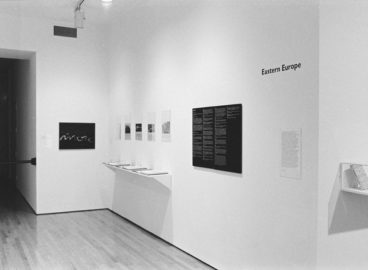
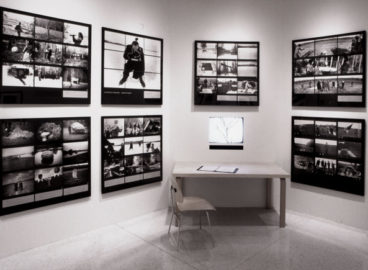
In this segment of the theme “Global Conceptualism Reconsidered,” the curators of the exhibition Global Conceptualism: Points of Origin, 1950s–1980s reflect upon their experiences organizing the exhibition. In the following interviews, they address the origins of the exhibition’s concept, the challenges faced in defining and presenting the variety of conceptualisms across the exhibition’s many international subsections, and…
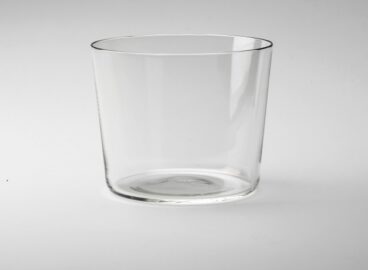
While going through MoMA’s Czech holdings during my Fulbright Research Fellowship at the Museum, I came across a surprising finding: the first Czech objects ever acquired by MoMA were a glass tumbler and two bowls designed by a young student, Věra Lišková (1924–1979) circa 1947, when Czechoslovakia was still part of the industrialized Western world.…
Aktualní umêní (Contemporary Art), a rare, hand-assembled magazine by the Czech artists’ group of the same name, began production in late 1964. Here, the first two issues are reproduced in their entirety for the first time, along with a unique prototype for the second issue, which offers an exceptional opportunity to compare plans and the final realization.
In this segment of the theme “Global Conceptualism Reconsidered,” the curators of the exhibition Global Conceptualism: Points of Origin, 1950s–1980s reflect upon their experiences organizing the exhibition.
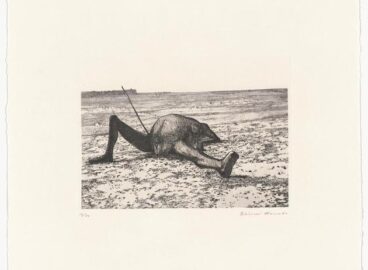
On one of my first trips to Japan in 2008, I visited the Hyogo Prefectural Museum, which has a stellar collection of Gutai work housed in a big Tadao Ando building. Its collection galleries are dominated by painting and sculpture, but hidden among these was a tremendously powerful small etching – a dark scene, surreal…
post asked the artist and critic Luis Camnitzer, one of the project directors of Global Conceptualism: Points of Origin, 1950s–1980s, to respond to some basic questions about the exhibition. In this interview he talks about how the show evolved. He also addresses how the organizers dealt with critical issues such as the differences between “Conceptual…