The Global Present
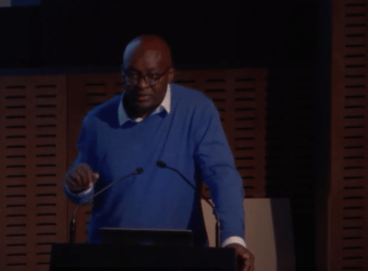
Achille Mbembe reflects on the global present and observes a recurring demand for durability in a planet in need of political and aesthetic repair.
Achille Mbembe reflects on the global present and observes a recurring demand for durability in a planet in need of political and aesthetic repair.
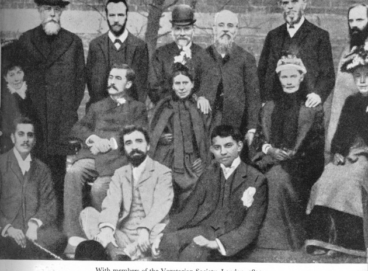
By the 1850s, commercial photography studios could be found all across the globe, with people in disparate locations holding similar standing poses in front of standardized backdrops. The essay addresses different manifestations of early photography in eastern Africa, including how to critically approach the subjects pictured in colonial photographs created for international consumption.
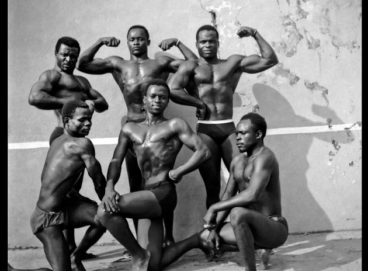
Since the 1990s, Jean Depara has become famous for his portraits of brash city dwellers, and for his hedonistic depictions of their unbridled nightlife. This essay explores how Depara’s transgressive photographs emerged in the interstices of the otherwise very controlled Belgian colonial “image world.”
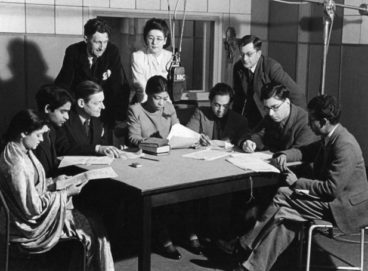
Mulk Raj Anand is perhaps best remembered as a cultural critic, writer, philosopher, and patron of the arts. But Rashmi Viswanathan turns her attention to his lesser known initiative to establish India’s First Triennale of Contemporary World Art in 1968. This essay explores Anand’s optimistic use of the triennale to shift international cultural relations and…
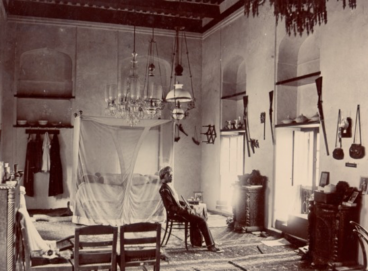
Riyaz Tayyibji considers the little-known architectural collaborations of Mahatma Gandhi, charismatic leader of the Indian freedom movement, in light of discourses of modern architecture. Weaving in discussions of phenomenology, material, and a discipline of privacy, the essay explores aspects of Gandhi’s philosophical and political thinking that propose a notion of the modern with an ethical and spiritual underpinning for 20th century architectural practice.
How does art history deal with the radical diversity of objects it encompasses?
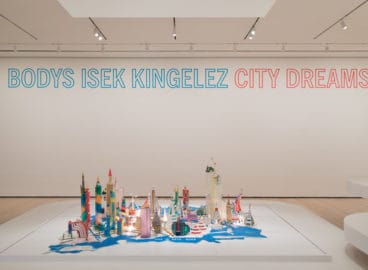
The sculptures of Congolese artist Bodys Isek Kingelez (1948-2015) offer a vision of a future modernity that is beautiful, harmonious, and functional.
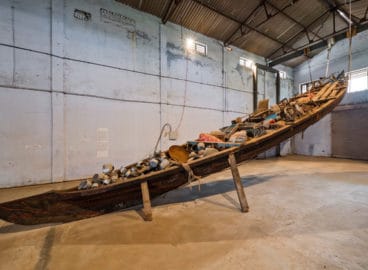
The Kochi-Muziris Biennale has produced three exhibitions since its inception in 2012, with its fourth edition opening in December 2018. This essay sites the biennale within the historical context of the twin port cities of Kochi and Muziris, as well as within the recent burgeoning of the biennial as a international format for viewing “global” art and representing local identities.
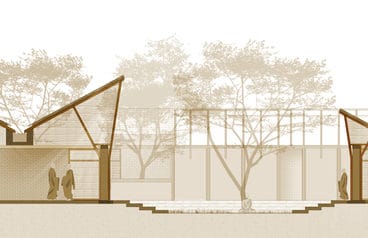
The recent documentary “Reading Architecture” (2017) explores the contemporary history of design in India across five practices in Mumbai. Sameep Padora, one of five featured architects, is the founder of Sameep Padora & Associates (sP+a), a Mumbai (India) based architecture studio. In 2016, he initiated sPare, a research arm of the studio.
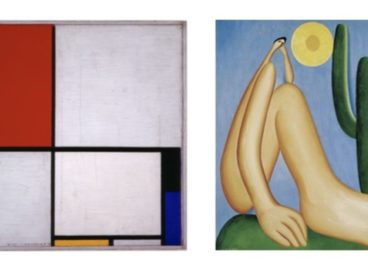
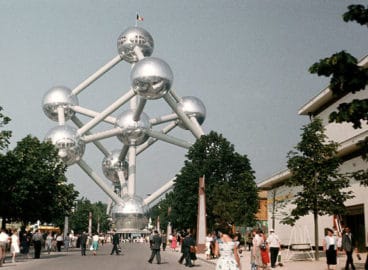
When the Brussels Expo presented the exhibition Fifty Years of Modern Art in 1958, it unintentionally pioneered a more broadly global view of modern art, although not without some friction.
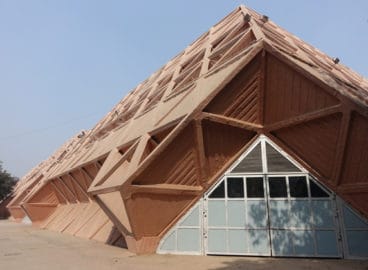
Despite protests and petitions from leading architects and architectural historians across the world, the Hall of Nations was surreptitiously demolished overnight on April 23-24, 2017. In this essay, Stierli bids farewell to architect Raj Rewal’s iconic building—a hallmark of modernist architecture in post-independence India.
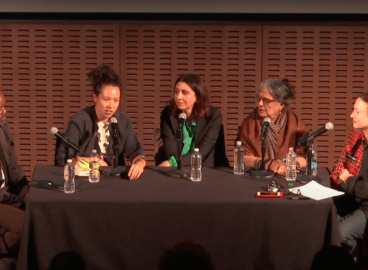
The roundtable discussion focuses on international networks that decenter, complicate, or even bypass Western-centric models.