Incomplete Biography: Interview with Antonio Dias

With a healthy dose of humor, the Brazilian artist Antonio Dias explores the challenges and absurdities of his artistic career and comments poetically on his life’s work. Now in his late 60s, Dias generously shares stories of his early years in Rio, Paris, and Milan; his surprise at the dearth of women in Milan’s art scene compared to Rio’s; and his apprenticeship with master printmaker Oswaldo Goeldi. He also shares his early concerns about the commodification of his work and talks about his experiences in Brazil during the dictatorship. In particular, Dias discusses his series The Illustration of Art and the work The Invented Country, which was recently acquired by The Museum of Modern Art. The interview was conducted at Dias’s home and studio in Copacabana during the C-MAP Latin America Group research trip to Brazil in November 2012.

The interview is divided into five chapters, “Early Days in Rio, Paris, and Milan,” “The Illustration of Art,” “The Invented Country,” “‘Art is something for interacting with others,'” and “Printmaking with Oswaldo Goeldi.”
More in this theme

Subscribe to our newsletter

Related Content

Open Loop: Reconsidering the Relationship Between Mexican Wire Baskets and Ruth Asawa’s Looped-Wire Sculpture

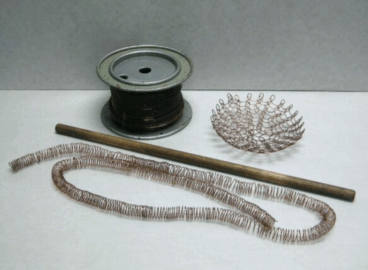
In creating a mesh by looping and interlocking single strands of wire, Asawa defined an intricate shape without precluding a view of its interior; instead, she foregrounded space itself. The artist had learned the basic premise of looping wire into permeable volumes during an American Friends Service Committee volunteer trip to Toluca, Mexico, where in 1947, she encountered—and briefly studied—a unique wire-basketry technique. While today, thanks to a series of critical analyses from 2006 onward, Asawa’s art sits comfortably within the trajectory of radical innovations of modernist sculpture, the Mexican origin and craft pedigree of her signature looped-wire creations are typically cast in a role subservient to the major narrative of the artist’s singular contributions.

Female Approaches to the Divine: The Marian Representations of Norah Borges, María Izquierdo, and Miriam Inez da Silva / Acercamientos femeninos a lo divino. Las representaciones marianas de Norah Borges, María Izquierdo y Miriam Inez da Silva

“Mary is . . . a myth of a woman without a vagina,” proclaims queer theologian Marcella Althaus-Reid in Indecent Theology: Theological Perversions in Sex, Gender, and Politics. Moreover, Althaus-Reid declares that the adoration of the Virgin in Latin America in the…