An Interested Observer: Interview with Branko Vučićević
In this interview conducted during a C-MAP research trip to Belgrade in the spring of 2012, Vučićević speaks to Jon Hendricks and Gretchen Wagner about both art and life.
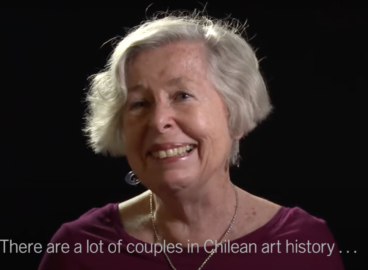
Renowned Chilean critic Adriana Valdés visited the Museum in April 2015 to speak to the C-MAP Latin America group about the Chilean art scene and the work of Eugenio Dittborn. During her visit, she generously agreed to record a video interview and share her thoughts and memories of the Chilean art world before and after…
This informal conversation took place in March 2015 in Nalini Malani’s studio in Mumbai during a C-MAP trip to India. Gayatri Sinha and Stuart Comer talked to Malani about her practice, spanning from the 1960s to the 1990s. The discussion focused on Malani’s early lens-based experiments, her interest in psychoanalysis, her activities in the 1980s…
In the shadow of the Brazilian military dictatorship, Regina Silveira pursued an elusive art, by necessity and by design. Absence and isolation, illusion and distortion were not only promising artistic strategies, but also richly meaningful metaphors in an era of severe political repression. Trained as a painter and printmaker in her native Porto Alegre, Silveira…
Anna Maria Maiolino (Brazilian, born Italy, 1942) refers to Trajetória I (1976) as a “Book Object,” a term that aptly describes the way it combines aspects of a book with those of a sculpture. Although comprised of eleven folios of black, white, and red papers bound into a black paper cover, it does not include text or…
One of the most respected Czech artists in recent times, Jiří Kovanda created actions and installations in Prague’s public spaces in the mid-1970s and early ’80s. Self-taught, he was one of the few Czech action artists to work outdoors in the urban environment following the 1968 invasion of Czechoslovakia by Warsaw Pact troops. Most of…
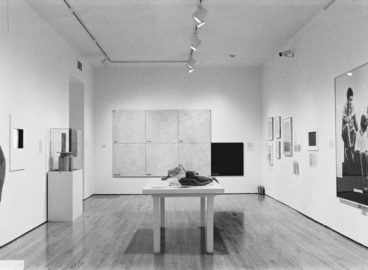
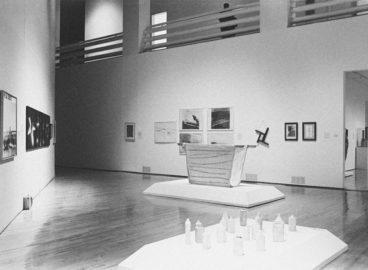
post asked the artist and critic Luis Camnitzer, one of the project directors of Global Conceptualism: Points of Origin, 1950s–1980s, to respond to some basic questions about the exhibition. In this interview he talks about how the show evolved. He also addresses how the organizers dealt with critical issues such as the differences between “Conceptual…
Rachel Weiss, curator, writer, and professor at the School of the Art Institute of Chicago, was invited to MoMA to speak about the exhibition Global Conceptualism: Points of Origin, 1950s–1980s, which she co-organized in 1999 with Jane Farver (who also came to talk on the subject), Luis Camnitzer, and an international team of curators: Okwei Enwezor,…
Jane Farver, curator and former Director of Exhibitions at the Queens Museum, was invited to MoMA to speak about the exhibition Global Conceptualism: Points of Origin, 1950s–1980s, which she co-organized in 1999 with Rachel Weiss (who also came to present on the subject), Luis Camnitzer, and an international team of curators: Okwei Enwezor, Reiko Tomii &…
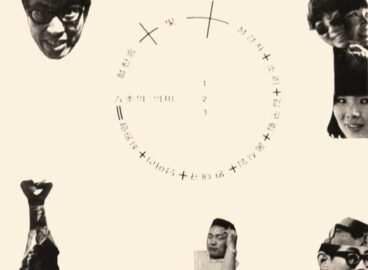
At what moment did artists in Korea show work that was considered experimental, underground, and contemporary? How are the first Korean Happenings, from the late 1960s, seen from today’s perspective? These questions were addressed by Kim Mikyung at a C-MAP presentation at The Museum of Modern Art in April 2014. Her talk, published below, surveys…
Milan Knížák was a key figure in the development of action art and performance in Prague in the 1960s. His Performance Files, now in the collection of The Museum of Modern Art and published here in their entirety, constitute a tremendous resource, as they bring together images and texts related to many of the artist’s independent…
Although postwar Japanese avant-garde art is considered to have ended in the year 1970, Julian Ross contends that projection installations in the 1970s took on many of its characteristics, namely, an engagement with the concepts of “environment,” “intermedia,” and “display.”