C-MAP Africa in Morocco: Reflections from the 2026 Research Trip
April 1, 2026
From February 5 to 11, 2026, members of the C-MAP Africa group from The Museum of Modern Art traveled to Morocco on a research trip that included several cities: Marrakech, Casablanca, Rabat, Tangier, and Tétouan. Over the course of the visit, the group met with artists, curators, scholars, and cultural practitioners and toured studios, archives, museums, and independent initiatives. Upon their return, the travelers were invited to reflect on a single moment that shaped their experience and prompted them to reconsider their work at MoMA. Because these responses are intentionally brief, they do not fully capture the breadth of encounters that shaped the experience.
The group extends its heartfelt thanks to Chahrazad Zahi, whose knowledge and good spirit were integral to the trip. The group also remains deeply grateful to the many artists, scholars, collectors, and cultural workers across Morocco who so generously shared their time, knowledge, and spaces with us, and whose hospitality and openness made the journey possible including but not limited to the following: Oumayma Abouzid, Amina Agueznay, Mustapha Akrim, Yto Barrada, Elisabeth Bauchet-Bouhlal, Amina Belghiti, Amina Benbouchta, Hicham Benohoud, Meriem Berrada, Khalil Binebine, Mahi Binebine, , M’barek Bouhchichi, Hicham Bouzid, Nadia Chabâa, Larbi Cherkaoui, Kamal Daghmoumi, Florence Renault Darsi, Hassan Darsi, Touria El Glaoui, Safaa Erruas, Oumaima Haitof, Hassan Hajjaj, Laila Hida, Amine Houari, Abdellah Karroum, Imane Lahrich, Othman Lazraq, Mohamed Mourabiti, Amina Mourid, Mounia Yasmine O’Neal and the team at The Mothership Tangier: Khawla, Chef Mohamed, BaMjido, Othmane, Saïd, and Si Mohammed; Juan Asis Palao Gómez, Mehdi Qotbi, Karim Rafi, Younes Rahmoun, Sara Rerhrhaye, Nadia Sabri, Abderrahim Yamou, and Fatiha Zemmouri.
The 2026 C-MAP Africa trip was organized and researched by Beya Othmani, the C-MAP Africa fellow (2024–26).
Smooth Nzewi, The Steven and Lisa Tananbaum Curator, Department of Painting and Sculpture, C-MAP Africa Group Leader
On Mohamed Chabâa
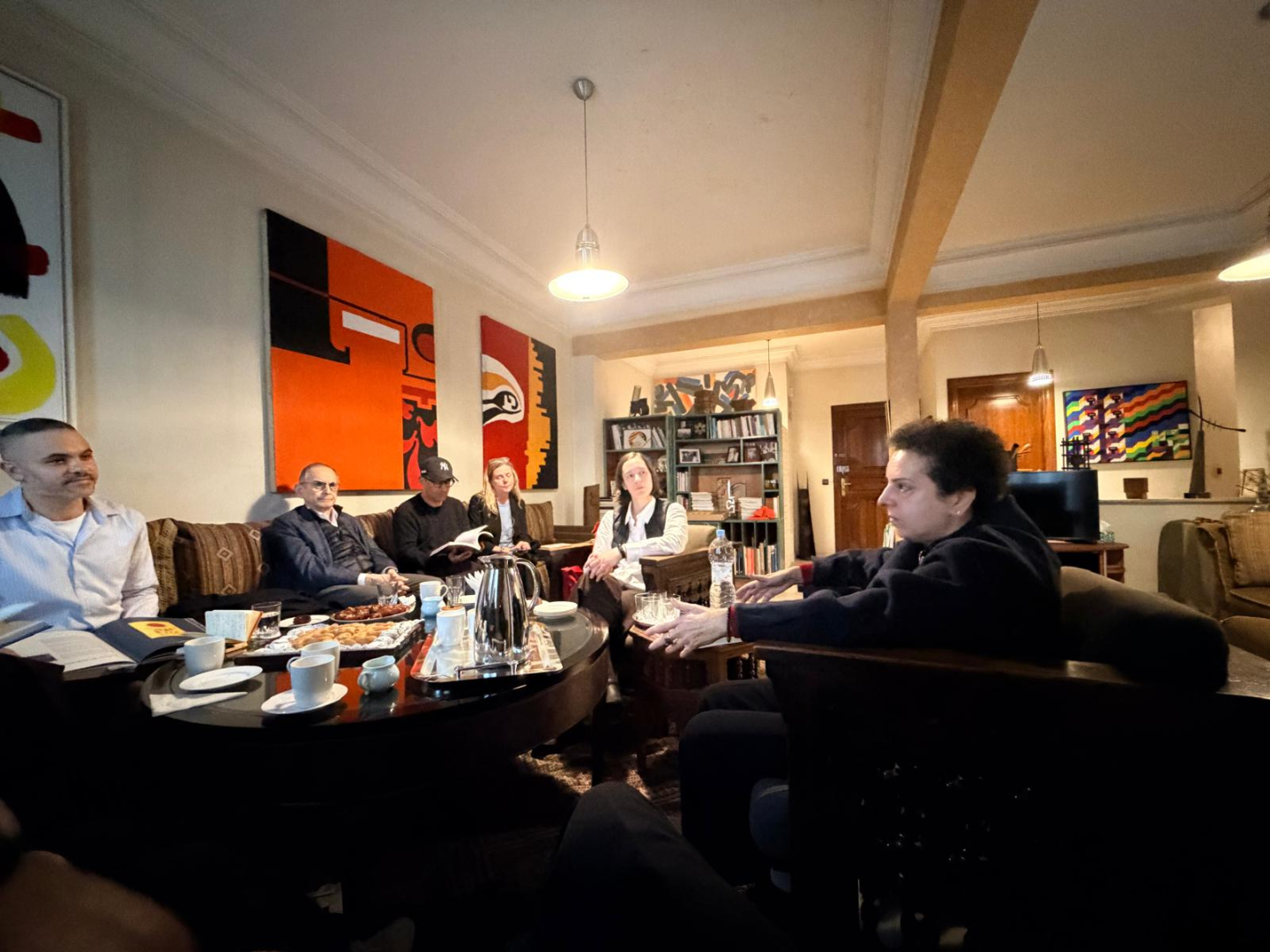
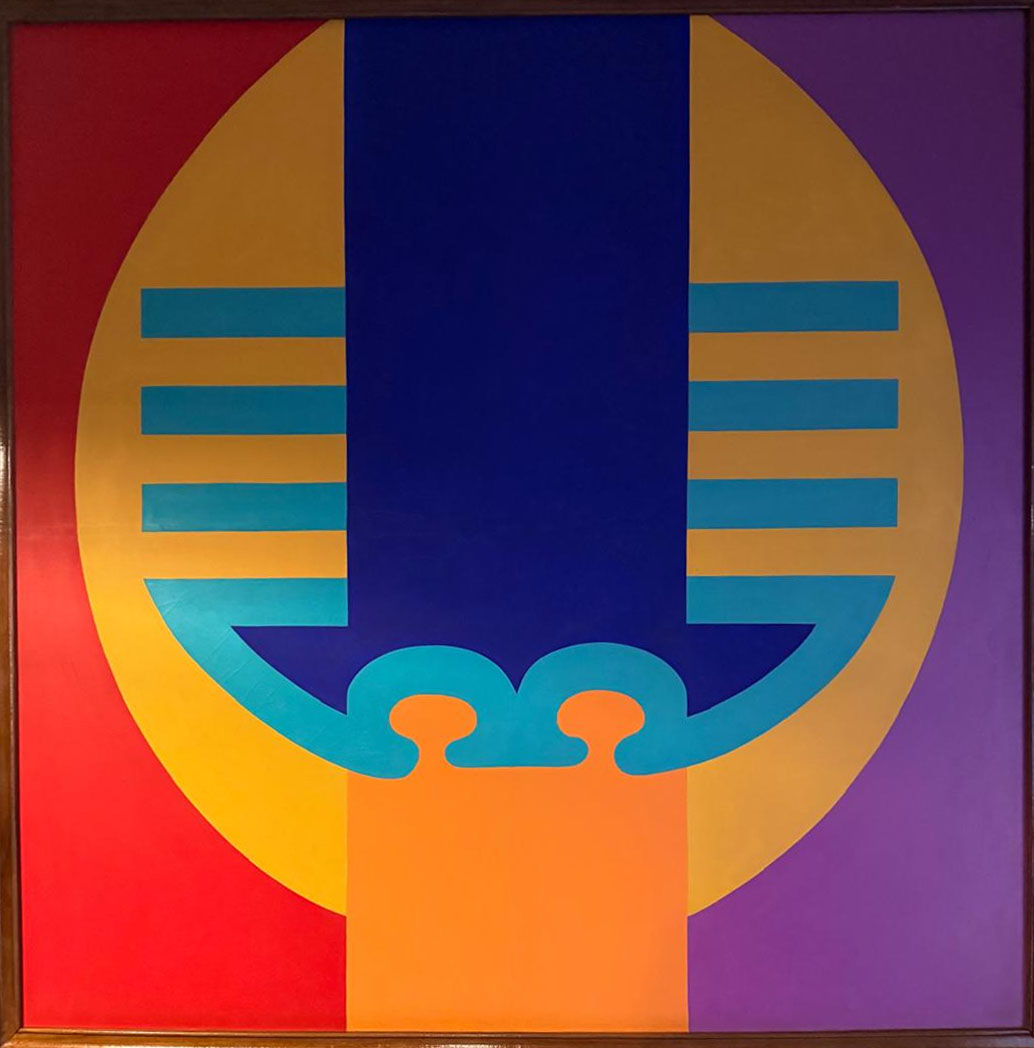
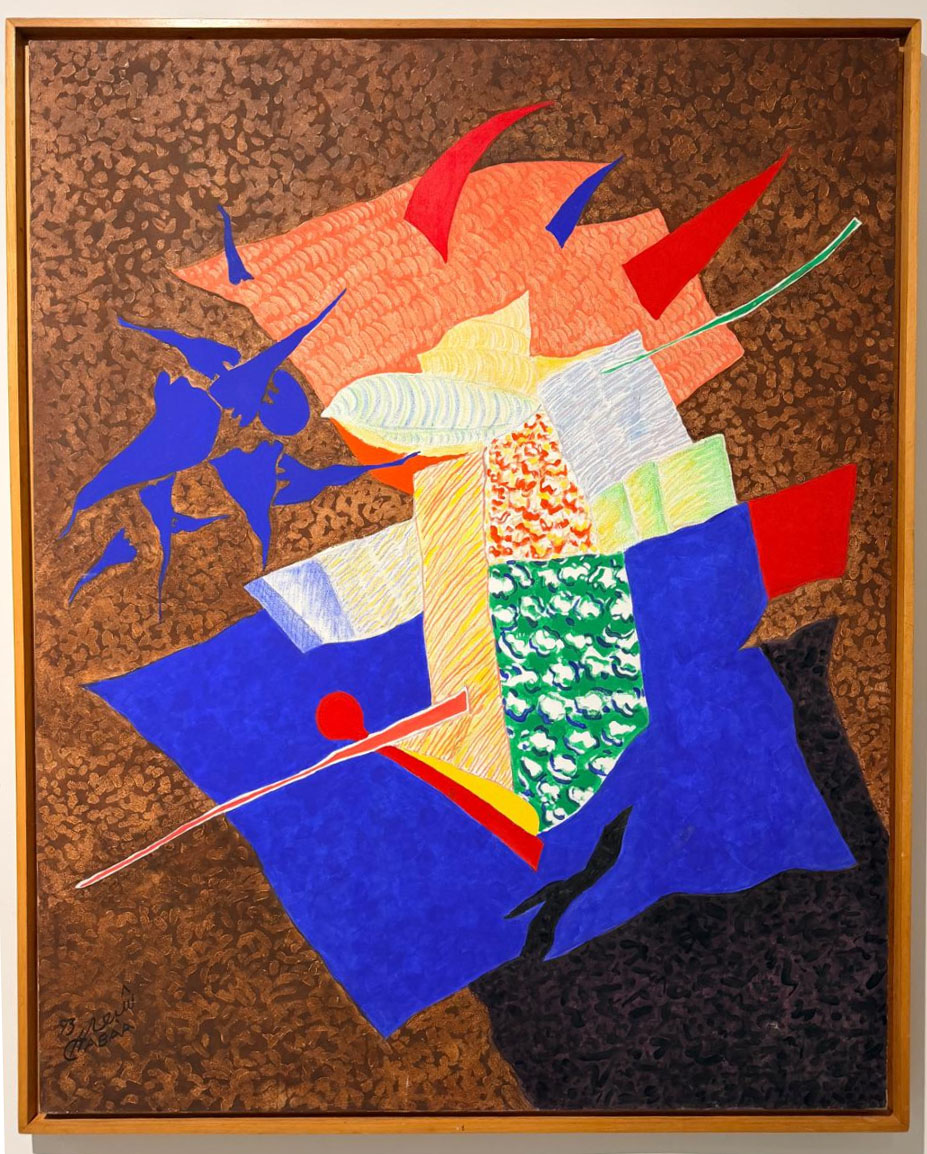
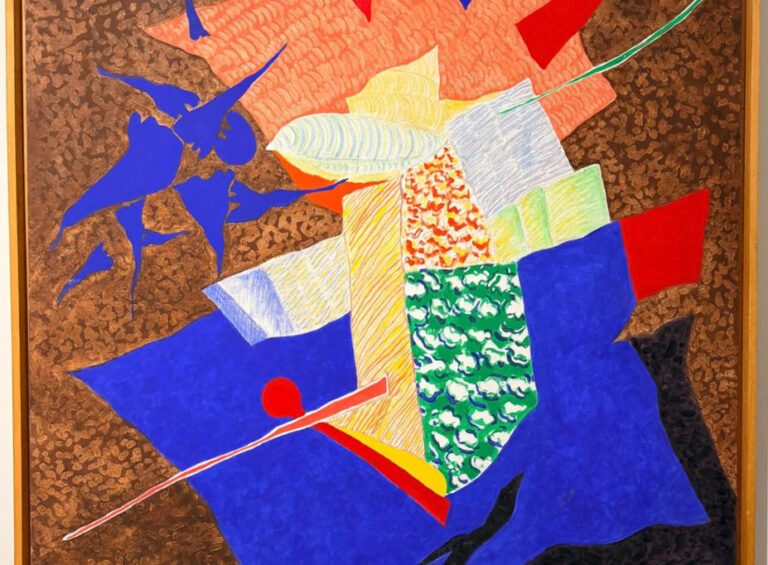
The stewardship of an artist’s legacy is something I find deeply compelling, especially when it is taken on by family members. Nadia Chabâa, an art historian who has dedicated herself to her father’s legacy, stands out as a particularly inspiring example. Before our visit to her home, my knowledge of Mohamed Chabâa (1935–2013) was spotty and largely limited to his role in the triumvirate that founded the Casablanca Art School. But his contributions ran much deeper. He combined artistic practice, theory, and pedagogy, and architecture was at the heart of it all.
In 1966, Chabâa joined the Casablanca Art School as a teacher, leading workshops in decoration and graphic arts and establishing an Arabic calligraphy workshop as a core part of the curriculum. Alongside Mohamed Melehi (1936–2020) and Farid Belkahia (1934–2014), he co-organized Présence Plastique, a manifesto-exhibition held in Jemaa el-Fna Square in Marrakech in 1969, deliberately bringing art into public space.
In 1982, he joined the faculty of the National School of Architecture in Rabat, Morocco’s first architecture school, and in 1994, he returned to his alma mater, the National Institute of Fine Arts in Tétouan, as its director, overhauling both its Italian classical curriculum, which had been place since Chabâa was a student there in the 1950s, and its pedagogy. There, he shaped a generation of Moroccan artists now active on the international scene, including Younes Rahmoun and Safaa Erruas, both of whom we visited during our trip.
I was also quite impressed with how Chabâa’s own artistic practice evolved over the years, from hard-edge abstraction of the 1960s and 1970s to looser abstraction in the 1980s to more gestural lines from the late 1990s onward.
Ksenia Nouril, Assistant Director, International Program
C-MAP research trips typically culminate over a year’s worth of distance learning. They are an on-the-ground continuation of the dialogic, group-based learning practiced by C-MAP members at MoMA in their monthly meetings with artists, curators, and scholars, which are organized by the C-MAP fellow and the C-MAP group leader. Thus, our short but precious visit to Morocco was but one piece of a larger and longer-term project with deep roots in our institution’s mission to connect people to and through art.
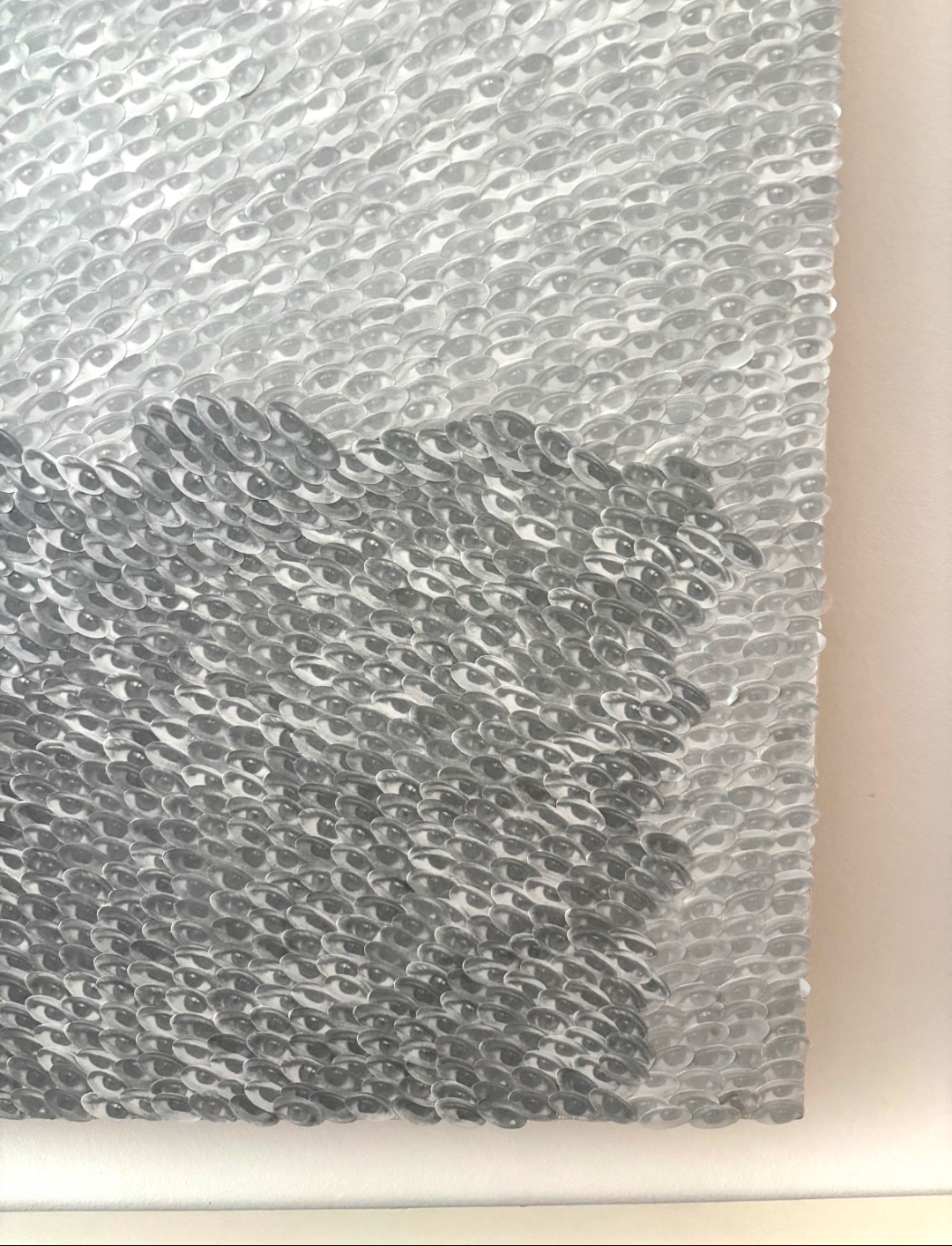
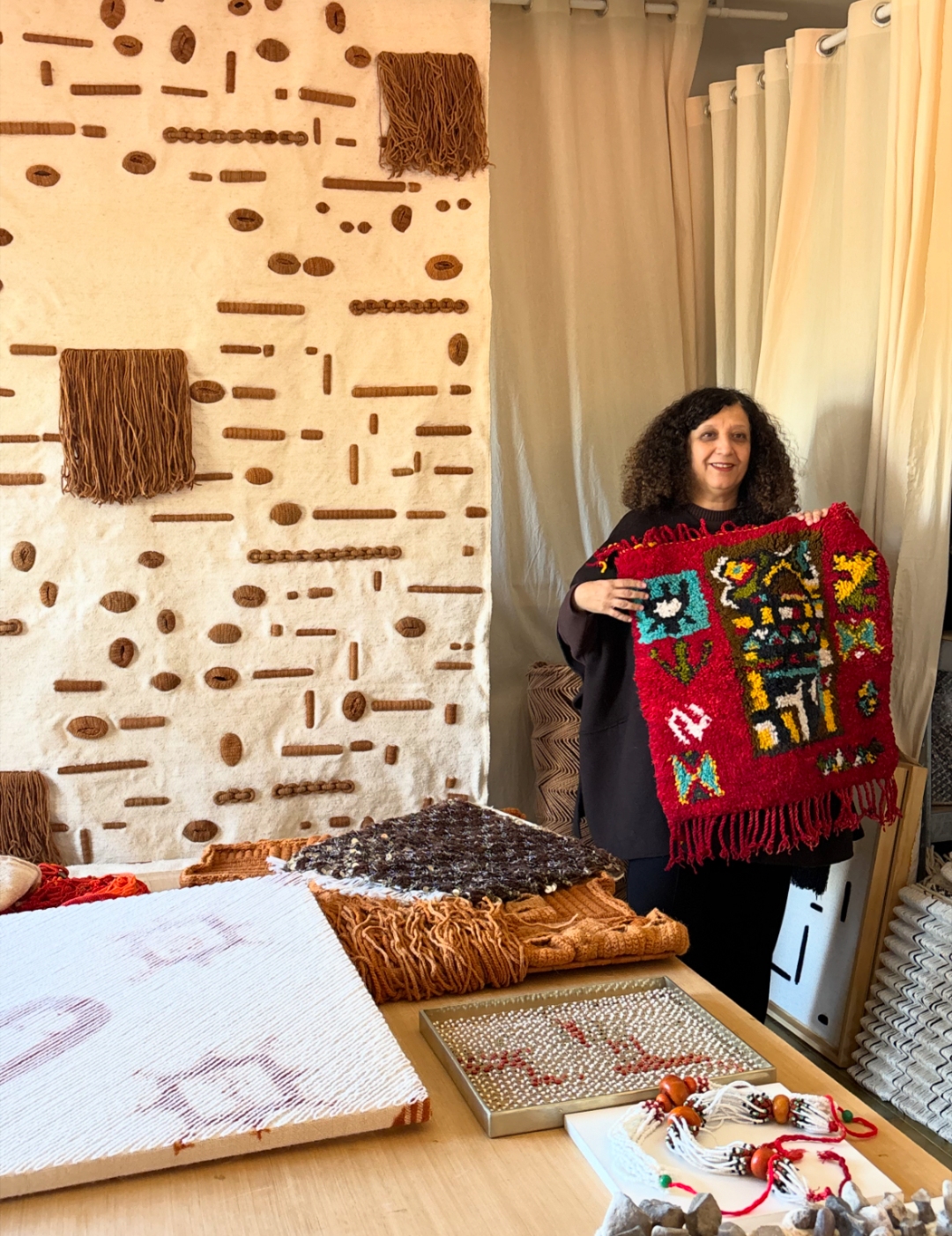
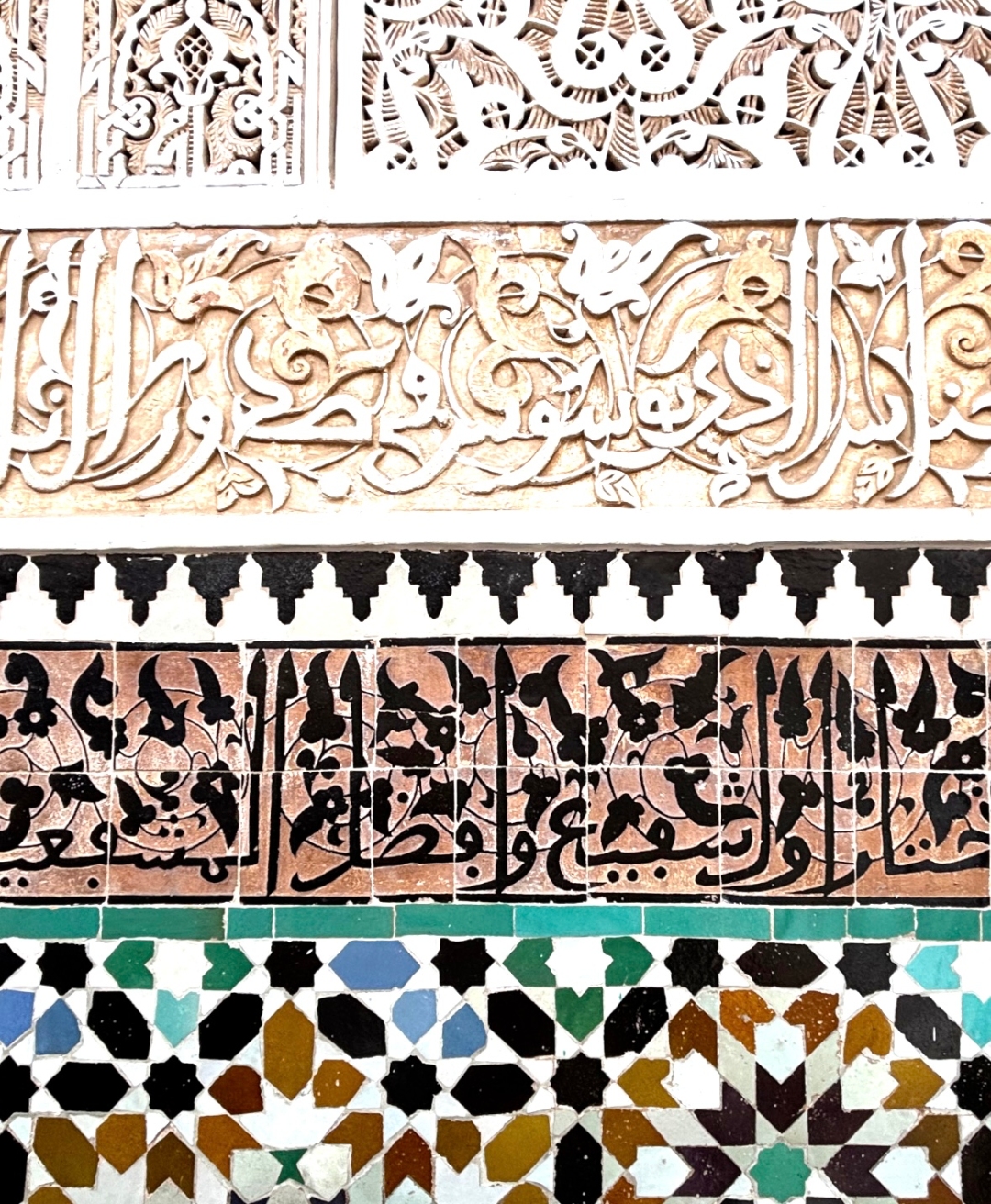
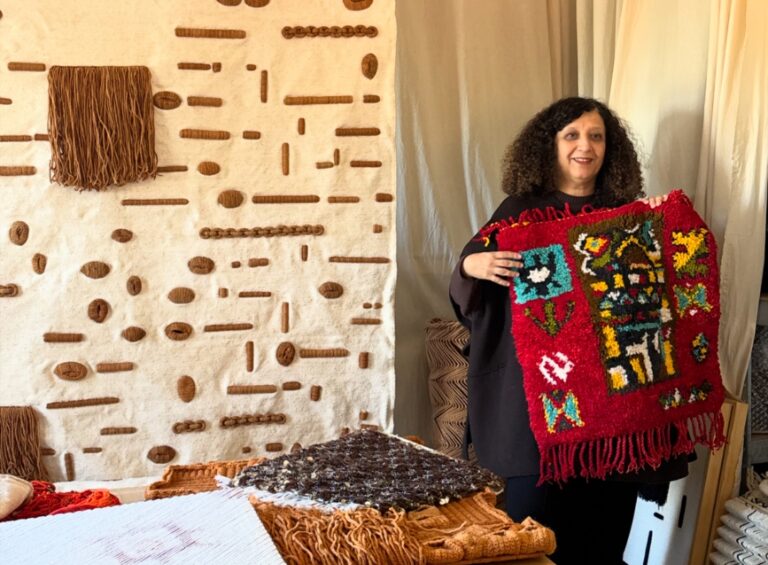
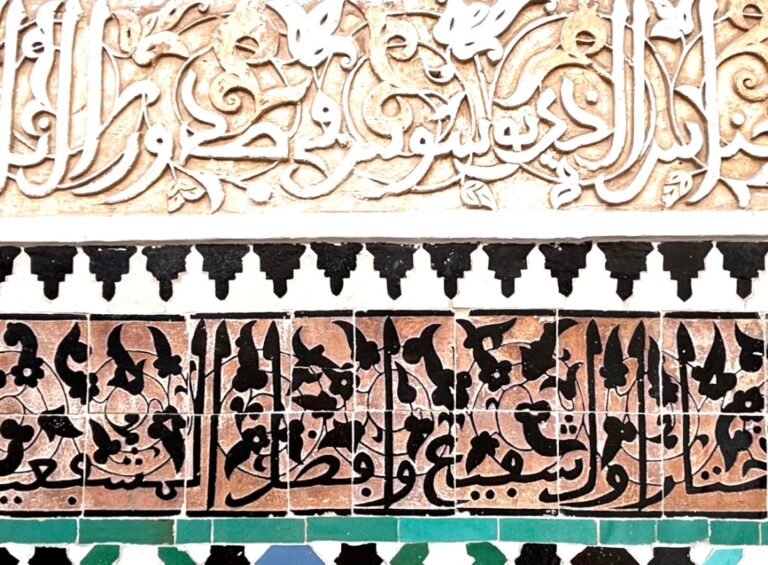
This metaphor of piecing or putting together lends itself to the many ways of making we experienced in our multicity venture via plane, train, and automobile. I was particularly struck by the power of pattern, which emerged as a salient trope for artists with whom we met or whose works we saw on view at various venues. Whether it is the repetition of an iconic image in the works of Safaa Erruas or Hassan Hajjaj or the repetition of a shape or color in urban and religious architecture alike, such as at the Madrasa Ben Youssef, pattern permeated our visual field. Meeting with Amina Agueznay brought pattern into the conversation a different way, specifically through the traditional weaving patterns incorporated in her work Curriculum Vitae from 2020–21, which comprises dozens of blocks made by weavers from different communities across Morocco. Each block represents that weaver’s “language,” which is passed down from generation to generation and is either well known or endangered. Agueznay also showed us Burials, a work from 2024 that also meditates on waving as a language, creating parallels between words and stitches.
Leonardo Bravo, Director of Public Engagement, Department of Learning and Engagement
The opportunity to travel to Morocco with the C-MAP Africa group felt like stepping into a long-held dream. Since my youth, Morocco has occupied a vivid place in my imagination—shaped by the mystique of North Africa, the wandering spirit of the Beats, and the hypnotic sounds of the master musicians of Jajouka.
To finally move through the country itself—along the vibrant streets of Marrakech, amid the coastal rhythms of Casablanca and the layered histories of Tétouan and Rabat, and across the luminous threshold of Tangier—was to encounter a reality even more compelling than the one I had imagined.
Across these cities, Morocco revealed itself as a landscape shaped over millennia, where culture and history unfold in layered and interconnected ways. It is a place continually formed and re-formed through the shifting currents of empire, colonization, and self-determination.
Particularly moving was the exhibition on Berber and Amazigh culture across the Maghreb at the Pierre Bergé Museum of Berber Arts, which offered a powerful testament to the grace, dignity, and resilience of these communities. The presentation underscored how Amazigh cultural traditions continue to resonate across generations and geographies.
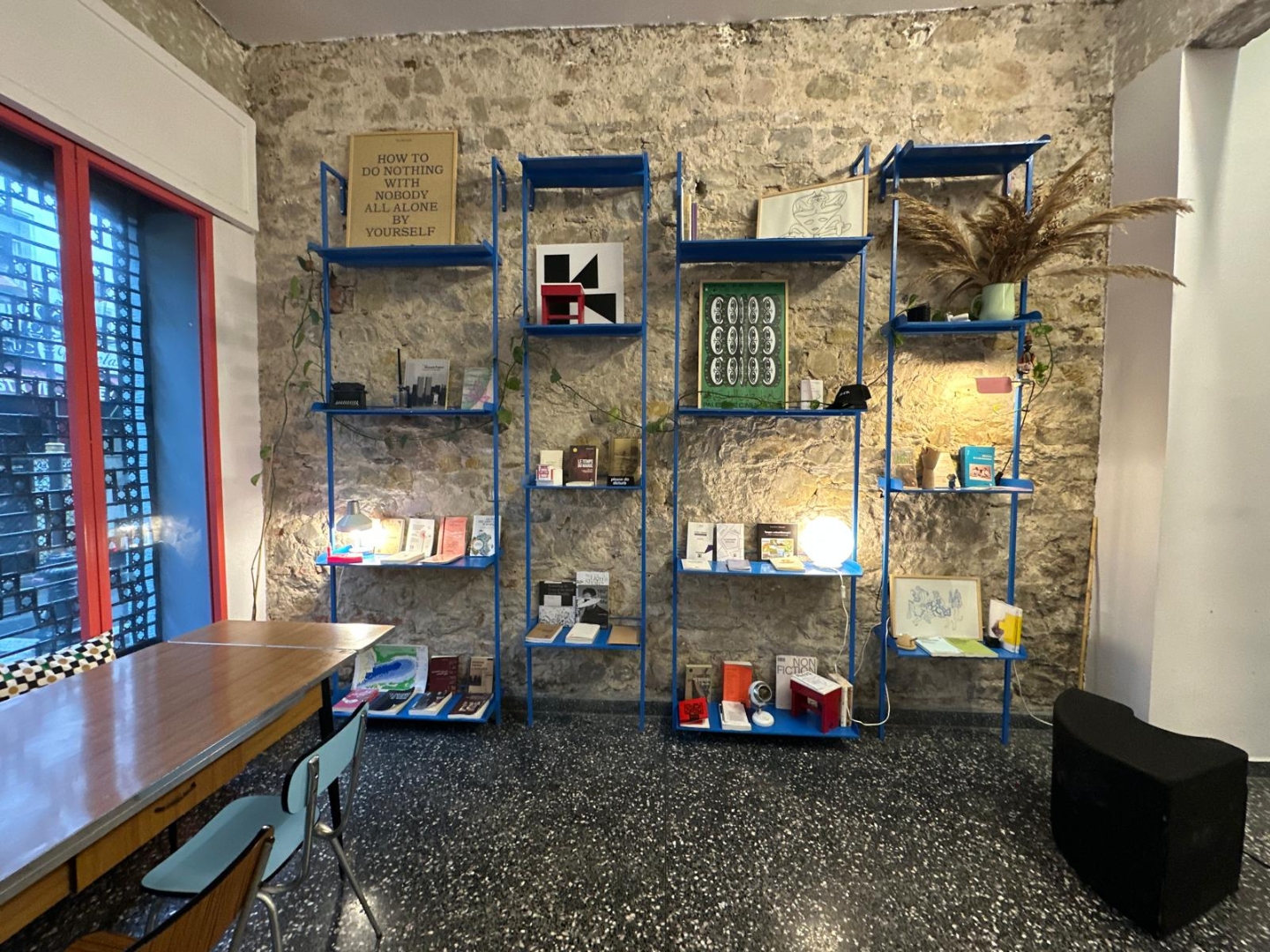
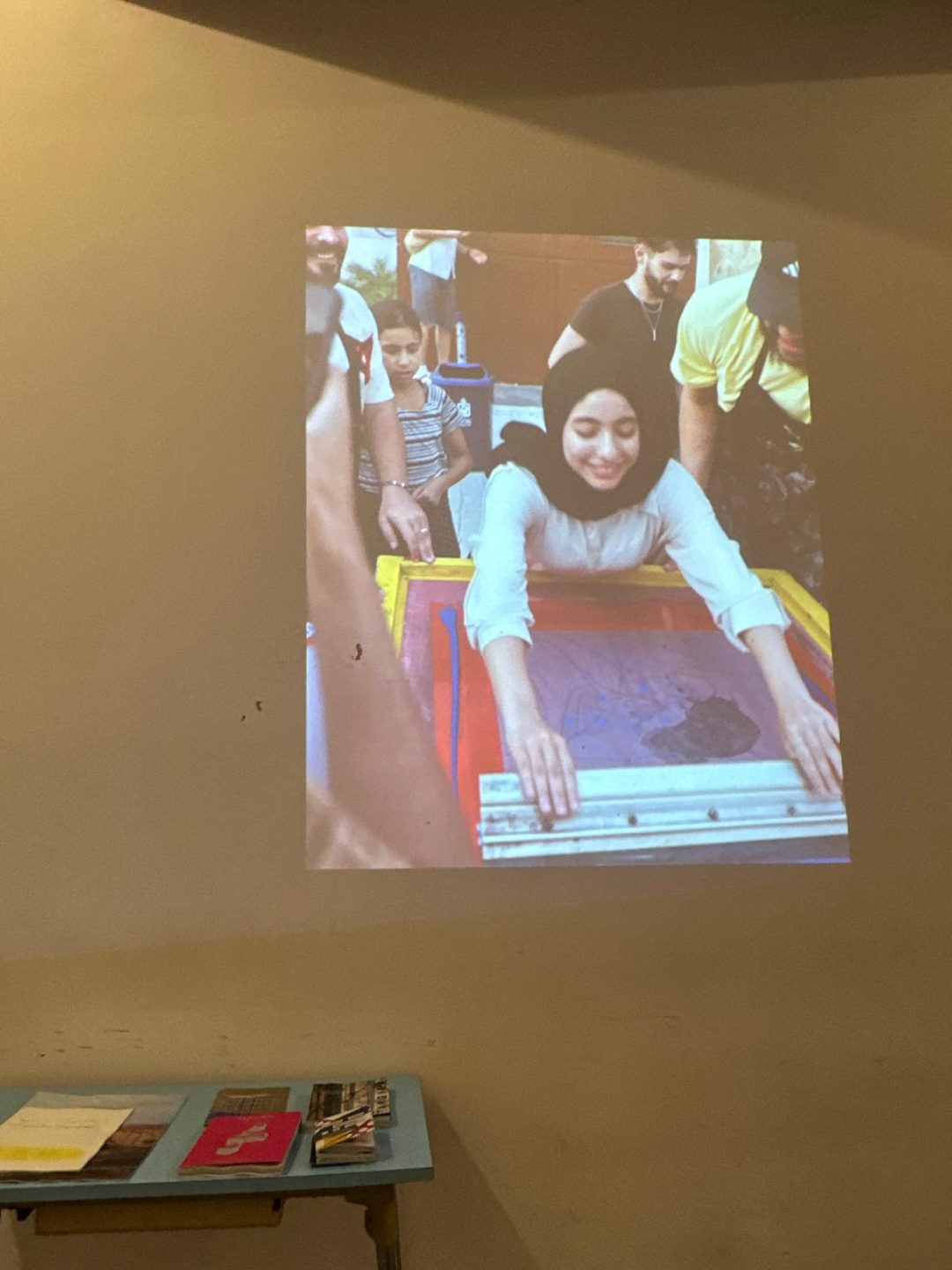
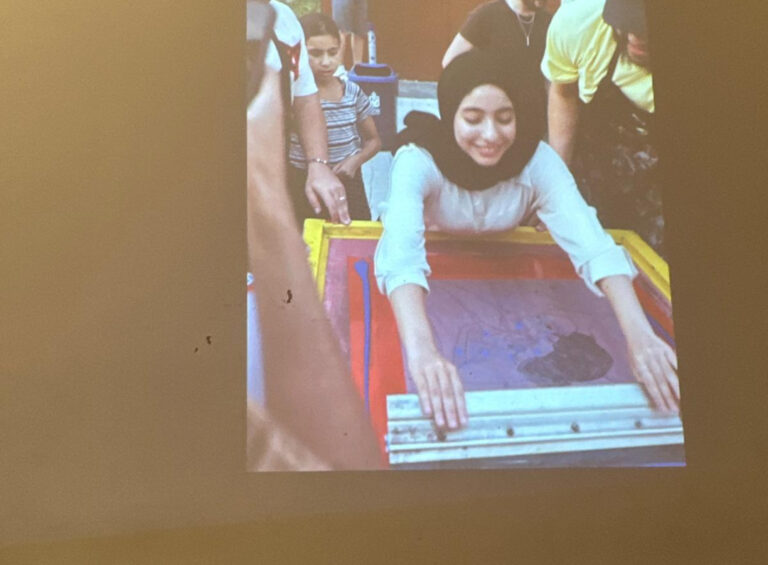
Among the many memorable encounters during the trip, our visit to Think Tanger stood out. The work of Hicham Bouzid, Amina Mourid, and their collective—creating a platform for collaborative learning, research, and public inquiry—deeply resonated with my own interests. Their experimental, research-driven approach to collective knowledge-making at the intersection of arts, culture, and civic life closely aligns with my institutional work.
I left the visit inspired and hopeful about developing stronger connections that might lead to future collaboration with MoMA.
Oluremi C. Onabanjo, The Peter Schub Curator, The Robert B. Menschel Department of Photography
Our time in Morocco was sprawling in its scope, intensive in its sensibility. From Marrakech to Casablanca, then Rabat to Tétouan, our final day in Tangier remains crisp in my mind’s eye.
The night prior, we had visited Yto Barrada’s inimitable Cinémathèque Tangier—followed by a convivial dinner over which we discussed Morocco’s expanded presence at the forthcoming Venice Biennale (Barrada representing France; Amina Agueznay representing Morocco).
On a dewy, fragile morning, the group arrived at The Mothership, where we encountered the expanded fields of Barrada’s artistic and social practice. In ethos, The Mothership is a site for artistic retreat, experimental research, and interdisciplinary exploration inspired by natural dyes and Indigenous traditions. Physically, it consists of a series of studios and dwelling spaces occupied by visiting residents, collaborators, and Barrada’s family. These are threaded together and surrounded by a variety of flowering and subsistence gardens.
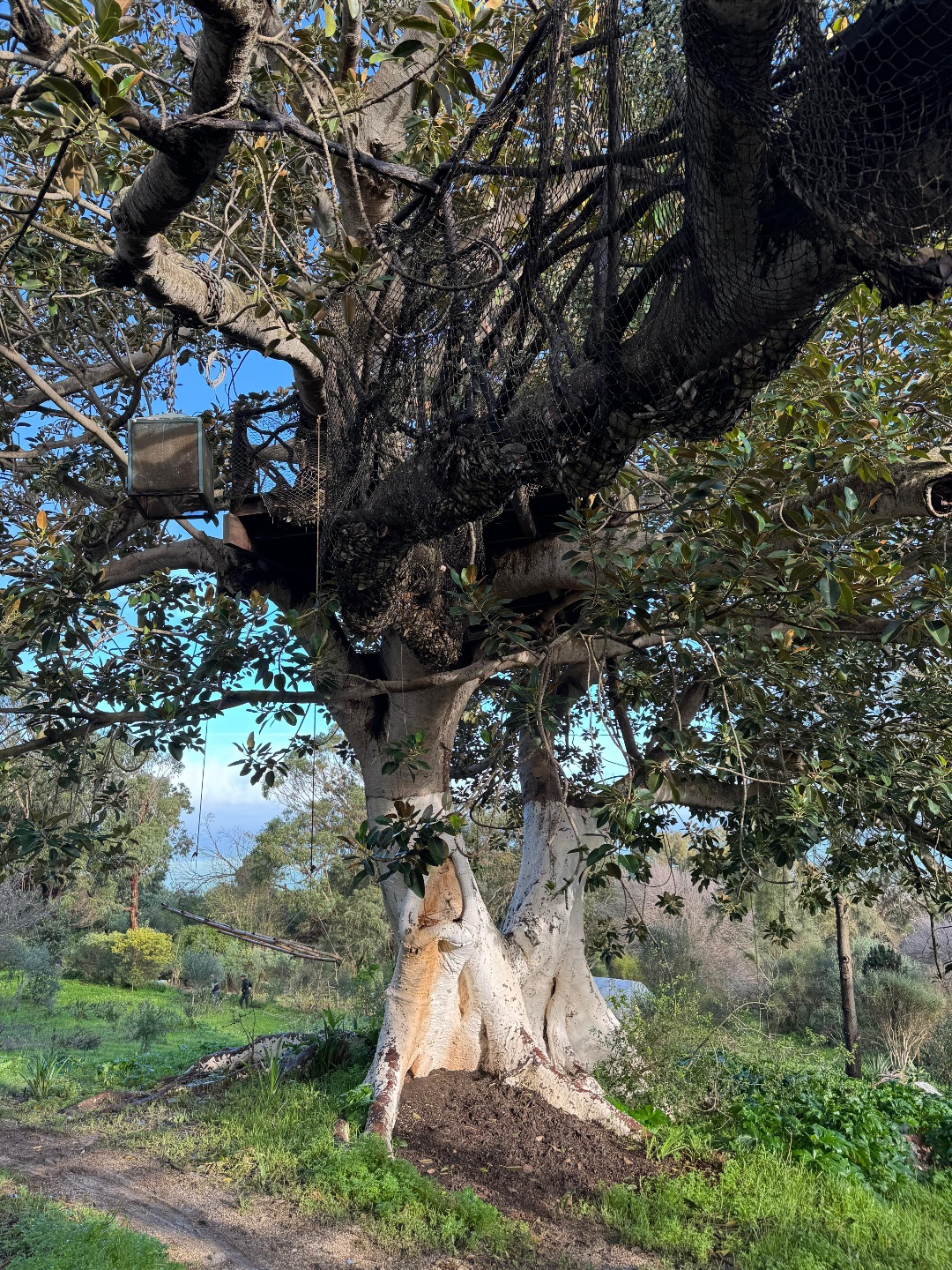
Situated on a dramatic set of cliffs that overlook the Strait of Gibraltar and face Spain, the view from the rear balcony of The Mothership is anchored by a massive tree. Here, Barrada has constructed a sturdy platform that one can access through netted passageways entangled among branches. She calls this her raft.
In considering this view, I was catapulted back to the first time I leafed through her photobook A Life Full of Holes: The Strait Project (2005)—a project that shaped my understanding of the stakes of contemporary photography in Morocco and which anchors MoMA’s photographic holdings of Barrada’s work.
Looking skyward at her raft, I was plunged back into the world of French social work pioneer and writer Fernand Deligny that Barrada had shaped at MoMA through Artist’s Choice: Yto Barrada—A Raft (2021–22), which was organized thoughtfully in collaboration with my colleague Lucy Gallun.
Still reeling from the loss of Jay Levenson—who has made, and continues to make, so much possible within and beyond MoMA—I was reminded of what it means to sustain an insistent generosity of spirit and a rigorous fidelity to life in all of its forms.
Thomas (T.) Jean Lax, Curator, Department of Media and Performance
Mother, Ship
Yto Barrada has been building rafts with others for over twenty years. Consider the tree house she made in 2005 in the garden of her Tangier home, which later that year she photographed and called Raft in Strangler Figtree. Or her 2021 tabletop sculpture—Tamo’s Raft (Le radeau de Tamo)—included in her Artist’s Choice exhibition at The Museum of Modern Art.
Yto’s rafts are rarely flat, much like the buoyant structures made of fastened materials used by migrants as makeshift boats. You don’t need me to recall images of Mediterranean migrants here for you to call to mind the morphological echoes between Yto’s assemblages and the vessels captured in photographs endlessly circulated via news and social media.
Those shapes are echoed in the meandering wires that wind atop Tamo’s ship and hover in the diagonal lines of ladders extending below the tree house and web of branches linking the two-hundred-year-old strangler fig tree to her house.
In this trail of associations, ghosted but not forgotten, a network of rafts seems to breed more floating platforms. There is a technical word for this type of vehicle: a mothership, designed to carry, lead, or serve other vehicles as they travel through water, air, and space.
Yto’s rafts tend to float in groups. To call them “Yto’s” rafts is itself a usable fiction. They are perhaps better described as our rafts; Yto keeps them company.
Michelle Elligott, Chief of Archives, Library, and Research Collections
Specificity, universality, transmission of ideas, connection, circulation, and yes, beauty.
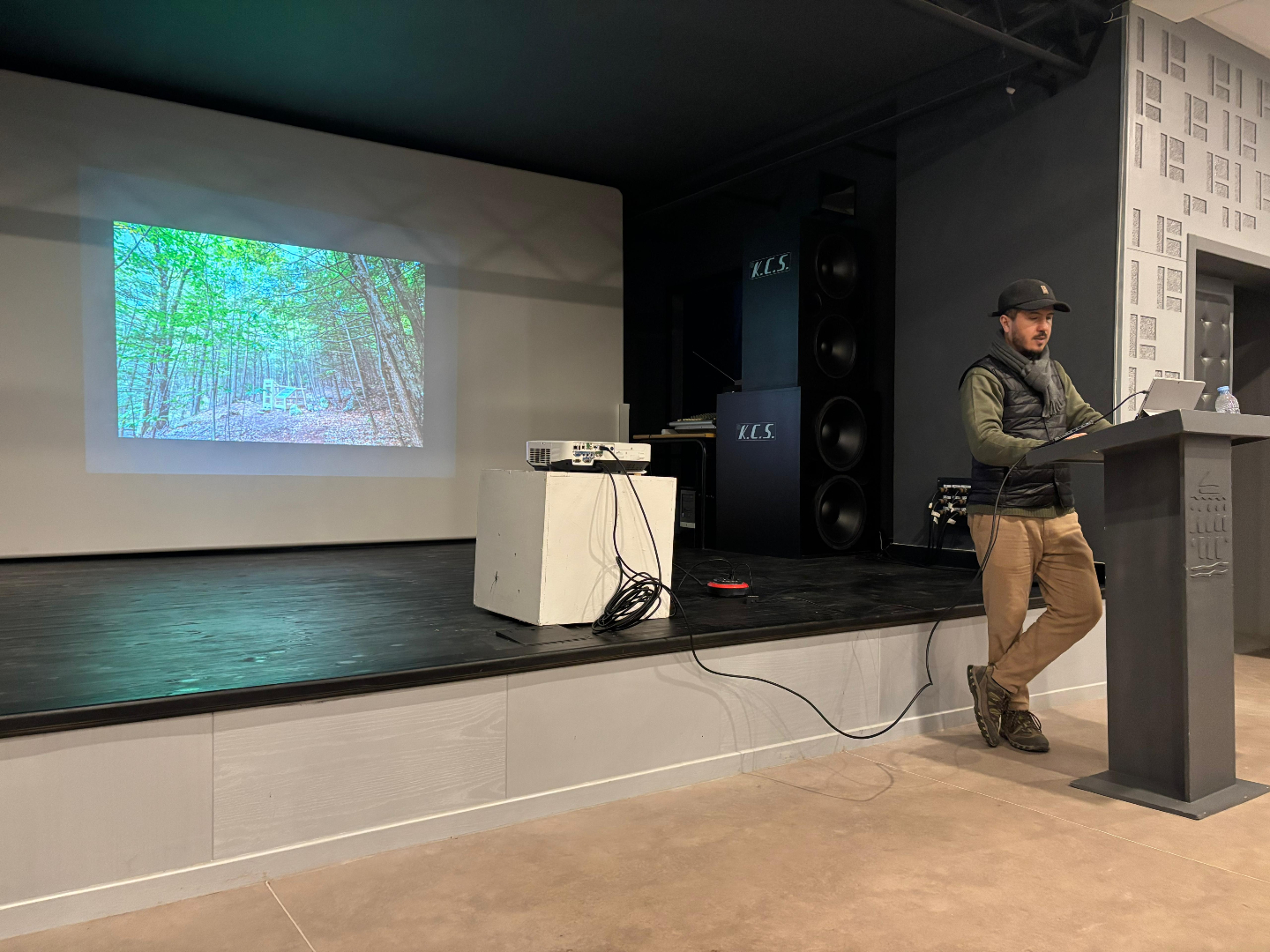
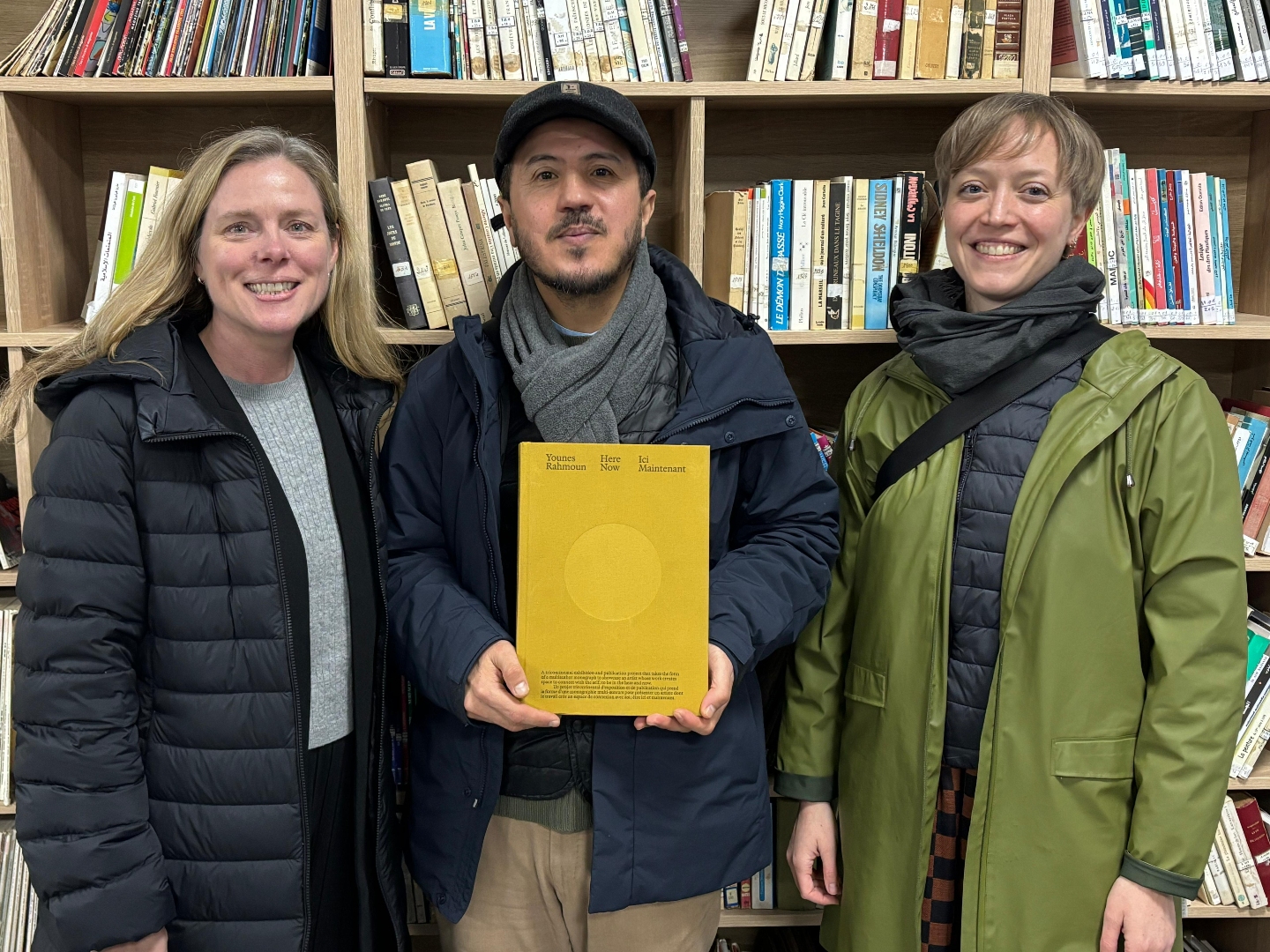
Younes Rahmoun’s presentation at the Tétouan School of Fine Arts helped me reflect on the experiences, new ideas, and hope that were centered during this most enlightening trip to several cities in Morocco.
Formed and informed by his family tradition, and deeply rooted to his locality, Younes discussed his background and practice. I enjoyed learning about his Ghorfa (room) series in particular. With his mother’s support, he inhabited a small space under the stairs in the family home, which became his studio—a space for work and meditation. He translated that architectural space into a series of drawings, objects, and installations in various media.
Some installations appeared in gallery contexts, while others were situated in the landscape—but always with the artist’s intended desire for the viewers to concentrate on their “here and now.” His presentation also spurred me to contemplate the path to my current role, from my first art history courses at Smith College, where Younes had a residency and solo exhibition in 2024 that included his most recent Ghorfa, which he installed in the woods a few miles outside of campus.
The show was curated by Emma Chubb, who joined our meeting in Tétouan, and together we all toured the School of Fine Arts library and discussed the critical importance of collecting, preserving, and making accessible research materials, particularly of artists, populations, and regions that may be underrepresented in research institutions.
I am grateful to all the inspiring people we met throughout the trip, and I felt honored to think together with such wonderful MoMA colleagues, including our dear Jay Levenson, who helped open horizons for so many with his humor and humility.
Kate Lewis, The Agnes Gund Chief Conservator
I am very grateful to all the collectors, collectives, curators, publishers, researchers, and, of course, artists (including their families and colleagues) across Morocco who so generously welcomed us into their homes, studios, spaces, museums, galleries, and cinemas over the course of the 2026 C-MAP Africa research trip.
At MoMA, artists and makers are integral to the stewardship of the collections. A clear thread that emerged during this journey was how the process of making—of choosing materials and techniques, of collaborating with others—is deeply influenced by histories, religion, language, politics, and communities.
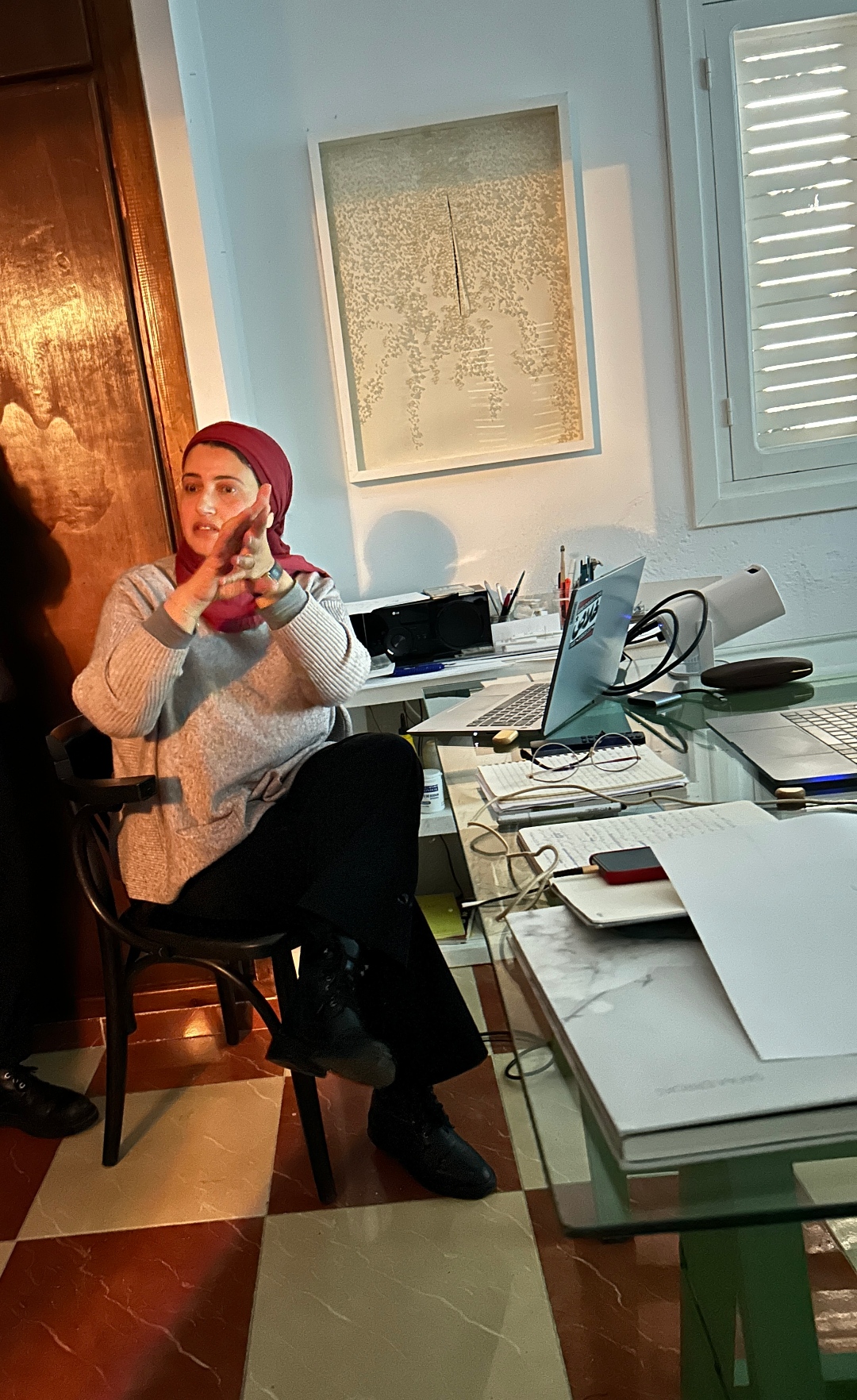
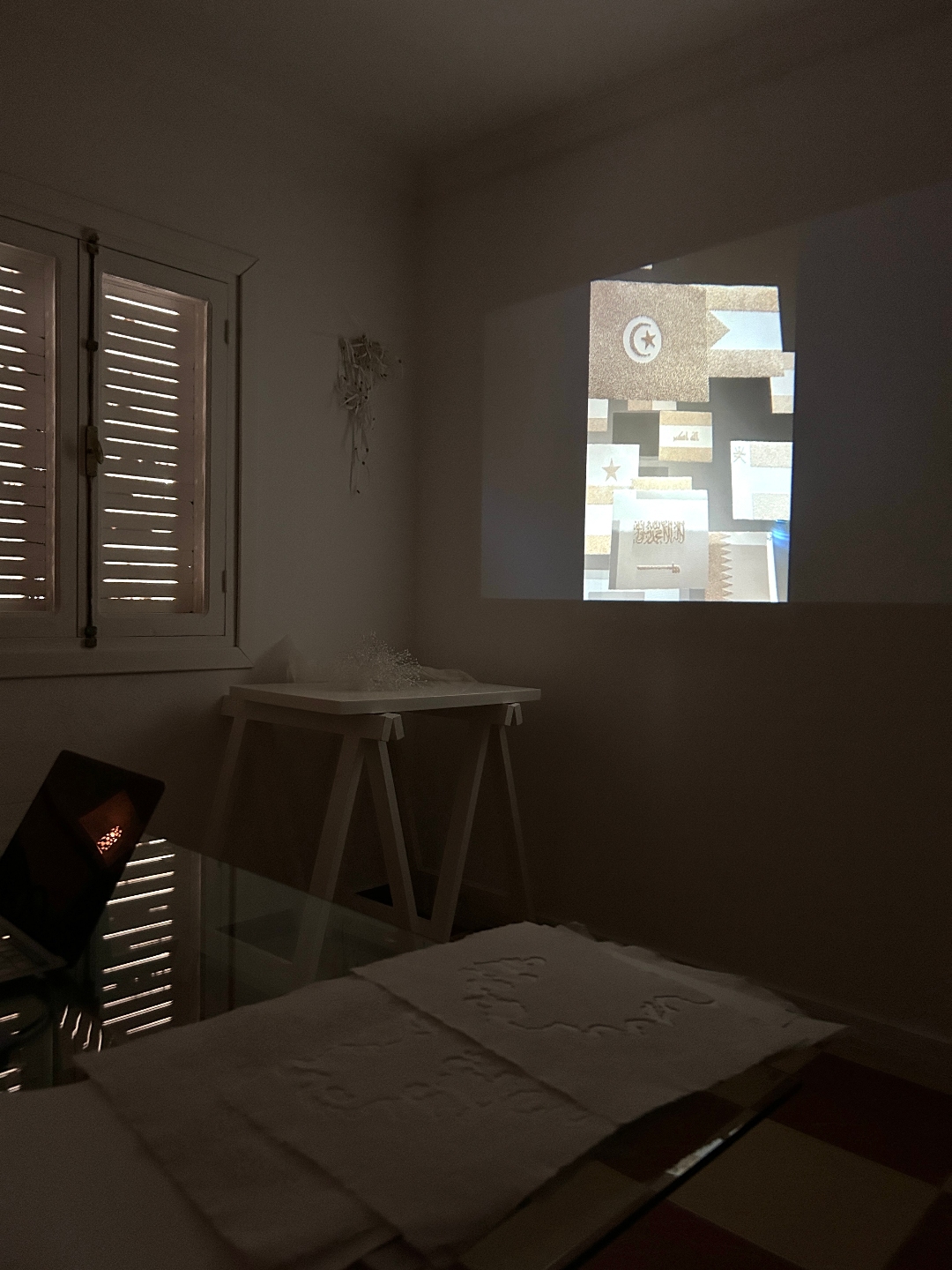
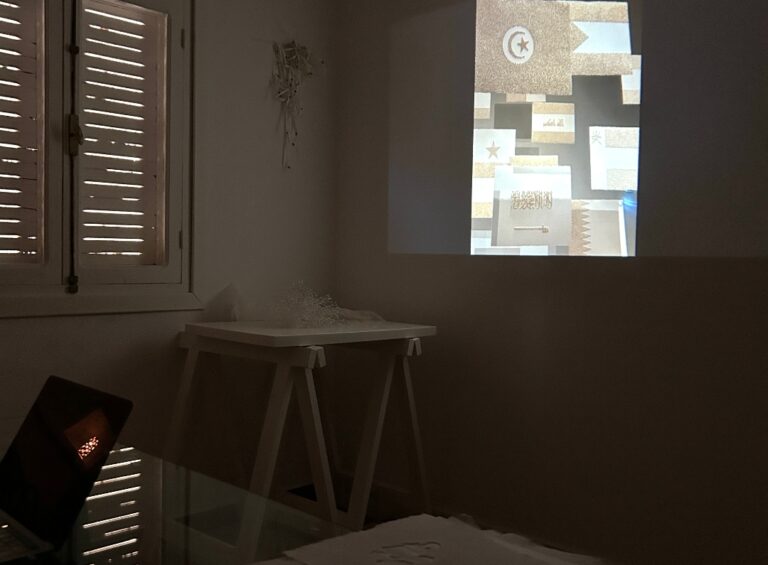
In the beautiful city of Tétouan, we were fortunate to visit Safaa Erruas in her downtown apartment studio. She shared with us her “ideas and materials from my internal kitchen” and talked about an artwork Les Drapeaux (2011–12).
This piece consists of the flags of the 22 Arab League member states reimagined as white pearls embroidered on sheets of 600 gsm cotton paper, reflecting on the Arab Spring.
Embroidery is a local tradition, passed down from mother to daughter, and the Tétouan practice is known for its stylized flowers and geometric shapes on unbleached canvas. It was interesting to hear how she worked with local embroiderers to create this painstaking work.
The multilayered significance of this approach and method reminded me that beyond materials and process, people are at the center of art and also, by extension, museum collections.
Jay Levenson embodied this ethos: Meet artists in their communities, where they are.
In memory of Jay Levenson (1948–2026)